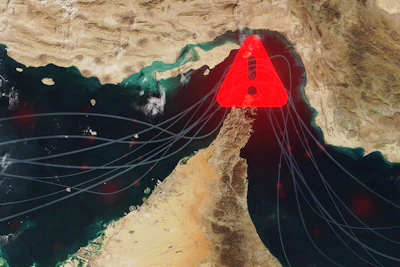
Diversions away from Gulf ports remain elevated nearly nine weeks into the conflict, but the pace of new diversion activity is slowing. What began as a sharp, reactive response to the Strait of Hormuz’s closure has shifted into a more stable pattern of avoidance, with weekly diversion volumes declining from their peaks but still well above pre‑closure norms, according to data released by project44.
The data suggests this moderation reflects fewer shipments entering the region rather than a return to normal operating conditions.
“While diversion counts taper, downstream impacts continue to accumulate. Ports absorbing rerouted volume remain under strain, with elevated dwell times persisting even as inflows ease. At the same time, trade lane volumes have begun to rebalance, with declines concentrated near the Gulf and growth emerging along alternative corridors, particularly involving Europe and select Pacific routes. Together, these trends point to a sustained reconfiguration of carrier networks rather than a short‑lived disruption,” the report says.
Key takeaways:
· As conflict in the area continues, diversions away from Gulf ports remain at sustained levels, even 9 weeks into the conflict, but these diversions are starting to slow down. Before the Strait closed, weekly diversions were below the 2,000 threshold, which is considered normal operational noise. Since the closure, there are 4 distinct phases of diversions based on specific events.
· Phase 1, spanning March 2-22, reflects the initial surge following the disruption. Volumes eased modestly in the weeks of March 9-16, down 8% and 10%, as the initial shock was absorbed and carriers stabilized provisional alternative routings.
· Phase 2 centers on the week beginning March 23, when diversions rose 28% to 9,572. This was the highest diversion volume observed in the dataset and correlates to a specific event: Iran’s partial reopening to five friendly nations on March 26. From that point forward, cargo moved under two distinct regimes. Non‑eligible cargo remained barred from Hormuz and was forced to divert, while eligible‑flag cargo resumed transit. This split concentrated rerouting pressure on the remaining flows and pushed diversion volumes higher.
· Phase 3 covers the ceasefire period from March 30-April 12. The first week held close to the prior peak at 9,317 shipments, a decline of 3%. The following week saw a sharp contraction to 5,633 shipments, a 40% week‑over‑week decline and the steepest fall recorded until early May.
· Phase 4 runs from mid‑April through May 4 and captures the dual‑blockade period. The addition of a U.S. naval blockade alongside Iran’s re‑closure established a baseline of roughly 5,000 to 6,600 diversions per week through late April. This floor held until the final week of the period, April 27-May 4, when volumes fell to 2,960, a 55% decline. The Project Freedom announcement on May 3 appears to have prompted carriers to pause bookings rather than commit to another Cape routing, a hesitation that is clearly visible in the data.
· The clear trend in declining volume is proximity to the Gulf. All five of the top lanes involve either the UAE or Saudi Arabia, two countries directly inhibited by the Strait’s closure. China makes up one of the partners in three of the Top 5 lanes despite being explicitly allowed passage by the Iranian government. This suggests carriers are routing on risk perception rather than diplomatic arrangements.