SQF Edition 10, launching audits in January 2027, requires food manufacturers to prove their food safety culture through documented assessments, employee engagement, and demonstrated improvements rather than relying solely on compliance records and spot-checks. Manufacturers must establish assessment plans, gather evidence from multiple sources including employee input, and show how identified gaps are addressed and resolved.
- SQF Edition 10 officially released in March, with audits beginning in January 2027, emphasizing documented proof of food safety culture over traditional compliance methods
- A Food Safety Insights survey found 76% of manufacturers believed they had good food safety culture, but Edition 10 audits will test whether that confidence is supported by evidence
- Edition 10 requires a food safety culture assessment plan that defines what to measure, how to gather evidence, who is responsible, and when findings will be reviewed
- Manufacturers must connect employee feedback with floor observations and demonstrate how leadership responds to concerns, creating a documented chain from identification to resolution
- Technology and tools like Food Safety Roundtables help gather evidence, but people must actively use systems and act on findings to prove culture effectiveness
For food safety to be proven, it first has to be defined. The Safe Quality Food (SQF) certification program gives manufacturers a recognized standard against which to assess their food safety controls, and most have now comfortably wrapped their heads around Edition 9.
In March, however, SQF Edition 10 was officially released, putting greater emphasis on assessing and demonstrating food safety culture in practice – in other words, prove it. Audits under Edition 10 are expected to begin in January 2027, so it’s little surprise that it’s one of the subjects repeatedly brought up by food and beverage manufacturers.
So how do you “prove” safety culture? It’s a fair question, because culture can feel difficult to pin down when you’re used to demonstrating compliance through spot-checks, training records, and spreadsheets. In September 2025, a survey by Food Safety Insights asked 170 food and beverage manufacturers whether they thought they had a good food safety culture. More than three quarters (76%) were sure they did. The optimism is encouraging, but the transition from SQF 9 to SQF 10 is going to put that optimism to the test. What happens when someone finds a problem halfway through a busy shift? Do they report it? Does their supervisor act on it? Can the plant clearly demonstrate how those decisions led to improvements? That’s the difference between optimism and passing an audit.
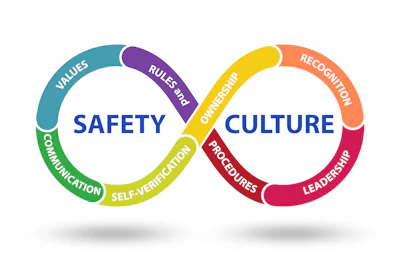
SQF 10 is far more focused on assessing, documenting, and improving food safety culture than its predecessor. Plants need to be able to connect what people say about food safety with what’s actually happening on the plant floor, then demonstrate how leadership responds. Rather than focusing purely on incidents or original findings, records will need to show response and follow-through. Technology can make that evidence easier to gather and access, but people still have to use it in the right way and act on what it reveals. SQF 10 aims to make food safety culture easier to see, dissect, and strengthen during the working day, so “proving it” becomes second nature.
An open door only works if people walk through it
It’s easy to tell employees that your door is always open. However, walking through it can feel quite different, especially if they’re bringing a concern to someone who manages their work. One way is what’s called a Food Safety Roundtable, where randomly selected employees from the production floor are personally to a small meeting with members of leadership.
The question underlining everything was “What are you seeing that we need to know about?” Employees work alongside the processes and equipment and have unique opportunities to notice things those not on the plant floor might miss.
Even culture needs a plan
This is where SQF 10 gives manufacturers something more concrete to work with. Edition 10 actually introduces a requirement for a “food safety culture assessment plan,” so plants need a deliberate way to examine how their culture is working and identify where it needs attention.
In real terms, that means deciding what you want to understand, how you’ll gather the evidence, who will take responsibility, and when you’ll review the findings. The roundtable example above could be a part of this process. You might want to know whether employees understand how to escalate a food safety concern, for instance, or how they’ll be heard. This procedure explains who they should contact, and their training records show that you’ve covered it, but the next step is finding out whether they know how to use that process and feel comfortable doing so.
Ask employees what they would do if they spotted a problem, observe how concerns are handled during production, and review records of issues that have already been raised. Those sources should help build a fuller picture, particularly when they don’t quite line up. If a supervisor says everyone knows the escalation procedure, but employees on another shift are unsure who to contact, you’ve found something worth addressing. An assessment plan gives a consistent way to uncover gaps, and gives leadership a clearer basis for deciding where support, training, or changes to working practices are needed.
Demonstrating change
This is where the proof comes in. Once you’ve identified a gap, demonstrate how that gap was dealt with. Take those employees who were unsure who to contact about a food safety concern – clarify the procedure, make contact details easier to find, and ask supervisors to walk their teams through the process. Documenting those actions gives a record of your response, but you still need to find out whether it actually helped. Can employees now explain who they would contact? Does that person know what’s expected of them? When a concern is raised, does it reach someone who can act on it?
This is also where technology can make the chain of evidence easier to manage. When an assessment finding is connected to an assigned action, a responsible person, and a subsequent check, it becomes easier to follow what happened. Leadership can review whether the same issues keep appearing across shifts, or whether a change has helped employees put their training into practice. People still have to ask the questions and make the decisions, but having those records at their fingertips gives them something concrete to work from, while helping the plant demonstrate how its assessment of food safety culture is translating directly into measurable improvements.
Confidence you can explain
Those manufacturers who felt confident in their food safety culture had good reason to be. There’s real pride in running a facility where people care about the food they produce, and SQF 10, while potentially quite daunting, actually gives manufacturers an opportunity to understand what supports that confidence. It may also bring some uncomfortable surprises, but when you ask people honestly about their experiences, leave room for answers you weren’t expecting. Finding a weakness gives you the chance to address it before someone gets hurt or a product line is affected.
With culture, some of the clearest definitions will come from the people working in your plant. They know what happens during a difficult shift, how a supervisor reacts to bad news, and whether yesterday’s concern is still waiting for an answer. As manufacturers prepare for Edition 10, those are conversations worth having. You should come away knowing more about your facility than you did when you started, including whether the confidence you have in its culture is shared by the people on the floor.