A practical framework for modernizing food supply chains combines low-GWP refrigerants, real-time digital monitoring, and intelligent controls to reduce the one-third of food globally lost or wasted while cutting agri-food emissions by up to 41 percent.
- One-third of global food is currently lost or wasted, while agri-food systems produce approximately 31% of human-caused greenhouse-gas emissions.
- Fully refrigerated supply chains could reduce food-waste-related emissions by up to 41%, making cold chain optimization a critical climate solution.
- Low-GWP refrigerants like CO₂, propane, and ammonia are replacing legacy HFC gases, with U.S. stores using CO₂ technology projected to triple between 2024-2028.
- Real-time monitoring systems enable operators to detect temperature excursions immediately, reduce spoilage claims by $250,000+, and improve product shelf life by 30%.
- Integrated cold chain resilience requires connected ecosystems spanning harvest, processing, transportation, storage, retail, and point-of-sale with continuous temperature visibility and predictive analytics.
As global temperatures rise and regulatory deadlines loom on high global warming-potential (GWP) refrigerants in refrigeration systems, cold chain operators face a dual challenge: expanding capacity to feed a growing population projected to reach 10 billion by 2050 while rapidly decarbonizing operations.
Today, roughly one-third of food produced globally is lost or wasted, while agri-food systems generate approximately 31% of human-caused greenhouse-gas emissions. Expanding reliable refrigeration across the supply chain is therefore not simply a capacity issue; it is a major opportunity to protect food, reduce waste and lower emissions. Studies suggest that fully refrigerated supply chains could reduce food-waste-related greenhouse gas emissions by 41%.
Meeting this moment requires more than replacing or retrofitting systems that use high-GWP refrigerants ahead of regulatory deadlines. It demands a fundamentally smarter, more resilient cold chain model — one built on next-generation low-GWP refrigerants, efficient variable-speed compression, and intelligent digital controls that deliver real-time visibility, optimize performance and enable proactive management from production facilities to distribution networks, retail refrigeration and the point of sale.
Transition to low-GWP refrigerants
The regulatory and environmental case for using low-GWP refrigerants is accelerating worldwide. The Kigali Amendment to the Montreal Protocol aims to reduce hydrofluorocarbons (HFCs) by up to 85% by 2047, while regulations such as the AIM Act are driving refrigerant transitions across North America. As a result, cold chain storage operations are actively transitioning away from legacy high-GWP hydrofluorocarbon (HFC) gases toward lower-GWP alternatives such as CO2 (R-744), R-290 (propane), ammonia (R-717) and A2L refrigerants. This shift is particularly evident in the food retail sector. In the United States alone, the number of stores utilizing CO2 technology is projected to increase threefold between 2024-2028.
Yet refrigerant selection alone does not guarantee meeting sustainability targets. For example, high-pressure CO2 systems require proper start-up, commissioning, automation and expert site coordination to maximize efficiency and reliability. As several supermarket operators have discovered, success depends on pairing refrigerant transitions with advanced compression and control platforms capable of managing increasingly sophisticated refrigeration architectures. The lesson for operators is that refrigerant transitions should be approached as system-level upgrades rather than single equipment replacements.
Real-time temperature data across cold chain operations
Managing products in transit and through distribution networks is another critical point in the food supply chain, where preserving product freshness depends on continuous temperature control and visibility across cold storage hubs and transport operations.
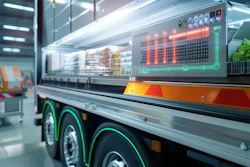
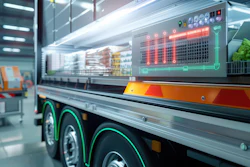
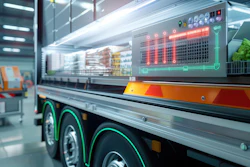
Beyond equipment upgrades, digital monitoring and control technologies are helping cold chain operators improve resilience and reduce waste. A transportation and logistics provider specializing in refrigerated and frozen food shipments across the United States, for instance, implemented real-time temperature and location monitoring throughout its network. By integrating shipment data into its transportation management system, the company gained visibility into product temperatures, shipment locations and spoilage risks during transit. This enabled faster responses to temperature excursions, strengthened product protection and improved operational efficiency.
This ability to respond to changing operating conditions is becoming increasingly important as climate change introduces greater weather variability and more frequent temperature extremes. Facilities and transportation networks that can maintain precise temperature control while minimizing energy use will be better positioned to withstand both environmental and economic disruptions.
Use digital intelligence to protect product integrity
With hundreds of billions of dollars in perishable food moving across North America annually, cold chain resilience increasingly depends on the ability to monitor, analyze and respond to temperature excursions in real time. Modern cold chains are becoming digital ecosystems built around real-time monitoring, cloud-connected systems and predictive analytics. These technologies help operators prevent waste, reduce energy consumption, enhance supply chain efficiency, improve reliability and avoid the greenhouse gas emissions associated with spoiled products ending up in landfills.
The value of real-time visibility is especially evident across global distribution networks. When a Belgian shipping company introduced 20 specialized reefer vessels (refrigerated cargo ships) into its fleet, it deployed an automated monitoring system capable of continuously supervising reefers and cargo conditions at sea and on land. By enabling immediate alerts and continuous oversight of the refrigerated containers, the platform helped ensure critical temperature-sensitive goods remained within the required conditions throughout the shipment’s journey, reducing operational risk and supporting product integrity from source to end destination.
Similarly, a produce company implemented real-time temperature monitors and cloud platform after experiencing costly shipment rejections caused by temperature excursions. The enhanced visibility allowed the company to intervene proactively, strengthen loss prevention efforts, and reduce annual claims by approximately $250,000.
Build resilience across the entire cold chain
A resilient cold chain operates as a fully integrated, end-to-end network, with temperature integrity maintained from harvest through processing, transportation, storage, retail, and foodservice. A lapse at any point can compromise product quality, increase waste, and erode the sustainability gains achieved across the rest of the supply chain.
Several real-world examples illustrate this systems-based approach. In Southeast Asia, improved cold chain infrastructure helped small-scale fishermen reduce spoilage by storing their catch at the proper temperature, enabling them to sell at prices approximately 30% higher than before. In India, a grape growers association implemented refrigeration solutions capable of cooling harvested grapes to 4°C within 4-6 hours of harvesting. The result was reduced food loss, extended shelf life and improved profitability.
These examples demonstrate that cold chain resilience is not achieved through a single technology or process. True cold chain resilience requires a connected ecosystem of refrigeration, monitoring and analytics and transportation solutions that work together to maintain product integrity from source to destination. Equally important is the ability to maintain real-time visibility across the cold chain. Continuous monitoring of temperatures, equipment performance and system conditions allows operators to detect temperature excursions and mechanical issues as they emerge. Advanced analytics can then transform this data into actionable insights, helping teams identify trends, prioritize risks, optimize maintenance schedules and address potential failures before they lead to spoilage, unplanned downtime or compliance issues. By enabling faster, data-driven decisions, these technologies help reduce food loss, improve efficiency and strengthen supply chain resilience.
Moving beyond compliance
The global cold chain is entering a period in which resilience, efficiency and regulatory readiness can no longer be treated as separate priorities. Moving beyond reactive compliance requires a deliberate approach. Successful operators are modernizing equipment, deploying intelligent controls and building flexibility into operations before disruption occurs.
The organizations best positioned for the future will view sustainability and resilience as mutually reinforcing. Low-GWP refrigerants in next-generation refrigeration systems can reduce environmental impact and help address evolving regulatory and operational requirements. Electrified, variable-speed compression can improve energy efficiency and lower emissions. Intelligent controls and predictive analytics can strengthen reliability, protect inventory and minimize waste.
Together, these technologies provide more than a path to compliance. They create a practical foundation for a smarter, more resilient global cold chain – one that is equipped to preserve critical perishable goods, improve energy efficiency and ensure reliable performance amid evolving regulatory, environmental and operational challenges.