Integrated pest management (IPM) programs help food warehouses and distribution centers prevent pest contamination, protect products, and maintain audit compliance by combining prevention, monitoring, documentation, and targeted control measures.
- Pests in food logistics facilities can damage products, contaminate equipment, and create health risks while incoming shipments introduce activity from elsewhere in the supply chain.
- Six core IPM practices include regular inspections, sanitation and exclusion, incoming goods inspection, activity monitoring, documentation, and employee training.
- Loading docks and storage areas are high-risk pest entry points requiring special attention to gaps, drains, and incoming shipments for signs of activity.
- Stored product pests like beetles and moths can infest dry goods including grains, flour, and cereals, requiring regular inventory rotation and spill cleanup.
- Effective pest prevention requires daily coordination across operations, sanitation, and maintenance teams working with pest management professionals to catch issues early.
Warehouses and distribution centers move quickly, and pest pressure doesn’t pause for an operating schedule. The constant movement that keeps a logistics operation running can also create opportunities for rodents, cockroaches, flies, birds, and stored product pests.
That makes prevention especially important. A proactive integrated pest management (IPM) program can help facilities identify pest pressure points, address conducive conditions, and strengthen defenses before activity develops into a larger issue.
How pests affect food safety and audit readiness
In food logistics facilities, pests may damage products, contaminate equipment or packaging, and create potential health risks. Warehouses and distribution centers can offer pests the food, water, and shelter they need to survive, while incoming shipments can introduce activity from elsewhere in the supply chain.
For warehouses and distribution centers subject to food safety, customer, or third-party audit requirements, pest management can also play an important role in audit readiness. Facilities should maintain preventive practices and thorough documentation as part of the facility’s pest prevention pre-requisite program. IPM supports this approach by combining prevention, monitoring, documentation, and targeted control measures to help maintain an audit-ready pest management program.
Pest prevention checklist for food logistics facilities
IPM is a proactive approach focused on long-term prevention by using multiple strategies to address the conditions that allow pests to thrive. An IPM program includes pest identification, monitoring guidelines, action thresholds, appropriate control measures, and documentation of results. For warehouses and distribution centers, these six practices put IPM principles into action.
Establish regular pest control inspections
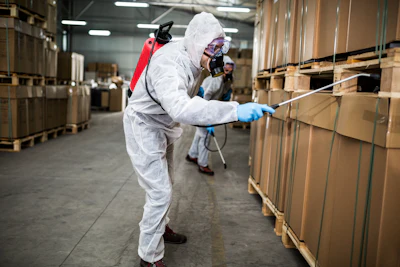
Routine interior and exterior inspections can help identify pest-conducive conditions before they become larger problems. Pay particular attention to loading docks, doors, storage areas, waste areas, floor drains, utility penetrations, and spaces beneath or behind equipment. A pest management professional can also help identify overlooked access points, signs of activity, or conditions that may attract pests.
Strengthen sanitation and exclusion
Reduce the food, water, and access points pests need by establishing consistent cleaning schedules, responding promptly to spills, emptying and cleaning waste containers regularly, and addressing standing water or leaks. Don’t overlook sink and floor drains, breakrooms, or hard-to-reach areas where food residue and moisture can accumulate.
At the same time, help keep pests outside by sealing gaps around doors, repairing damaged seals and screens, closing cracks, and addressing openings around utility penetrations.
Inspect incoming goods and stored products
Loading docks experience constant movement and repeated exposure to the outdoors, while pests can also arrive on incoming ingredients, packaging, pallets, and other shipments. Before products move deeper into the facility, look for damaged or leaking containers, torn packaging, droppings, webbing, holes, or live or dead pests.
Continue monitoring products once they are in storage. Stored product pests like beetles, moths, and weevils can infest grains, flour, cereals, pet food, and other dry goods, sometimes developing inside or around packaged products. Regular inspections, inventory rotation, and prompt cleanup of spilled product can help prevent activity from spreading.
Monitor pest activity trends
Look beyond individual sightings to understand where pest activity is occurring, which pests are present, and whether patterns are emerging over time. Tracking recurring activity can help teams identify persistent hot spots or facility conditions that may require corrective action.
Document corrective actions
Routine monitoring and clear documentation demonstrate that a facility has an established pest management process and is responding to identified issues. Facilities should document findings, corrective actions, and follow-up as part of everyday operations rather than assembling information only when an audit is approaching.
Train employees on pest prevention
Operations, sanitation, and maintenance teams are often in the best position to notice pest activity or contributing conditions between scheduled pest control visits. Train employees to recognize common signs of activity, inspect incoming goods when appropriate, and know how and where to report pest sightings or facility concerns. Early reporting can help the appropriate teams investigate the source, identify contributing conditions, and take corrective action before activity spreads.
Pest prevention is most effective when it is part of daily operations, from inspecting incoming shipments to addressing facility conditions and, finally, documenting follow-up. By coordinating efforts across operations, sanitation, and maintenance teams – and working with a pest management professional – warehouses and distribution centers can catch issues earlier, help protect products, and stay prepared for food safety audits throughout the year.