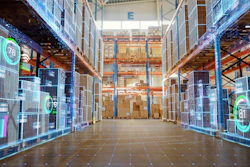
Physical intelligence—accurate, item-level data powered by RFID technology—is critical for food supply chains because it enables AI systems to make confident decisions about product safety and location rather than guessing, which can turn contamination events into public health crises.
- The data gap: Despite 68% of food retailers using AI, most deployments fail because physical supply chain data is incomplete, delayed, or inferred, forcing AI systems to make unreliable guesses about contaminated product locations.
- Real-world impact: A 2026 lettuce outbreak took 33 days to contain because buyers couldn't quickly trace where contaminated products went, demonstrating how accurate traceability can compress recall response times from weeks to hours.
- RFID solution: RAIN RFID labels attach unique digital identities to food cases and items, automatically capturing production lot, pack date, origin, and expiration data at every supply chain handoff without line-of-sight scanning.
- Regulatory driver: FDA Food Safety Modernization Act Section 204 will require companies to maintain digital records of critical tracking events, making RFID infrastructure essential for compliance and faster recalls.
- Beyond safety: Physical intelligence infrastructure delivers daily operational benefits including better inventory accuracy, reduced shrink, improved freshness management, and less food waste through automated near-expiration prioritization.
Grocery and food logistics operators are investing heavily in AI to drive demand forecasting, optimize inventory, manage freshness, and analyze supply chain risks. In fact, a 2026 FMI survey found that 68% are using AI, up from 47% in just one year. Yet despite identifiable use cases and early signs of ROI at some retailers, most AI deployments in this industry are running into a foundational problem.
AI systems depend on data to make decisions, but in physical supply chains, a significant share of item-level data is incomplete, delayed or inferred. As we’ve all experienced, AI models are more than willing to produce answers regardless of their actual confidence -- “best guesses” that may be acceptable for some business decisions but certainly aren’t when it comes to food safety. When contaminated products circulate through the national food supply chain, accurate physical-world data enables AI systems to determine where problem lots went, rather than assuming or just guessing.
This past summer made that gap visible, and illustrated just how high the stakes have become. Between June 14 and Aug. 15, an outbreak linked to iceberg lettuce from a single processor affected thousands of people across 20 states, and during the same period, confirmed cyclospora cases rose sharply nationally. The summer also brought a multistate Listeria alert on prepared chicken salad, and a nationwide frozen blueberry recall.
Recalls are an unfortunate reality of a food system this large and interconnected – but technology can improve recall outcomes. Though the first lettuce illnesses began June 14, product kept moving for 33 days because buyers couldn’t see, fast enough, where it came from and where it had gone. That delay turned a contamination event into a public-health crisis, and it’s exactly the part companies can compress by using radio frequency identification (RFID) technology to improve item traceability.
Making foods traceable from field to fork
One’s first reaction to “RFID for food” may be to imagine a tiny chip inside every apple, but no one’s putting radio hardware inside food items. In this context, the opportunity is to attach a unique digital identity to fresh food cases leaving their packers, and on packaged items shoppers pick up – anything from bagged salads to trays of chicken or grab-and-go sandwiches. RAIN RFID labels carry the digital identity, then are read automatically and without line of sight at every handoff from field to fork.
What makes this powerful for food is the data unique identities can be connected to. Each RFID-tagged case or item can include production lot, pack date, origin and expiration date data. This data has value well beyond recalls: Retailers can identify products approaching expiration, move them to the front of the shelf, mark them down, or prioritize them for use, enabling fresher food, better inventory management, and less food unnecessarily thrown away. And when an investigation identifies a specific lot, an operator with this infrastructure doesn’t have to manually search trucks, facilities and stores. It can query its systems to find where affected products went, helping teams remove the right products quickly while leaving unaffected products on the shelf.
This is a prime example of “physical intelligence:” making accurate data about real-world items available to enterprise AI systems so they can act instantly instead of guessing. Especially given the previously mentioned increases in AI adoption by food retailers, accuracy has become critical – AI is increasingly everywhere, yet its decisions will only be as valuable as what it knows about the physical world. Without grounded data, a model asked to infer where a contaminated lot went will guess regardless of its actual confidence, and in food, where margins are thin and public safety is on the line, a guess isn’t good enough. With physical intelligence, the RFID-tagged item reports its own unique identity, enabling AI systems to create records showing where it is and where it’s been.
The data problem underneath the AI problem
A decade ago, outbreaks traced to a foodservice provider led to a record $25 million federal fine. The company rebuilt its supply chain on RFID case-level traceability, onboarding suppliers nationally by 2023. So, when contaminated jalapeños entered that supply chain in 2026, it was ready: the affected lot was identified within hours of notification, the exact restaurants pinpointed, and product swapped in from alternate growers. Same company, same risk, a decade apart. The difference: better data, available faster.
Speed matters because one bad lot costs everyone. Within weeks of cyclospora being traced to lettuce, CNBC reported pre-packaged salad sales were down 14% and lettuce prices down 16.4%. Growers who never shipped a contaminated leaf lost a season. Paraphrasing former FDA Deputy Commissioner Frank Yiannas, the produce industry wins and loses together, because confused consumers avoid the whole category. Enhanced traceability lets the supply chain pull affected products without condemning everything around them.
The U.S. Food Safety Modernization Act Section 204 will soon require companies handling foods on the FDA’s Food Traceability List to keep digital records of critical tracking events and key data elements – lot codes, source, shipment dates – and quickly produce them on request. RFID tagging will be critical here, helping compress recall response times from weeks to hours at a cost of pennies per label.
Outbreaks aren’t the only business case for RFID. The same physical intelligence infrastructure delivers value every day: greater inventory accuracy, reduced shrink, better freshness management and less food waste, since retailers can prioritize near-expiration items for sale or markdown instead of discarding them. Faster recall response is an added benefit. That’s why the market is already moving. When operators at that scale move on the operational ROI, it’s a signal the payback is real; food safety is coming along for the ride.
Where the market is heading
This isn’t a “someday” story – it’s happening now. The technology works, food retailers are showing the economics work, and shoppers are raising the stakes every quarter by demanding fresher, less-processed food. Fresh is now the most-cited word Americans use to define “healthy,” yet also the most perishable, outbreak-prone part of stores. A food system getting fresher has to get smarter at the same rate, replacing a reactive supply chain for a predictive one that uses physical intelligence to close the blind spots.
Anything you put inside your body is too important to leave to an AI system’s best guess. When a physical object is coupled with an RFID tag that stores its digital identity, it’s ready to tell its truth, providing real, trusted item-level data the food retailing industry has been sorely missing.
The food industry is clearly approaching a convergence point. AI investment is accelerating, regulatory requirements are tightening, and consumer expectations around freshness and transparency are rising. Physical intelligence – accurate, item-level traceability – will ultimately be the connective tissue between them. The question isn’t whether it’s coming, but how quickly it can become universal across this industry, creating a safer, fresher and more efficient food supply chain to benefit suppliers, retailers, government, and consumers.