Across industries, AI is fueling concern about jobs being redefined or replaced. In supply chain planning, that shift is no longer theoretical. As autonomous systems take on more routine decision making, the real challenge for leaders is not whether the planner’s role will change, but how strategically they will redefine it.
Gartner predicts that by 2029, 60% of supply chain planners’ roles will shift from operational execution to strategic oversight, as autonomous planning systems manage routine decision making. This guidance should be a wake-up call for chief supply chain officers (CSCOs).
Advancements in autonomous planning technologies, which encompass AI, advanced analytics, and automation to sense demand and supply signals, generate scenarios, and execute tasks, are already automating routine supply chain decisions, with organizations surveyed by Gartner reporting improvements in decision speed (78%) and decision quality (75%) while reducing manual intervention and operational bottlenecks. These gains signal a shift in how planning decisions are made and where planners are expected to contribute.
The future of planning is not simply doing the same work faster with better tools, but redefining what planning work is, what talent is needed to do it, and how humans and technology collaborate to create value.
This is where many organizations risk getting it wrong. AI and autonomous planning does not make planners less important. It makes their contribution more strategic.
For years, planners have been measured largely on their ability to manage the day-to-day: expedite exceptions, rebalance supply, adjust forecasts, resolve constraints, and keep operations moving. As AI absorbs more of that routine activity, the planner’s role is moving up the value chain.
When executed well by organizations, the planner becomes a strategist. To unlock the full value, CSCOs must develop planning talent at the same pace as planning technology.
The new collaboration model is human plus AI
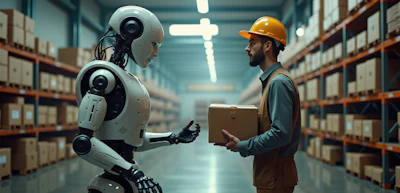
The most effective organizations will not frame AI as a replacement for human expertise, but as a collaboration model in which machines handle speed and scale, while people focus on context and consequence.
While AI can execute routine decisions quickly, humans become essential when the situation moves beyond the expected. Consider a sudden supplier disruption affecting a critical component. Autonomous planning tools can flag the issue and model alternatives, but CSCOs still need to assess the broader business impact, weigh tradeoffs across cost and service, and align with stakeholders on the best response.
The value of planners is no longer defined by how many decisions they personally touch, but by how effectively they guide the decisions that matter most. This requires a different talent profile than many organizations have built for historically.
Planning talent must evolve as quickly as AI
As AI capabilities mature, demand will rise for planners with stronger analytical fluency, broader business acumen, and the ability to work cross-functionally. That talent will be hard to find. Organizations are already facing a market in which demand for digital, analytical, and strategic planning skills outpace supply.
This creates a workforce development challenge that cannot be solved through hiring alone. Companies that wait for the labor market to deliver “ready-made” strategic planners will find themselves competing for scarce talent while more proactive peers build those capabilities internally.
The better path is to redesign roles before the talent gap leads to performance issues. Job descriptions, career paths, and KPIs should reflect the work planners increasingly need to do. Workforce development, then, is not a side initiative to accompany digital transformation. It is central to making that transformation pay off.
Role redesign is now a competitiveness issue
Organizations that successfully transition planners into strategic oversight roles are better positioned to anticipate disruptions and optimize long-term supply chain performance. Those that fail to redefine the role risk losing advantage to peers that are using AI not just to improve efficiency, but to enhance decision quality at the enterprise level.
CSCOs need to make role redesign a priority. Consider a planner whose day was once dominated by expediting orders and manually resolving routine exceptions. As AI takes on more of that work, the role should evolve accordingly, with expectations and incentives tied less to transactional activity and more to scenario planning, risk identification, and the ability to guide stronger cross-functional decisions.
Equally important is governance. A cross-functional task force sponsored by the CSCO can align workforce development with broader digital transformation goals, ensuring upskilling efforts are not fragmented across functions. Planning, procurement, logistics, manufacturing, HR, and IT all have a stake in what the new planner role becomes. Without that alignment, organizations risk upgrading technology while leaving talent models stuck in the past.
CSCOs who move now will define the next era of planning
The organizations that gain the most from AI will be the ones that understand a simple truth: the technology investment only creates value if the workforce evolves with it.
That means communicating progress clearly to the C-suite and board. CSCOs must take a step beyond reporting on automation adoption and share insights into how the planning function is strengthening agility, improving resilience, and generating better returns on technology investments.
The coming transformation of planning is not about removing humans from decision making, but about repositioning how and where they can contribute most. In the years ahead, the planner’s job will look fundamentally different. The question is whether organizations will prepare their people for that future or let the future arrive before their workforce is ready.