Cold chain logistics has long been a complex process, and it’s becoming increasingly challenging. Manufacturers now face surging demand, stricter regulations, shifting markets and mounting pressure to cut emissions. Tasks that once felt separate now operate as one connected system and a data gap in the warehouse can create problems downstream.
This complexity reaches into every aspect of operations. For example, a single temperature slip can harm product quality, a delay can spike refrigeration costs and missing warehouse data can trigger errors that ripple through transportation.
This is where innovation matters most. Integrated logistics, sharper visibility, smarter warehouse tools and stronger execution work together to reduce friction. When these elements align, manufacturers spend less time troubleshooting and more time building resilient and scalable operations.
Maintaining product integrity
Protecting product integrity is non-negotiable. Food safety and quality hinge on strict temperature control and real-time monitoring. These mission-critical measures guard against compromised quality, safety and shelf life. With real-time monitoring, manufacturers can oversee product conditions from storage to delivery, taking proactive action before issues arise.
Cold chain breakdowns are rarely caused by one dramatic failure. More often, they result from multiple small weak points, including insufficient facility resources, limited handling practices, deficient safety measures, inefficient response mechanisms, poor tracking capabilities and environmental efficiency. A 2025 study published in the IOSR Journal of Business and Management ranked insufficient facility resources as the biggest challenge and found that 71% of respondents believe infrastructure plays a crucial role.
That finding should not surprise anyone in the field. The cold chain is only as strong as the physical and digital systems supporting it, which is why being as efficient as possible is crucial for success.
Improving operational efficiency
Operational efficiency in cold chain logistics depends on more than miles traveled. Major costs come from refrigeration during transit, energy used when trucks idle at facilities and temperature fluctuations from repeated door openings during loading and deliveries. An NIH study groups refrigeration costs into three main categories: cost during transit, cost while the vehicle is waiting and cost from opening and closing the compartment door during service operations. Each touchpoint adds strain on refrigeration systems, increases fuel and energy use, erodes margins and threatens product quality if not tightly managed.
Bottlenecks and excess dwell time at warehouses and loading docks often go unnoticed, but they are major drivers of inefficiency. Each minute a truck idles or the doors are opened, it burns fuel and increases refrigeration costs, which can trigger temperature spikes and strain cooling systems.
To drive operational efficiency, cold chain operators must examine every link in the process, from warehouse management and staging to facility turnaround time and handling practices at each stop. Reducing this friction lowers cost and creates a foundation for better decision-making.
Making better decisions with better data
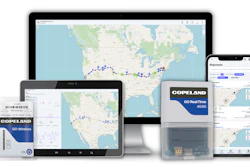
Cold chain operators need useful data that helps them act faster and with more confidence. Real-time visibility into temperature, inventory, dwell time, throughput and exception events helps teams address problems before they turn into service failures.
Better data strengthens stronger planning by helping manufacturers identify repeat bottlenecks, improve labor allocation, tighten inventory accuracy and reduce waste. When tracking capabilities are weak, decision-making becomes harder and teams spend more time chasing information than improving performance.
Timely, actionable information helps teams do more than solve daily issues. It helps them build systems that are better prepared for growth, especially since expansion often reveals weak points that were less visible at a smaller scale.
Scaling for sustainable growth
Growth can quickly expose weak spots. A network that works well at one volume or product mix may struggle as demand shifts, customers expand or new channels are added. The challenge is not just to innovate, but to do it in a scalable way. That means building processes and systems that absorb complexity without adding manual work, so growth creates leverage instead of more firefighting.
Innovations shaping the future of cold chain logistics
Logistics solutions
Advances in logistics planning and execution help cold chain operators move temperature-sensitive goods more consistently. Better load design, route planning, dock coordination and network alignment can improve service while reducing waste. Cold chain reliability is not just about speed — it’s about reducing avoidable variability across every handoff.
Warehouse management systems (WMS) that improve visibility
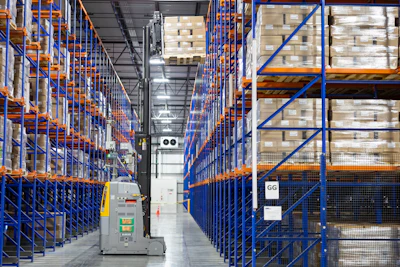
Warehouse management systems play a central role by providing real-time inventory visibility, improving traceability, reducing manual processes, supporting more accurate fulfillment and helping operators respond faster when conditions change.
In cold chain environments, visibility matters even more because products are perishable and timing is tight. Inventory accuracy and workflow discipline are operational necessities, not just concerns.
Consultative approaches to innovation
Not every improvement starts with a software purchase or fleet upgrade. Often, progress begins with a clear assessment of where friction exists and why. A consultative approach can help manufacturers identify growth opportunities, prioritize practical changes and implement solutions that fit operational realities.
That is especially valuable in cold chain environments, where logistics, manufacturing, quality and customer service are tightly connected and one change in one part of the system often affects several others.
Connecting the dots across the supply chain
Many manufacturers do not need another tool; instead, they need better connections across tools, teams and workflows they already have. An integrated supply chain brings logistics execution, warehouse visibility and manufacturing expertise into one operating model.
A useful example comes from a manufacturer that only handled products made within its own facilities until 2019. Then, one of the manufacturer’s dairy customers asked to warehouse and deliver some independently branded and produced items alongside products already being supplied to major retail customers. Rather than create a separate delivery stream, the manufacturer used its own network to move those products on the same trucks to the same endpoints.
The lesson goes beyond one company or network. When manufacturers align storage, fulfillment and transportation around how customers actually buy, complexity can decrease while value increases. Integrated distribution does not just reduce touches. It improves efficiency, simplifies execution and strengthens service.
Practical steps to take
Cold chain complexity is not going away, but it can be managed more effectively. Four priorities stand out:
● Invest in real-time visibility. Make temperature data, inventory status and operational alerts easy to access and act on.
● Improve end-to-end integration. Address disconnects across warehouse operations, transportation and production planning.
● Work with experienced experts. An outside perspective can help uncover root causes, not just symptoms.
● Prioritize sustainability and scalability. The best improvements reduce friction today while supporting growth tomorrow.
The path forward
Cold chain logistics is becoming more demanding, more visible and more important to business performance as service expectations rise, energy costs increase, infrastructure gaps persist and sustainability pressure grows. The good news is that innovation should reduce complexity, not add to it.
The path forward starts with identifying where friction is slowing the business today. From there, manufacturers can use better visibility, stronger integration and more disciplined execution to build resilience for tomorrow.