Food waste is a difficult problem to solve. It is a $540 billion opportunity, but one that has no easy fix. This is because small execution gaps compound quickly when store associates have dozens of competing priorities.
Amid the chaos of the in-store environment, most retailers treat surplus or near-expiry food as a late evening write-off. Store associates often deprioritize markdowns in favor of a lever that feels more urgent at that exact moment, such as product replenishment. Plus, the markdown process itself has historically been manual and slow, requiring associates to walk the aisles and audit expiry dates by hand.
Retail is a game of big numbers. Having a surplus of stock on hand, or significant produce that expires, repeated across thousands of SKUs and stores adds up to a meaningful hit to sustainability and margin by year end.
Given this reality, it is not enough to mark down prices just ahead of expiry. The printed expiry date does not communicate whether that item is actually likely to sell before that date. Store associates often lack the data inputs needed to markdown by the optimal amount, as well as the insight into when to do it. A 20% markdown at 10 a.m. might move the product much more than a 50% markdown at 7 p.m. will.
The retailers managing this well are shifting from treating markdowns as an end-of-day clean-up to a proactive margin lever earlier in the day.
The power of dynamic markdowns
Rather than relying on manual assessments, over the past few years grocers have introduced dynamic markdown strategies, which use real-time data, demand signals and machine learning to determine when products should be discounted and by how much. AI can recommend the right markdown price for an individual item, at an individual store, on an individual day, in a way that will improve sell-through. It adjusts based on SKU and how specific products sell as they approach expiry, rather than applying blanket logic to a box of pasta and a pre-packed sandwich.
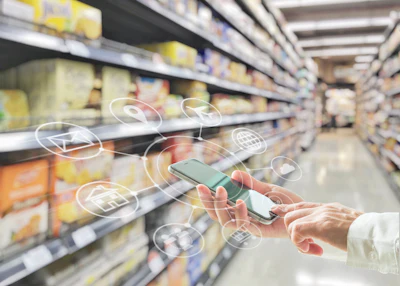
Dynamic markdowns must be paired with prompts, so store associates can easily fit it into their day and the markdown is made at the right moment. Using apps and connected store tech, retailers can serve up clear actions to the store team so they mark the item down now, at the right price, rather than waiting until it is close to the bin.
Grocers have also seen success integrating dynamic markdowns with electronic shelf labels (ESLs), increasing the reliability of the markdown happening at the right time.
Dynamic markdowns help save meals from landfills, but the technology can do even more. The reality is, dynamic markdowns focus on inventory that has already become a waste risk. It helps, but savvy retailers can go further with modern AI and machine learning.
The future of markdown strategy is predictive
AI can help retailers better track demand patterns, delivery data and historical product performance to identify the products that are likely to become waste. Retailers can then take action sooner, saving margin by avoiding steeper discounts and eliminating unnecessary food waste.
Sell-through trajectory matters here. Retailers can now combine how quickly a product is moving at the shelf, what hourly sales rates look like relative to the stock on hand and how many days of life remain, to get a sharper picture of where the real waste risk sits. The tools to surface those signals now exist. There is a major opportunity to shift the culture around markdowns, making it something that happens earlier based on data, rather than at 9 p.m. based on what is still on the shelf.
What this looks like in practice is getting ahead of the problem earlier, where the opportunity to mitigate the upcoming risk still exists. This is especially critical during the major trading periods for retailers, such as at Christmas and during the summer holidays. Another example is if a retailer invested in a fresh NPD promotion, and it simply undersold, leading to a major surplus of stock. If that does not get marked down until close to expiry, at that point sell-through is already a lost cause.
From an ordering perspective, visibility into those patterns - when and where retailers are overstocked - helps store teams understand where they are consistently ordering more than they sell. This feedback loop helps solve one of the most persistent drivers of waste.
Predictive retail starts with connected data
The new era of grocery is a connected ecosystem where inventory, pricing, replenishment, and operational data flows between functions. Instead of treating markdowns as an isolated event, retailers are creating feedback loops that connect what happens on the shelf to decisions made throughout the supply chain.
When sell-through signals feed back into buying decisions, teams can see where they have been consistently over-ordering. They can pull back before the problem repeats and see real shifts in margin and sustainability.
However, this predictive approach requires AI to have access to SKU level sales, delivery and store data, which is easier said than done. This is where stores are making investments today, improving the flow of their connected store data, to enable predictive models. Otherwise, they struggle with inventory accuracy. When it comes to AI adoption, most retailers need to focus on improving their data hygiene and data integration across the store to see ROI. Then, store associates need to be trained on new processes and educated, so they trust the data and take action.
The retailers that invest in their data processes now can manage the full lifecycle of fresh products with a precision that was not possible a few years ago. They can start making predictions around how to prevent waste the next time. The solution to preventing waste before it even starts is on the horizon.