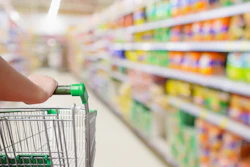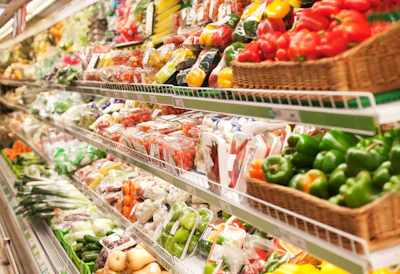
Every night, U.S. grocery stores clear shelves of food that didn’t sell. In fact, according to a new white paper from Too Good To Go, more than $384 billion worth of food goes unsold or uneaten annually in the United States, with nearly 45% of that surplus still safe to consume.
Grocery stores alone see roughly 30% of food go unsold each year, contributing to an estimated 16 billion pounds of retail food waste.
That’s because food prices are 20% higher than they were four years ago, margins remain tight, and consumers are increasingly price-sensitive. At the same time, unsold food accounts for 24% of landfill inputs and 15.5% of U.S. freshwater use, even as 47 million Americans experience food insecurity.
Key takeaways:
· The report identifies key drivers of surplus at the retail level, including date label confusion, overproduction, handling errors, and spoilage.
- Nearly half of unsold food is still edible, representing significant margin recovery potential.
- One independent grocer recovered more than $47,000 in incremental revenue while adding less than four minutes of daily operational time.
- 41% of consumers purchasing surplus items report making additional in-store purchases, increasing overall basket size.