The most expensive mistakes in retail aren’t made in the boardroom, they happen quietly on the shop floor, when a markdown is missed or incorrectly executed, a new process gets skipped, or a store associate simply doesn’t have the bandwidth to act on what the system is telling them to do.
Recently, more grocers have been investing heavily in connected store technology. From robotics to AI and electronic shelf labels (ESLs), all new technology investments are expected to improve margin, increase sell-through, reduce waste, improve workflows and streamline real-time inventory tracking.
The reality is that these are often significant CapEx investments and don't always deliver the expected return. Not because the technology doesn't work, but because hardware alone cannot solve operational challenges when the workflows aren't designed around the realities of frontline labor.
Connected store ambitions are running into a workforce reality
Everyday, connected store operations are running into a workforce issue. As teams gather data and implement AI technology across stores, the most consistent gap is between the data insight and in-store action.
In fact, grocers are often bombarded with data. The best-laid head office plans frequently have gaps in visibility at store level. New technology tends to get thought of as automated, but in reality it still relies heavily on labor, and we all tend to underestimate that.
What happens in practice is that technology adds new requirements to the job role, and anything that adds additional steps for frontline employees is unlikely to be well received. Simplification has to be prioritized. Additional requests to update ESLs or check on-shelf availability based on AI prompts need to take into account store associates' existing workflows and tight bandwidth.
With the rise of e-commerce, store associates now have to take on fulfillment orders in-store, because most grocers can't add additional labor resources. Teams are forced to juggle more responsibilities. It's then that everyday execution tasks, like markdowns, fall through the cracks, along with any new processes put in place to support connected store technology.
When that happens, the AI systems that depend on accurate shelf-level and operational data start to break down. Unreliable data produces unreliable outputs, and store teams stop trusting the prompts they receive.
Grocery isn’t one size fits all
A process can look simple on paper and be complex in practice.
For example, let’s say the head office team decides: ok, let’s combine our AI technology with ESLs and have the store team implement dynamic markdowns at 10 a.m., after the morning deliveries happen at 9 a.m. Sensible on paper. But in practice, especially with smaller retailers, things don’t go as planned. There’s road closures, deliveries get delayed, staffing issues, online orders suddenly scale. Soon enough, it’s 3 p.m. and those markdowns still haven’t happened.
This is why a one-size-fits-all approach doesn’t work in grocery. Every technology implementation needs to take into account what’s happening on the floor of that specific store. Some stores see bigger lunch rushes, others have larger turnover challenges. Connected stores are still powered by human-led execution, and no amount of technology changes that.
How to maximize ROI in the connected store
Most grocers already have the foundational technology in place. So how do they enable store teams to better operationalize it?
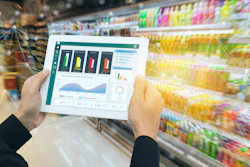
Connected store investments only create value when workers can respond to data-driven issues quickly and consistently. Employees need systems that help them prioritize what is most critical to address next. This shift toward real-time prompted execution can come in various, easy to use forms. Integration into apps that employees use in their day-to-day makes AI-powered alerts and guided workflows easy to follow. Technology should also reduce decision fatigue for employees and be specific. If the prompt is generic it can be misinterpreted or ignored. If a store associate is told to check a shelf for an availability issue but sees the product still on the shelf, they stop trusting it. Simplicity, specificity and time savings are the levers.
A good example of this is AI-driven prompts for markdowns. Rather than having a colleague wander the aisles checking every SKU, the prompt tells them exactly what to mark down and what price to reduce it to, so the right product gets discounted at the right time. That's not just a better colleague experience; it's the difference between recovering margin on a tray at 10 a.m. and scrapping it at 6 p.m.
The grocers who get the strongest results from connected store technology also start with pilot programs. They spend significant time in-store understanding the specific operational challenges that location faces. Then, they customize their technology to fit into the actual workflows their frontline associates are working within. Seeing real results from predictive AI requires tying it directly into store-level execution, so that action happens before margin or inventory issues escalate.
The future of connected retail depends on store execution
The connected store transformation isn't a technology initiative; it's an operational and workforce challenge. Technology can speed up workflows and reduce lost margin, but it cannot compensate for broken execution. In grocery retail, the future of AI will depend less on the sophistication of the models, and more on the industry's ability to work with frontline colleagues to make sure those models actually drive action on the shop floor.