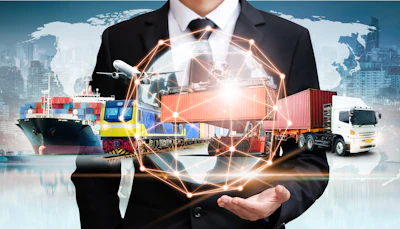
Economist Impact launched the Future of Trade, a multi-year initiative designed to chart a roadmap to better understand – and prepare for -- key forces reshaping global trade systems, such as rapid technological acceleration through AI and automation, escalating climate disruption, and intensifying geopolitical competition.
“Global trade has moved from a focus on efficiency to a landscape defined by risk, rivalry and weaponization,” says John Ferguson. “Our new Future of Trade initiative aims to provide leaders with evidence-based insights to move beyond reactive strategies and shape a system that delivers stability, growth, and opportunity for all.”
Key takeaways:
· Through rigorous research and strategic convenings that bring together governments, businesses, academics and civil society, the initiative will generate independent, evidence-based insights designed to build consensus and identify practical pathways toward a more resilient, inclusive, and sustainable global trade framework.
· The partnership with UN Trade and Development (UNCTAD) will elevate global debate and engagement, delivering high-quality data, analysis, and insights to advance an open global economy.
- The chart interrogates how trust can be rebuilt in a new trade order shaped by geopolitics, climate change, and an AI-driven industrial transformation by solving key questions such as “How do we restore the multilateral system in this new chapter of global trade?” and “What are the new rules, processes and structures needed to renew cooperation and trust?”
- It examines how digital and environmental trade can be strengthened in an AI-driven global economy by addressing challenges such as “How can digital trade benefit all economies rather than a minority in advanced markets?” and “How do we strike the right balance between trade and environmental objectives to meet global climate goals?”
- And, it explores how AI-driven supply chains and trade networks can withstand an era of persistent uncertainty and disruption by tackling questions such as “How do we ensure trade and supply chains remain resilient in a world of permanent volatility?”
- The next phase of the initiative will explore critical questions across these priorities, from “How can narrower partnerships rebuild trust in a rules-based system?” to “Which governance models ensure interoperability, data security, and cross-border trust?”
- Economist Impact will collaborate with partners and convene experts to answer these questions and shape the next chapter of globalization in a way that is open, participatory, and rules-based.
“History shows that recovery is possible. Trade collapsed in the 1930s but was rebuilt over decades of institution-building and liberalization. Today, the same resolve is required,” says Ferguson. “The Future of Trade will generate original insights and evidence in pursuit of building a new trading order that is inclusive, resilient, and sustainable.”