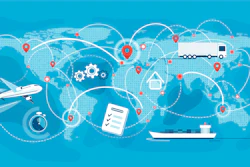
Disruption of international supply chains are a major systemic risk for Europe and countries beyond, alongside food insecurity, energy instability and financial stress.
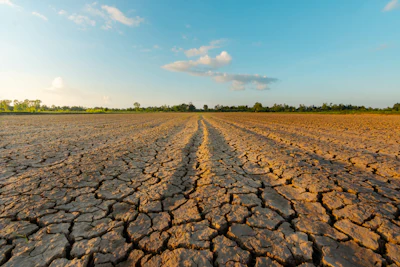
“Climate shocks are now driving supply chain shocks, cascading through interconnected networks rather than remaining isolated disasters. As local weather extremes ripple through interdependent systems, they can quickly become global shortages and delays that threaten economic security,” says Dr. Mikael A. Mikaelson, policy fellow at Stockholm Environment Institute (SEI). I
That’s why insurance and reinsurance, the financial mechanisms normally absorbing these shocks, are being tested by the growing complexity, frequency, and severity of climate hazards.
An SEI report examines how these sectors are responding to climate change challenges and the emerging limits of traditional risk-transfer models.
Key takeaways:
• The physical and financial foundations of insurability are eroding. As hazards increase in number and intensity, assets concentrate in exposed regions and correlated losses across portfolios are undermining the principle of diversification on which (re)insurance depends, accelerating market withdrawals and widening protection gaps.
• While innovative solutions, such as parametric products, Contingent Business Interruption (CBI) cover and resilience-linked assessments, offer valuable tools, they are limited in scope and reliability.
• The scope of insurance coverage remains narrowly focused on assets and direct damages, excluding slow-onset, indirect and social dimensions of climate risk. Climate-related risks to human health and productivity among supply chain workers are particularly under-recognized.
• Structural and technical limits, including reliance on historical data, incomplete climate-adjusted modelling, and fragmented risk metrics undermine insurers’ ability to anticipate systemic exposure. There is a need for harmonized standards and forward-looking, probabilistic models.
• Short-term underwriting cycles and annual repricing prevent insurance from supporting long-term adaptation, since the focus on immediate solvency and profitability conflicts with the multi-decadal nature of climate risk.
• Risks to labor in supply chains are effectively invisible to current life and health insurance systems, particularly in physically exposed roles such as agriculture, construction, and logistics. Workers in such roles often fall outside formal insurance systems, and even when insured, climate-related illness, productivity loss, or mental health impacts are rarely recognized or compensated.
“Insurance alone cannot manage systemic climate risk. Without stronger adaptation, better data, and coordinated public–private governance, risk transfer will increasingly fail where resilience is needed most,” says Mikaelson. “Climate risk is becoming systemic faster than insurance systems can adapt and when losses can no longer be diversified, insurance stops working as designed.”