As food safety breaches and recalls continue occurring regularly, many companies across the food industry still manage product risk in disconnected parts. Handling testing, traceability, and recalls separately delays recall decisions that could increase public health risks. A connected approach, on the other hand, creates a seamless end-to-end system that enables supply chain partners to identify risk, act on it, and resolve it.
The core problem: Food safety systems haven’t kept pace
The tools for modern food safety management already exist. Rapid testing kits can identify contamination at the source. Digital traceability systems can map product movement across global supply chains. Real-time recall management platforms can deliver recall information instantly. But, unfortunately, food companies have been slow to adopt these tools, making food safety and recall efforts more difficult, time-consuming, costly, and potentially damaging than they should be.
Ultimately, keeping consumers safe during a recall relies on how quickly a company can move from identifying a risk to acting upon it. When companies use disconnected or manual systems, they can’t identify risks early, share critical information immediately, pinpoint product location precisely, or create an audit trail automatically.
Data quality and accessibility are often barriers to effective food safety. During a recall, multiple data points must come together to paint the full, actionable picture of what product is affected, who has it, and what needs to be done to get it safely out of supply. From lab results to distribution details, to customer contact data, to purchase records, keeping data in siloed databases or outdated Excel files makes it hard to get the right information to the right people. If records are incomplete, outdated, poorly formatted, or hard to access, it hinders fast, coordinated action.
Inconsistent, unreliable, or disconnected information creates serious operational risks, including:
- Delayed decisions and action: Teams spend considerable time trying to interpret information or manually tracing lots before acting.
- Incomplete visibility: Contaminated products can remain in the marketplace longer than necessary, prolonging public health risks.
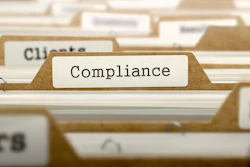
- Regulatory gaps: Clear, accurate compliance documentation for audits or internal review are hard to compile and use.
The opportunity: A connected supply chain
A connected approach unites every part of food risk management—including detection, traceability, execution, and resolution—into an interoperable, coordinated system. This bridges the gap between information and action.
With today’s modern food safety tools, a streamlined recall workflow is possible:
- A test confirms contamination or labeling risk.
- Product data is matched to distribution and shipment data.
- Targeted recall alerts go out to affected trading partners with clear, step-by-step instructions.
- Trading partners take proper action, which is time-stamped and logged for compliance review.
The goal is not just to collect data, but to connect it, transforming siloed systems and disjointed workflows into a unified process that identifies, tracks, and mitigates risk. With connected systems, each data point triggers the next proper step. Detection of a food safety breach informs traceability systems. Traceability data enables recall communication. Clear, accurate communication drives proper responses. Recall action confirms compliance and public safety. Early alerts, automated tracking, and complete visibility empower teams to make informed decisions—and take proper actions—to mitigate risks and minimize damage.
Connecting food safety systems helps ensure that accurate data flows forward and backward once a risk is identified. That way, every trading partner can take immediate actions to protect public health, plus reduce risk, manage business disruption, minimize reputational damage, and control associated costs.
What a connected system looks like
A connected system accelerates every step, from detection to action. First, rapid testing identifies risk early in the production or distribution cycle. This early detection helps trading partners pull potentially unsafe foods before they enter the marketplace. Results can automatically be integrated into a traceability system, with product identifiers that allow trading partners to identify and pull affected product quickly and completely.
This data helps automate recall communications, notifying the right people and providing clear, actionable instructions. Real-time dashboards track who has received, responded to, and completed the necessary actions. The system logs every step into a detailed record, supporting compliance requirements.
What companies should be doing now
Evaluate your testing, traceability, and recall systems. Do they talk to each other? Where is manual work slowing you down? Also, look for solutions that will enable more collaborative, seamless work with supply chain partners. Implement systems that trigger fast, accurate actions, creating a more resilient, transparent, and compliant supply chain. Practice simulations with your supply chain to uncover gaps and refine the process. Invest in a culture of safety and readiness, where decisions are guided by data and supported by systems designed to act fast and mitigate risk.
A food safety incident is not the time to improve disconnected systems.
Doing it now is in everyone’s best interest—companies, supply chains, and consumers all benefit from faster, more accurate, and more effective responses to potentially harmful situations. Companies that connect detection, traceability, and recall execution into one continuous workflow are faster to act, easier to audit, and better positioned to protect the public when it counts.