Packaging has traditionally been viewed as a way to protect food products from damage, contamination and quality loss. However, as food supply chains become more complex, packaging decisions are increasingly connected to broader operational challenges, including transportation efficiency, warehouse utilization, product waste and recovery processes.
For food manufacturers, retailers and logistics providers, the question is no longer simply whether a package can protect the product.
The more important question is whether the packaging system can continue to perform efficiently throughout the entire supply chain.
A package that uses fewer materials may appear to be a more sustainable choice. However, if that reduction leads to higher damage rates during transportation, more product losses or additional operational challenges, the overall environmental impact may increase rather than decrease.
Packaging improvements should not simply move problems from one stage of the supply chain to another.
Packaging efficiency starts before transportation
The performance of food packaging is often determined before products enter warehouses or distribution networks.
For products such as meat, seafood and ready-to-eat meals, packaging must satisfy several requirements at the same time. It needs to protect the product, maintain quality during storage, support efficient handling and withstand the physical conditions of transportation.
These requirements are especially important in third-party logistics (3PL) operations, where products may move through multiple stages, including cold storage, pallet handling, transportation and retail distribution.
Small design decisions made during packaging development can influence supply chain performance. Tray dimensions can affect stacking efficiency. Structural strength can determine whether products remain stable during transportation. Closure performance can influence leakage risks and product damage.
This means packaging is no longer only a manufacturing consideration. It has become part of supply chain planning.
Reducing packaging complexity without creating new challenges
Food packaging often requires additional components to achieve specific functions.
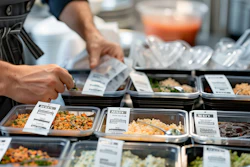
Fresh food trays, particularly those used for meat and seafood products, frequently rely on absorbent pads, adhesives and labels to manage liquid release and maintain product presentation during storage and transportation.
These components serve important purposes. However, they can also introduce additional complexity into the packaging system.
 Manluen Pack
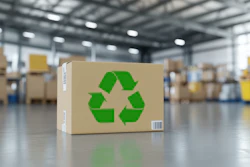
A recyclable PET tray, for example, may still face challenges in real-world recovery systems when combined with absorbent materials, adhesive layers or food residues. These additional elements can affect sorting efficiency, material separation and the quality of recycled material.
This creates an important distinction between technical recyclability and practical circularity.
A package may be made from a recyclable material, but achieving efficient recovery depends on how the complete packaging system is designed and managed.
Structural design can improve packaging performance
To address these challenges, packaging engineers are increasingly exploring ways to integrate more functions directly into the package structure itself.
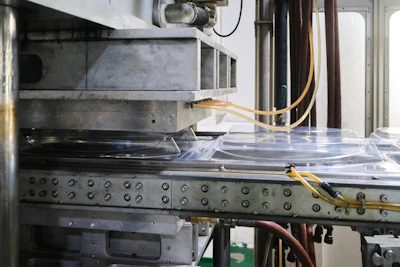
For thermoformed food trays, a new design approach is emerging that uses structural features within the tray itself to manage liquid release, improve stacking performance and reduce reliance on additional components. Instead of adding separate materials to solve individual challenges, packaging designers are developing structures that can provide better control and functionality through geometry and material distribution.
This approach represents a broader shift in packaging development: moving from adding more components toward creating smarter packaging systems through engineering design. By improving the connection between structure and function, packaging solutions can better balance product protection, operational efficiency and recycling potential.
Sustainability through better system design
Sustainable packaging is often discussed through the lens of material reduction and recyclability. However, long-term improvement depends on how efficiently the entire packaging system functions.
 Manluen Pack
Reducing unnecessary materials can provide environmental benefits, but only when product protection and logistics performance remain stable.
A lighter package that increases food waste does not create a meaningful sustainability improvement. Likewise, a recyclable package that cannot easily enter existing recovery systems may struggle to achieve circular outcomes.
Future packaging development will require a broader balance between protecting food quality, improving logistics efficiency, reducing unnecessary materials and supporting realistic recovery pathways.
The most successful packaging systems will not simply be the lightest. They will be the systems that deliver better performance across the entire supply chain.
Conclusion
The future of food packaging will depend on more than selecting recyclable materials or reducing package weight.
As supply chains continue to evolve, packaging design will increasingly influence transportation efficiency, operational reliability and sustainability outcomes.
The next generation of packaging solutions will focus on creating systems that protect products while reducing unnecessary complexity and supporting more effective recovery.
By connecting packaging design with real supply chain requirements, the food industry can move toward solutions that improve efficiency, reduce waste and create more resilient distribution networks.