For food and beverage supply chains, cold storage is no longer a simple question of capacity. With a market shaped by volatile demand, tighter production margins, and more stringent handling requirements utilizing aging infrastructure, today’s management teams are navigating strategic obstacle courses to protect quality and reduce waste.
When geopolitical conflicts reroute supply overnight, extreme weather compresses harvest windows, delays transportation, or interrupts production, or when plant renovations and relocations increase demand for temperature-controlled space, the cold chains that perform best are those that can add capacity quickly, adequately protect product, and maintain service levels without locking in long term infrastructure commitments. In an ideal logistical management paradigm, the focus shifts from whether there is enough refrigerated capacity, to whether the right kind of capacity is available at the right time, and in the right place.
This is a crucial distinction. The broader cold storage market is cooling; Newmark’s 2H 2025 U.S. Cold Storage Market Overview found that cold storage vacancy has elevated even as underlying demand swells. In practical terms, these concurrent trends indicate that decision makers are being more selective with cold storage commitments: Modern, high-efficiency cold storage facilities are capturing a larger share of the market, while aging facilities are failing to adapt to evolving market structures. For food companies, refrigerated space is valued most when flexibility, compliance, energy performance, and operational savings are increasingly prioritized over raw capacity.
To that end, modular cold storage is becoming more strategically relevant. Building permanent refrigerated infrastructure can make sense for servicing long-term, stable demand, but it also requires significant lead time, capital, and confidence in consistent market demand.
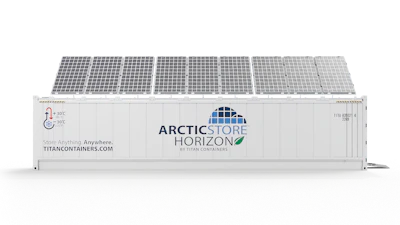
Food businesses—increasingly—lack that certainty, and are thus treating refrigerated capacity management dynamically, with modular systems to add capacity where and when it is needed. In practice, modular cold storage refers to self-contained, temperature-controlled units or connected container-based systems that are most often leased and can be delivered to a site. They can be installed quickly and can supplement existing cold or frozen storage space without the long lead time and frontloaded costs of permanent construction and associated permitting – reducing upfront construction costs by 20-30% annually. Once that surge in demand concludes, operators can scale back or return these cold storage units, freeing them and their budget from permanent overhead cost increases that may not align with future needs.
These benefits are applicable across the food industry. For food businesses, these upgrades reduce operating costs and support sustainability goals while strengthening product protection, and reinforcing traceability and product segregation to optimize shelf life, enhance quality control, and ensure regulatory compliance.
The flexible deployment of modular storage can directly contribute to ensuring that food makes it onto distributor shelves. According to Food and Agricultural Organization (FAO) data, 526 million tons of food, around 12% of the global total, are lost or wasted due to insufficient refrigeration. Modular cold storage can help mitigate this product loss by reducing dwell times in uncontrolled environments. This is particularly true for fresh produce, for which on-farm modular solutions can be deployed in these situations to quickly add capacity, even in remote locations when containers are paired with solar or battery solutions to store harvests immediately, mitigating product deterioration and loss.
Modular cold storage can also help operators stay current with both energy performance and operational standards. Because these units can often be leased, instead of owned and operated for decades, providers have an incentive to keep fleets updated with newer refrigeration systems, improved insulation, advanced cooling technology, and modern compliance features that align with changing food safety and storage expectations. These innovations can cut operational energy costs by up to 30 %. These improvements to technology also allow for increasingly sophisticated systems that can help automate monitoring processes, and trigger interventions when necessary; these include continuous temperature tracking, temperature or condition variation alerts, and system diagnostics, which can help identify performance issues before they escalate into equipment failure or significant product loss.
Decentralized cold storage warehousing can also support downstream distribution and delivery. With the rapid popularity increase in direct-to-consumer distributions, and with online grocery logistics increasing 20% in recent years driving the expansion of micro fulfillment centers, adequate, reliable and affordable refrigeration measures increase the efficiency of operations and deliveries alike.
Traditionally built and designed cold storage still maintains an important function in stable use cases. But for businesses facing seasonality, supply chain disruptions, or uncertain growth—which can happen to any business, at any scale—modular cold storage offers ways to add capacity, reliability, and efficiencies without overcommitting to permanent infrastructure prematurely. When change becomes a constant, and the links in supply chains are constantly tested by external pressures, the focus to prioritize systems that can flex with demand becomes critical to success; static capacity stagnates, while variability is viability.
In the new economic environment, refrigerated space is no longer just a fixed asset, but its own vertical in which organizations can develop a competitive edge, and improve their abilities to provide for producers and consumers alike in any market.