Driven by sustained consumer demand and significant investments in automation, the food logistics market in the United States is now estimated at $180 billion. This growth means food distributors are handling a wider range of goods and executing more frequent stock movements than ever before. This rapid transformation had created a complex, often congested warehouse environment where human workers, specialized material handling equipment and various forms of automation operate in close proximity. This intensified blend of activity highlights a critical industry need: deploying new technologies that can ensure safety and maintain compliance with compromising the essential goal of improving productivity and controlling costs.
The limitations of traditional anti-collision systems
As warehouses grow busier and product ranges expand, the number of forklifts and people working side by side has increased. These shared spaces create a higher risk of collisions and injuries, particularly as operations accelerate to meet demand. Many companies have introduced automation and safety technologies to help, but traditional systems often struggle to deliver the reliability and intelligence needed in fast-moving warehouse environments.
Conventional anti-collision tools such as RFID tags, ultrasonic sensors, and basic LiDAR each have significant drawbacks. Wearable tags rely on workers remembering to wear them, leaving gaps in protection. Ultrasonic sensors can detect that an object is nearby but cannot identify what it is, while LiDAR systems can be costly and provide limited context for decision-making. Because of these constraints, many warehouses still depend on operator awareness alone, which is increasingly unsustainable as sites become more crowded and complex.
Spatial awareness as a solution
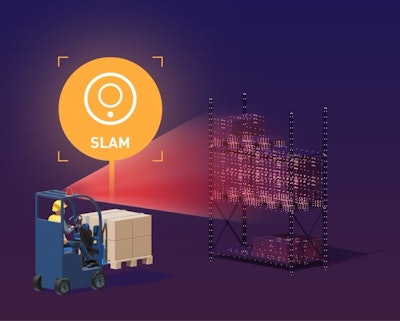
Spatial awareness technology gives machines a real understanding of their surroundings, allowing them to recognize not only where they are but also what is around them. On a forklift, this means being able to distinguish between a person, a pallet, or a misplaced object and respond appropriately in real time. This level of understanding is critical in busy warehouses where people and vehicles frequently cross paths.
By using intelligent cameras and advanced spatial AI, forklifts can map and interpret their environment accurately. This information can then be streamed through real-time locating systems (RTLS), turning vehicles into connected, intelligent assets that can track their own movement and detect nearby workers or obstacles. These insights allow the system to alert drivers to potential risks before they happen, improving both safety and traffic flow across the warehouse.
Unlike older safety systems that simply detect an object, spatial awareness provides context. It can tell when a person is in a safe walkway or directly in a vehicle’s path, reducing false alarms and helping operators maintain trust in the technology. In this way, spatial awareness combines the goals of productivity and safety rather than forcing a trade-off between them.
Improving safety and efficiency at the same time
In food logistics, time and safety are equally critical. Products must move quickly through the supply chain to stay fresh, but the speed and density of activity in warehouses can increase the risk of accidents. Spatial awareness technology bridges this gap by allowing vehicles to move confidently at higher speeds while maintaining a precise understanding of their surroundings.
By reducing the likelihood of collisions and unnecessary stoppages, this approach keeps both people and goods moving efficiently. The result is a warehouse environment that is safer, faster, and more predictable. Fewer disruptions mean lower insurance and downtime costs, while improved traffic flow and throughput directly support leaner, more cost-effective operations.
As retailers and distributors continue to expand product ranges and face pressure to control margins, solutions that deliver both safety and efficiency will become essential. Spatial awareness enables that balance, creating smarter warehouses where people and machines can work together seamlessly and at speed.