The warehouses for food and beverage facilities are high-risk environments for workers. From slips, trips and falls and repetitive strains, to being struck by moving vehicles or a fall from height, storage facilities can be busy and dangerous places. While operators know and understand the risks well and take steps to prevent accidents occurring, there is one danger to workers that is often overlooked – the risk of arc faults.
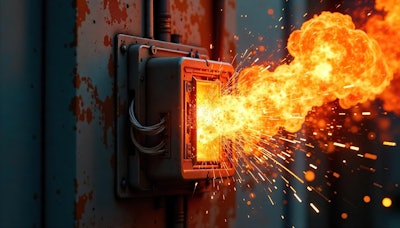
This phenomenon happens in a split second without warning, producing an arc flash, four times hotter than the surface of the sun. It can vaporize metals and cause a blast radius which propels everything in its path. In a storage facility it can quickly ignite combustible raw or packaged goods (such as flour, sugar and freeze-dried coffee) and vapours (from alcohol) in the atmosphere, catalysing the risk to workers.
Usually in a fire situation, there are warning signs - maybe smoke or a fire alarm that gives you time to limit the damage and move people to safety. But this is certainly not the case with an arc flash.
How worried should you be about arc faults?
Arc faults don’t happen every day, but they are not an uncommon occurrence either. The exact number of arc faults that occur each year is not quantifiable because they are not often recorded in national statistics. However, in the United States, OSHA puts the figure at between 5-10 incidents a day. Arc faults can take place in different types of locations and buildings, but one of the most commonly reported is manufacturing facilities, including food and beverage factories.
The high risk to life is of most concern when it comes to arc faults, as workers in the vicinity of an arc flash will almost certainly be injured, sometimes fatally. In the United States, it’s estimated that 30,000 injuries are caused by arc flashes each year. The human toll of such incidents is unacceptable and preventable.
While we count the human cost first, there are also additional consequences for operators from arc faults. In a warehouse setting, raw materials or finished goods can be damaged or destroyed (including from loss of power to refrigeration units or smoke damage), plus there is the cost and disruption of the subsequent unscheduled downtime and missed fulfilments.
The good news is that although arc flashes happen without warning, they are preventable.
4 steps to prevent arc faults
1. Start with an audit
Protecting workers from arc flashes starts with taking care of electrical assets. Electrical faults are often caused by poorly maintained electrical equipment or old, improperly installed equipment so a full asset audit is the ideal starting point for an arc flash prevention plan.
A good arc fault assessment should identify the major contributing factors to arc fires; design and installation errors, signs of aging or wear like worn or damaged insulation, maintenance or repair backlogs, or where environmental influences (dust, small animals, corrosion etc) are making electrical equipment unsafe. This information provides the insights needed into the unique electrical safety issues within a warehouse to devise a robust preventative maintenance system to lower the risks to workers and the facility.
2. Don’t overlook the human element
While an arc flash is an electrical fault in essence, there is also an important human element to their occurrence which should not be overlooked. This ranges from missed opportunities for repair and maintenance to human errors such as dropped tools or accidental contact with energized parts during operation, maintenance or modification which can also cause arc faults.
Ensuring everyone who deals with electrical assets within the warehouse environment – regardless of roles or areas of the business – is properly trained and competent is essential to reduce risk. It’s also worth doing dedicated training on electrical safety, so that everyone can visually identify potential hazards that could cause an arc fault. Prevention is key to saving lives and reducing injuries.
3. Using technology to support safer operations
In the same way that advanced automation and robotics, wearable technologies and AI are making warehouses safer for workers by reducing severe injuries and occupational hazards, there is also technology which can reduce the risk of arc flashes.
The most obvious one is dedicated arc-protection equipment for medium voltage switchgear and low voltage switchboards which will disconnect a circuit immediately if any type of arc fault is detected. Some equipment has arc detection or arc quenching integrated as standard, but it can also be retrofitted.
Digitalization also offers arc safety benefits. For example, if assets such as power distribution, HVAC and refrigeration equipment use digital monitoring and diagnostic tools, you can track their health in real-time and detect issues as they arise. Digital tools can also flag up issues such as voltage spikes or transients, which can cause arc faults. With advanced data analytics and AI, this can be taken a step further with predictive maintenance solutions which detect potential equipment issues before they happen.
Digital monitoring can be implemented as part of a complete safety and assessment management system to bring all of a warehouse’s data related to network faults and asset health, alongside energy consumption information and even cybersecurity vulnerabilities, together in one place.
4. Balancing continuous operations and maintenance
Food and beverage storage facilities and warehouses are operational 24/7 to preserve the integrity of the goods stored and ensure they are kept in optimum condition for customers. But operating electrical equipment – whether that be chillers and deep freezers or power distribution units – around the clock without proper maintenance can be very costly in the long run as opportunities to identify and rectify problems pass quickly.
To reduce the risk of arc faults, operators need to balance continuous operations with planned and reactive maintenance. This can be done with a multiphase approach by using insights gathered from an electrical asset audit and digital monitoring to prioritize critical issues first. These safety and mission-critical items can be added to a road map to tackle and solve before establishing continuous monitoring and preventative maintenance to protect the health and wellbeing of all equipment in the warehouse.
Arc flashes are the hidden danger in warehouse facilities, but with a preventative, safety-first approach, warehouses can reduce the risk to workers, assets, goods and business continuity, and ensure these high-risk occurrences are shelved for good.