In food and beverage logistics, the conversation around safety and security has traditionally focused on warehouse floors and over-the-road transportation. Manufacturing plants and distribution centers have refined processes to minimize forklift incidents. Telematics offers new layers of driver oversight. In-cab temperature-monitoring tools have become standard safeguards for cold chain fleets. AI-enabled cameras now help detect distracted or unsafe driving behaviors before they result in accidents.
Yet between the dock and the highway, yard operations have long been treated as a buffer zone, a holding area where product simply waits for its next move. That mindset is changing. More organizations are recognizing a direct link between yard conditions and worker injuries, cargo theft, temperature excursions, service performance, and ultimately, the financial health of the business.
Why the yard stands out
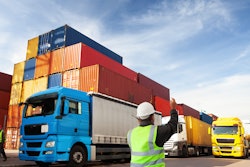
The yard is a busy convergence of people, equipment, and inventory. Workers move on foot alongside yard trucks, trailers, and forklifts. Trailers arrive at unpredictable times. Priorities shift throughout the day. Weather changes quickly. Cold chain freight adds additional layers of urgency and handling considerations.
Much of this activity occurs under time pressure. When information is incomplete or delayed, workers improvise. And that is when mistakes happen.
According to the Bureau of Labor Statistics, transportation and warehousing continues to experience one of the highest workplace injury and illness rates among major industry sectors. Many of these incidents stem from vehicle contact, slip hazards, and equipment operation near crowded traffic areas. The yard contains all of these risk factors in one concentrated space.
What makes the yard particularly challenging is that it has not benefited from the same rigor applied inside the warehouse. While warehouse processes have been standardized, digitized, and continuously optimized, yard operations often still rely on binders, whiteboards, and radio calls to direct activity.
Compared to highly structured receiving and picking operations, the yard functions more informally. Even in large networks, priorities often exist only verbally. During shift changes, direction gets lost. As a result, organizations struggle with mis-spotted trailers, delayed dock activity, safety near misses, and costly detention.
Communication breakdowns
The most common source of yard-related risk is straightforward: information does not reliably reach the right people.
A refrigerated trailer may arrive earlier than expected. Without clear communication from the gate to the jockey team or receiving dock, that trailer may sit beyond its allowable temperature window. Product quality can deteriorate within hours. The receiving team eventually discovers the load, but by then, corrective action may be too late.
Similarly, a spotter may be told to move a trailer to a specific door without knowing the dock is not ready. Forklifts assume the door is clear, only to reverse into a newly parked trailer. These situations unfold daily, not because workers are careless, but because they must act without complete information.
Communication tends to fail at hand-off points. The most vulnerable transitions include gate to yard, yard to dock, dock to warehouse, and shipper to receiver. Any breakdown across these touchpoints slows movement and increases risk.
Training and consistency
Another persistent challenge is training. The yard environment experiences more turnover than other operational areas, and many workers learn by shadowing colleagues rather than through structured, role-based skill development. Without formal training, workers develop inconsistent approaches to safe pathways, load priority, and escalation.
This inconsistency fuels improvisation. And improvisation, especially around heavy equipment, increases the likelihood of injury.
Safety is not only procedural. It is cultural. Training must be refreshed, reinforced, and aligned to how the yard actually operates. When that alignment is weak, employees become less confident, decision-making slows, and small errors compound into bigger ones.
Equipment management
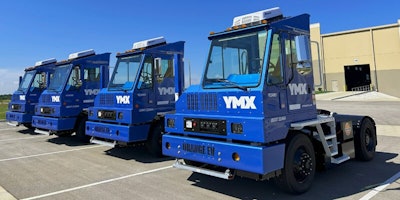
Equipment reliability is another critical element of yard safety. A yard truck with unreliable brakes or a forklift with limited visibility introduces risk to workers and product. Poorly maintained equipment can stall in active drive lanes or force operators to take suboptimal routes, increasing congestion and confusion.
Refrigeration units require particular attention. When temperature-control equipment fails, especially in remote corners of a yard, the result can be product loss, chargebacks, or regulatory exposure. Consistent inspection and maintenance routines are essential to protect both workers and product.
The data gap
Inside the warehouse, operators rely on robust performance metrics to evaluate throughput, cycle time, picking quality, and labor efficiency. Yard operations often lack similar visibility.
Many organizations cannot answer basic questions:
● How long has a trailer been on-site?
● Where is it parked?
● Is it loaded or empty?
● Does it require priority?
Without this information, it is difficult to reduce congestion, improve routing patterns, or identify repeat safety hazards. Leaders cannot benchmark incident rates or spot operational patterns. Near misses are not captured or analyzed, so opportunities to learn and improve are lost.
The absence of yard visibility also increases exposure to theft. According to CargoNet, food and beverage products remain among the top categories targeted in U.S. cargo theft. Many of these incidents occur not on the road, but at unsecured or poorly supervised facilities. Without strong custody control, it becomes easier for a bad actor to impersonate a driver or redirect freight.
The role of technology
Technology plays an important supporting role in enhancing yard safety and security. While people, process, equipment, and training remain foundational, digital tools can streamline routine tasks, reduce human error, increase visibility, and help teams make better, faster decisions.
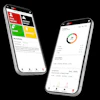
At the gate, automation improves how drivers, equipment, and cargo enter and exit a facility. License plate recognition, computer vision, and trailer auto-identification capture key details such as tractor and trailer IDs, timestamps, and refrigeration status as soon as an asset arrives. This reduces manual data entry, improves accuracy, and builds a reliable inventory record.
Digital visit management adds control by combining appointment information, electronic documentation, and pre-arrival driver registration. Self-service check-in through kiosks or mobile devices reduces congestion and shortens turn times. Where cold chain integrity is essential, automated temperature and seal checks ensure exceptions are flagged immediately rather than hours later.
Gate automation also strengthens security. Identity validation confirms inbound equipment is authorized, while photo and video capture creates a visual record that supports both theft prevention and incident investigation. In some operations, remote monitoring and automated alerts notify security teams of suspicious activity.
Across the yard, technology helps coordinate movement by linking gate data with warehouse, transportation, and dock workflows. Parking or door assignments can be automatically recommended, and spotters can be guided efficiently based on appointment and capacity. Cold-chain sites benefit from continuous refrigeration status monitoring, improving response time and preventing product loss.
These tools do not replace structured operational practices. Instead, they help enforce them, reducing friction at hand-offs and grounding decisions in accurate, timely data. When used well, technology supports safer operations, stronger chain of custody, and a more predictable environment.
Rethinking the yard: A system, not a space
Because yard-related risk stems from training gaps, equipment variability, process inconsistency, and information loss, the answer is not simply to add technology. The solution requires a foundational shift: treating the yard as an operating system rather than an overflow lot.
A yard operating framework creates structure and discipline. It defines how information moves from gate to dock, how priorities are communicated, and how work is handed off. Standard operating procedures help ensure operators execute movements consistently, regardless of shift or experience. Clear roles and boundaries reduce guesswork and improve decision-making.
Within this framework, training becomes more targeted, equipment maintenance becomes proactive, and data drives continuous improvement.
The result is a safer, more predictable yard. Refrigerated loads do not sit unattended. Personnel know where to go and when. Gate officers do not rely on handwritten notes. Organizations gain a clearer understanding of freight movement and the vulnerabilities that need attention.
A foundation for safer supply chains
Worker safety and cargo security in the yard are deeply connected. When information is clear, training is consistent, equipment is maintained, and data informs decisions, yard operations become less chaotic and far more resilient.
This reflects the direction of the most forward-thinking food logistics organizations. They recognize that the path to safer, more secure operations is built not just with tools, but with structure and operational discipline.
The yard must now be managed with the same rigor as the warehouse floor. That shift is overdue. The work to modernize yard safety and security is only beginning. But the organizations that take it seriously will protect their people, reduce loss, and strengthen the cold chain at its most fragile point.