The U.S. Food and Drug Administration’s (FDA) Food Traceability Rule, commonly referred to as FSMA 204, represents one of the biggest operational changes to hit the food industry in decades. While the rule was originally scheduled to take effect in 2026, Congress directed the FDA to delay enforcement until July 20, 2028, giving the industry ample time to prepare.
For food and beverage producers, the delay in enforcement is not a reason to wait — it’s an opportunity to use the extended runway to strengthen traceability capabilities across cold-chain operations. The rule requires extensive changes to supply chain visibility, recordkeeping, lot tracking and data sharing practices. Companies that postpone preparation may discover that compliance is less about paperwork and more about redesigning how supply chain data is gathered, flows, and utilized across the network.
The Food Traceability Rule, issued under Section 204 of the Food Safety Modernization Act (FSMA), applies to entities that manufacture, process, pack or hold foods on the FDA’s Food Traceability List (FTL). The FTL includes higher risk foods frequently associated with foodborne illness outbreaks and recalls. Examples include vegetables, seafood products, soft cheeses, and fresh-cut fruits and vegetables. The purpose of the rule is to help the FDA identify contaminated food faster and remove it from circulation before outbreaks like Salmonella and E.coli spread widely. Any company that manufactures, processes, packs, holds, ships, receives, transforms, or imports these foods may be affected.
The rule is fundamentally changing how food supply chains manage information. However, as food and beverage producers work to become compliant with the act, many forward-thinking organizations are realizing that FSMA is not just a safety compliance exercise. There is an opportunity to leverage the systems, data, and visibility required by the regulation to build supply chains that are also more resilient, efficient, and sustainable.
The following are three areas where food and beverage producers can move beyond simple compliancy and enhance the overall performance and strength of their supply chains.
1. Warehouse automation improves food safety and traceability
Warehouses have traditionally relied on manual processes for receiving, storing, and shipping inventory. Even with experienced employees, manual data entry, paper records and barcode scanning introduce opportunities for errors that can create traceability gaps.
Automated dense storage solutions (AS/RS), autonomous mobile robots (AMRs), conveyor systems, RFID technology and advanced warehouse management systems (WMS) help create a digital record of every product movement. Every pallet, case, or tote can be automatically tracked from receipt through shipment with minimal human intervention.
This level of visibility supports one of FSMA's core objectives: enabling rapid identification of where products have been, where they are now, and where they are headed. Automation also reduces product handling, lowering the risk of contamination while improving inventory accuracy. Temperature-sensitive products benefit from automated movement through refrigerated environments, minimizing exposure during transfers. Just as importantly, automation solutions generate standardized digital records in real time. Instead of piecing together information from multiple systems or paper documentation, companies can quickly retrieve accurate records during audits or product investigations.
The operational benefits extend beyond food safety. Automation solutions can improve throughput, reduce labor challenges, increase inventory accuracy and support faster order fulfillment. Warehouse automation can also offer a blend of operational flexibility and scalability that enables manufacturers to adapt quickly as business needs and market conditions evolve. These additional benefits can significantly offset the investments made to achieve FSMA compliance.
2. Cybersecurity becomes integral to food safety
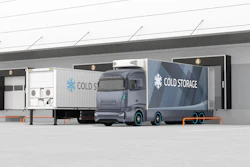
Cyberattacks have become an unfortunate part of doing business in today’s digital age. Food manufacturers, especially those that rely heavily on cold storage environments, are becoming increasingly vulnerable to cybersecurity threats within their supply chains. The rise of digitization, automation, and interconnected logistics has brought tremendous efficiencies to the industry, but it has also created a larger attack surface for cybercriminals.
To maintain strict temperature requirements, these operations are dependent on internet-connected sensors, data loggers and systems that provide real-time monitoring and control. Every one of these connections present a potential entry point for attackers.
As organizations gather increasing amounts of traceability information to meet FSMA requirements, ensuring the integrity and availability of that information becomes essential. Accurate, trusted data enables confident decision-making during recalls, regulatory reviews and customer inquiries.
Rather than viewing cybersecurity solely as an IT responsibility, there is an opportunity for food and beverage producers to elevate cybersecurity to business continuity planning. There are two key parts to this approach. The first is including cybersecurity as part of any robust supply chain risk management (SCRM) program. The second part of this approach is to include cyberattacks as part of any disaster recovery plan (DRP).
Companies should also incorporate cyber resilience into their broader risk management strategies. This includes securing IoT devices, encrypting data transmissions, implementing multi-factor authentication, segmenting operational technology networks and continuously monitoring connected systems for suspicious activity.
3. Data and intelligence creates safer supply chains
If automation generates data and cybersecurity protects it, intelligence is what transforms that data into a competitive advantage. FSMA's traceability requirements require companies to collect significantly more information than ever before. The greatest opportunity for food and beverage producers is to put that data to work.
Artificial intelligence, predictive analytics, blockchain technologies and advanced sensor networks are enabling food companies to gain unprecedented visibility across their operations. While this helps enable compliance with FSMA, it also unlocks other opportunities to strengthen the supply chain. For instance, by acting as a single source of truth, blockchain can bring a sense of fidelity to all partners along the supply chain. Using the technology, companies can quickly identify points of unauthorized removal or the insertion of products, helping to investigate theft, fraud, and counterfeiting.
Rather than merely having access to large volumes of data (data quantity), logistics professionals can intelligently use and analyze this data for strategic advantage (data quality), which is essential to answer the increasingly complex and specific questions asked by businesses today.
Instead of spending days locating affected inventory, companies with connected digital ecosystems can identify impacted lots within minutes, isolate products more precisely and reduce unnecessary product destruction. Faster response protects consumers while minimizing financial losses and preserving brand reputation. The same data also supports continuous improvement. Companies can identify recurring quality issues, evaluate supplier performance and make evidence-based operational decisions that improve both compliance and profitability.
Companies that view FSMA as a catalyst for innovation will be best positioned to thrive in an increasingly dynamic and data-driven supply chain. Those that invest in automation solutions, traceability, cybersecurity and digital technologies will discover benefits that extend across their entire business.