The ever-evolving e-commerce landscape is placing never-seen-before pressure on warehouse operations, far beyond what a human-only workforce can keep pace with. From the accelerating speed of e-commerce in the United States to the growing supply chain regulations in the UK with packaging reduction targets rolling out, this pace of change is not going to slow on a global scale.
Today’s warehouse leaders have a difficult job: They must seamlessly adapt to new and evolving pressures down the pipeline, while simultaneously meeting current customer and business demands.
How is the industry tackling this change?
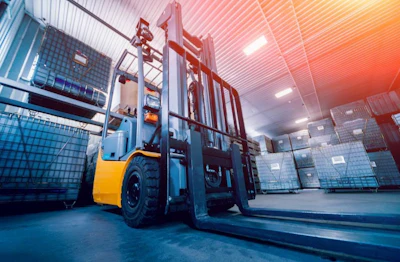
To overcome labor shortages and deliver operational efficiency, many leaders are looking to automated material handling equipment (AMHE), which refers to the use of automated technologies for transporting, storing, sorting, and otherwise controlling product in a warehouse or factory setting.
Given its immense promise, AMHE is quickly becoming a requirement, not icing on the cake, with the market expected to grow to $489.65 billion by 2034. Additionally, Interact Analysis notes that in 2025, 50% of end-customers anticipated increasing their investment in MHE by more than 10%. While some leaders are rallying around this technology, others are still resistant to making this change.
Why is there resistance around AMHE?
Historically, the supply chain operations sector is slow to adopt new technologies due to reliance on legacy systems, the fear of disrupting complex and ongoing operations, and the high cost of initial investments required to upgrade. AI and automation have proved no different, and adoption lags behind other industries despite its valuable use cases in manufacturing, warehouse management, and distribution. To fully embrace the technology, we must first address its barriers to adoption:
1. Workforce resistance
Looking at macro trends in the supply chain industry, it’s easy to see that automation is a no-brainer. When we dial in a bit deeper to the warehouse floor or the executives making the decisions regarding MHE, there’s more hesitation. Smaller companies especially are in dire need of automation to keep up with – and avoid being pushed out by – the larger players, but they are often the most fearful that bringing in automation will result in job loss. AMHE is increasingly being adopted not to replace people, but to ensure operations remain viable, competitive, and capable of sustaining long-term employment in an ever-evolving supply chain landscape. In general, it is not about cutting jobs, but rather relieving employees of physically demanding tasks and counteracting the general trend of labor shortages.
While AMHE will eventually replace manual labor for physically demanding roles, it will also create the need for new positions tasked with overseeing and managing the new tech. In practice, automation changes the nature of warehouse work rather than eliminating it. As AMHE is introduced, new roles emerge in system oversight, maintenance, controls, and optimization – typically safer, more skilled positions that offer clearer career paths and help retain experienced employees. Ultimately, it will allow supply chain operations to keep up with the modern economy by supplementing the existing workforce.
2. Deployment costs
Automation – especially deploying robots or AI systems into warehouse operations that have their own longstanding and specific way of doing things – can seem daunting. One way to ease into automation and avoid the high initial investment is to optimize existing MHE with automation rather than fully replacing them.
A common concern from warehouse managers just starting on their automation journey is that they are not seeing the immediate return on investment (ROI) they were expecting. Automation in MHE follows a “J-curve,” which means that productivity does initially dip following implementation as employees learn and adjust to the new technology. However, productivity then substantially rises after this phase.
It’s important to set expectations at the start of the process, so end users are not taken by surprise. AI tools are also making it easier for companies to calculate ROI and streamline AMHE maintenance by predicting failures and consolidating technical documentation, helping to reduce the dip in the J-curve.
3. Deployment concerns
In addition to cost concerns, deployment concerns also weigh heavily on the minds of leaders, especially those in in heavily regulated sectors such as pharmaceuticals.
These industries may be more hesitant to adopt AMHE because all of their equipment must meet such rigorous standards. Yet these are concerns that can be addressed on a case-by-case basis, leaning on personalization. For example, cleanliness standards often necessitate stainless steel components, which do increase costs but are required for these applications.
Additionally, installing and deploying AMHE appropriately can be tricky, yet today, there’s technology to support this change, including augmented reality (AR). AR can visualize the placement of new equipment on the warehouse floor, making the process more approachable and personalized to ease apprehension. By working to meet particular operation needs rather than taking a one-size-fits-all approach, deployments are far more likely to be seamless.
What is the future of AMHE?
Automation and robotics are the present and the future of MHE, with new innovations being rolled out regularly. Today, machine vision is enabling robots to adapt to changes in packaging, improving accuracy and speed via visual data learnings. Additionally, robust enterprise resource planning (ERP), warehouse management systems (WMS), and barcode/radio frequency identification (RFID) systems are improving tracking of goods, supporting rapid order fulfillment, and reducing errors in labeling and shipping.
Looking ahead, AMHE is shifting from siloed assets to an AI‑orchestrated, unified control layer that spans production and intralogistics, integrating digital twins, unified factory control, and IIoT to optimize flows in real time.
This enables adaptive, resilient networks and more regionalized operations, with decisions increasingly governed by AI‑driven optimization and a deepening data economy.
In parallel, human‑centric autonomy becomes the default operating model as Industry 5.0 normalizes human–AI collaboration – cobots, AMRs, and AI copilots augmenting human judgment to raise safety, throughput, and flexibility. The supply chain is in a season of change, and technology is the driving force.
The time to adopt AMHE is now
While there are hurdles that can hinder the acceptance of AMHE, they can be overcome with education, communication, and flexibility. With an intentional and open-minded approach, AMHE has the potential to transform our industry. Leaders, what are you waiting for?


![Top Tech Logo 2026 Vertical [color]](https://img.foodlogistics.com/mindful/acbm/workspaces/default/uploads/2026/04/top-tech-logo-2026-vertical-color.mWl7RAiZmg.png?auto=format%2Ccompress&bg=fff&fill-color=fff&fit=fill&h=100&q=70&w=100)






![Top Tech Logo 2026 Vertical [color]](https://img.foodlogistics.com/mindful/acbm/workspaces/default/uploads/2026/04/top-tech-logo-2026-vertical-color.mWl7RAiZmg.png?ar=16%3A9&auto=format%2Ccompress&bg=fff&dpr=2&fill-color=fff&fit=fill&h=135&q=70&w=240)


