Automation is surging as the latest hardware advances unlock AI capabilities for the food industry, making it more accessible than ever for businesses. As more physically demanding and difficult-to-staff jobs get automated, new jobs are emerging to help ensure automation is successful. These jobs will replace the physical tasks that AI-enabled machines can handle and focus instead on strategic decision making; innovation; resilience; AI training (identifying items); robotic training (teaching how to lift or place items); data analytics and management; quality control; and operational technology (OT) systems monitoring, optimization and maintenance.
Many of these jobs will require on-the-job training and skills development as the usability of automation tools continues to improve, focusing on mastery of software suites to monitor systems, handle exceptions and train new operations that build on existing programs. Advanced technical jobs will land on the other end of the spectrum, requiring know-how in AI development and training.
The rise of the robotics manager
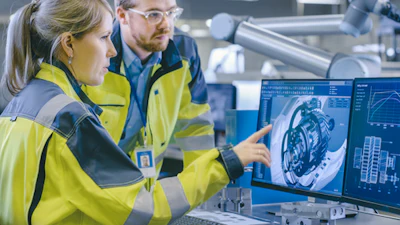
Among the most common roles to emerge will be the robotics manager who will monitor a robotic fleet to ensure flawless operation, handle exceptions, report maintenance needs and handle training for new tasks (counting 12 items in a box rather than 10, for example) with basic knowledge and understanding of the system. Similar jobs are already common in other industries, including smart electronics and electric vehicles. They focus on keeping the operating system and accompanying apps up-to-date on devices, ensuring compatibility, functionality and improved features.
Some companies within the food and beverage space have job openings focused on fleet health, performance and orchestration via data monitoring and analysis. A decade ago, these jobs didn’t exist or were in their infancy, but they became critical to the operations and success of these industries. As the number of sites deploying automation grows in step with the continued expansion of robotic fleets at each site, the robotics manager will become a standard-but-critical role that companies must fill.
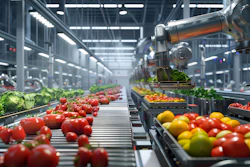
An automated salad kitting cell developed and deployed for a salad-making company gets wheeled to the correct place on the production line and plugged into power and compressed air. When the operator selects the appropriate program, it is off to the races picking and placing pieces of raw peppers and bags of salad dressing into bowls of lettuce. While that operation is simple for the operator, the cell itself contains vision AI, an industrial PC, a robotic arm, a camera, a gripper and OT that ensures it all works together seamlessly. Though it is 99.9% accurate, there are times when that complex piece of machinery may falter (worn grippers, decreased vacuum power, power outages or hardware failures, for example), and the robotics manager must be capable of identifying and understanding the problem to ensure it gets addressed quickly to get the automated cell back into production.
Demand for technical skills will continue to grow
As AI adoption continues to grow, other jobs will remain in demand that require more technical skills/experience. According to Alcott Global, these jobs include:
● Data analysis and visualization tools
● ERP systems integrated with AI capabilities
● Supply chain analytics and forecasting
● Automation technologies and robotics
● Programming languages for supply chain optimization
● Cloud-based platforms
● Project management and agile methodologies to implement AI solutions effectively
Unlike the robotics manager who will handle day-to-day operations and oversight, many of these will require advanced technical skills that go beyond expertise in the software suite a company relies upon for automation. These jobs will mostly land outside of the production floor, working instead in company offices or robotics test labs but will still be critical to food industry automation.
Workforce development already underway
Some companies have already begun offering on-the-job training to develop the skills akin to the robotics manager in current staff members, delivering positive business results.
A study from Politecnico di Milano and Amazon, “The Impact of AI and Digital Technologies on Demand Forecasting and Advanced Inventory Management in E-Commerce Logistics: An Economic and Social Analysis,” revealed how AI can create new jobs rather than replace them, while increasing business efficiency and reducing waste. The findings show that:
● 80% of the companies surveyed successfully reassigned employees to higher value-added roles, creating new professional positions.
● 85% reported improvements in process efficiency and customer satisfaction.
On the other end of the spectrum, most leading universities now offer AI programs at the undergraduate level, with AI and data science routinely topping the lists of degrees that will be most valuable in an increasingly AI-reliant world. With Fortune Business Insights projecting the global industrial automation market to reach $395.09 billion by 2029, it’s hard to disagree.
No matter which path food industry workers choose, there will be plenty of workforce opportunities even with the expanding reliance on automation. Instead of handling the physically demanding jobs of loading/unloading, picking and placing, sorting ingredients, quality inspections and more, jobs will instead focus on ensuring automated solutions continue to operate at peak performance.