The food supply chain starts long before a truck leaves a distribution center. For seafood, it starts at sea, and the technology gaps at that first mile have downstream consequences that processors, distributors, and buyers feel all the way to the dock.
Ask a commercial fishing company how they manage their fleet, and you will likely hear one of two answers: a generic ERP that was never designed for the water, or Excel. Plenty of sophisticated, multi-vessel operations are still running on spreadsheets, and while that choice is understandable, it is an expensive one.
A spreadsheet cannot tell you in real time where your vessels are, what catch is in the hold, or what a trip will cost by the time the fish hits the dock. The flow sounds straightforward: vessels go out, crew catches fish, catch becomes inventory, costs are tallied, crew gets paid, product gets sold. In practice, every one of those steps carries complexity that generic software was simply never built to handle.
Where standard systems break down
The fundamental business unit in commercial fishing is the trip. Not the invoice, not the vessel, not the species: the trip. A trip record needs to exist before the vessel leaves the dock, capturing planned fishing grounds (latitude and longitude), gear type, target species, and crew by role: captain, mate, cook, and engineer. It stays alive while the boat is at sea, accumulating catch and costs in near real time, and becomes the basis for inventory receipts, cost reconciliation, and crew settlement when the boat returns. Generic ERPs offer sales orders, production orders, and purchase orders. None of those constructs comes close to describing a fishing trip.
The inventory side is just as awkward. When a vessel returns, the company suddenly has product, but it arrived with no purchase order, no supplier, and no confirmed weight until someone opens the hatch dockside. Catch has to be registered as inventory tied to the originating trip, weight corrections at landing need to reconcile cleanly, and the system has to account for the reality that most vessels are separate legal entities, making the transfer from vessel to processor an intercompany transaction rather than a simple internal move.
Then there are costs, which arrive from everywhere and on their own schedule: fuel, ice, provisions, port fees, gear, observer fees, and insurance allocations. A system that waits until the trip is close to register them is always working with an incomplete picture. And once the trip closes, crew reconciliation begins: a share-based settlement that only works if the final catch value and finalized costs are in the same place. A generic payroll module has no way to do that calculation. On top of everything else, fish is perishable. Every hour between catch and sale matters, which is why seeing what is in the hold while the vessel is still at sea is not a luxury feature. It is how competent shore operations stay ahead of the market instead of scrambling to catch up when the boat docks.
Why purpose-built vessel management is the answer
For too many fishing companies, the honest answer to "what is your fishery management software?" is still Excel. The consequences are predictable: crew settlement disputes that drag on because nobody can audit the math, inventory discrepancies that quietly erode trust between vessel and office, profitability reports assembled manually and delivered too late to influence the next trip's deployment, and sales left on the table because the shore team had no idea what was in the hold until the truck was already waiting at the dock.
So, what does a system that actually gets fishing right look like? It starts with the trip as a native, first-class record, not a workaround built on top of a production or project module, but a record with its own lifecycle (planned, underway, landed, settled) that anchors every cost, catch entry, crew assignment, and regulatory note for that voyage. From there, the system shows catch building in the hold in near real time so the shore team can start coordinating buyers, cold storage, and processing logistics well before the boat is back at the dock. All trip costs post as they arrive and feed a running margin view, with late invoices flowing through to crew settlement automatically rather than requiring someone to reopen the books.
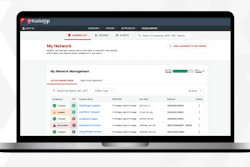
Crew settlement itself needs its own purpose-built logic: configurable lay calculations that reflect each company's specific agreements, with a clear settlement document that flows straight into payroll. The fleet dashboard should show actual vessel status (fishing, turning, in maintenance, out of service) along with utilization rates and gross margin by vessel, because a fleet manager who has to call captains to find out where boats are is not really managing a fleet. Each vessel also needs to operate as its own legal entity within a consolidated structure, with intercompany transactions handled automatically. And profitability by vessel, captain, fishing area, species, and season should be a standard report, not a multi-hour spreadsheet exercise.
Finding the right fit
When starting to evaluate vendor solutions, one criterion matters more than any feature checklist: ask for references at active fleet fishing operations, not aquaculture or distribution, and actually call them. Ask what broke during implementation. Ask whether the settlement module handled their specific lay formula without heavy customization. Vendors who have genuinely built for fishing will have customers who can answer those questions directly. Those who have adopted a general system will struggle to produce them.
The companies that pull ahead in the years to come will not be those with the biggest fleets or the best fishing grounds. They will be the ones that run tighter operations, and that starts with software that actually understands the business from ocean to sale.