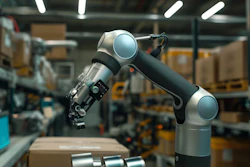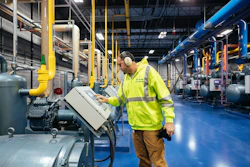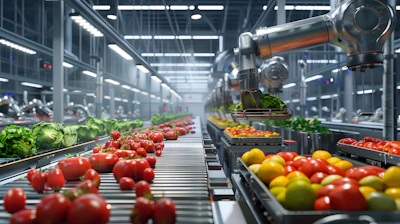
Food and beverage companies are investing in automation to address persistent labor shortages, margin pressure, and growing fulfillment needs. Nearly half of all capital spent is now directed to automation projects. In fact, in the last year alone, North American companies were reported to have ordered nearly 37,000 robots at a value of $2.25 billion. Yet as these companies invest heavily in robotics, automated storage and retrieval systems (AS/RS), autonomous mobile robots, and automated palletizing solutions, a surprising obstacle is emerging. The next phase of automation isn’t about whether the technology can move products; it’s about whether the full operating system can sustain the flow.
That distinction matters because automation systems are designed around consistency. Machines thrive on predictability. They depend on products, pallets, containers, and packaging arriving in the same condition every time. When variability enters the system, performance suffers. This is where many supply chain automation strategies begin to encounter diminishing returns.
The conversation has shifted dramatically over the last few years as retailers, manufacturers, and distributors are asking how quickly they can scale automation across their operations. As more organizations move from pilot projects to enterprise-wide deployments, new challenges emerge.
The operational pressures reshaping food and beverage supply chains
According to the 2025 MHI Annual Industry Report, 56% of supply chain leaders are increasing investments in supply chain automation, supply chain technology, and innovation, with 60% planning to spend more than $1 million on new solutions. These investments are largely focused on improving resiliency, transparency, and addressing ongoing workforce shortages.
The food and beverage sector is feeling those pressures acutely. Labor remains one of the primary drivers of automation adoption, with many facilities struggling to replace retiring workers while competing for a shrinking pool of available talent. At the same time, fulfillment expectations continue to rise as online grocery shopping becomes a permanent part of consumer behavior.
Beyond labor, food and beverage companies are also navigating margin pressure, private-label competition, and persistent supply chain disruption. Shoppers still prioritize value, which drives growth in store brands while pressuring manufacturers to find new efficiencies without sacrificing service. Tariffs, geopolitical uncertainty, and extreme weather events have made volatility a recurring operating condition.
These aren’t being treated as separate challenges, either. Retailers, manufacturers, and distributors increasingly view automation as a strategic response to all of them, with the goal being to build more resilient and scalable operations that can maintain throughput despite workforce constraints.
Organizations are moving from automation pilots to broader deployments, but a new reality is emerging: installing automation is only part of the equation.
There’s a hidden variable that’s undermining automation performance
Packaging: Although it is rarely considered a critical automation input when departments plan their automation, it is a variable that affects the entire operation.
As companies scale their investments in automation and technology, workers see a growing challenge in packaging variability. While corrugated packaging remains the industry standard, boxes typically vary by 3-5 millimeters. Though the difference may seem small, it can exceed what automated systems can handle, causing costly machine downtime and consistent errors.
Additionally, when using corrugated, performance varies with moisture exposure, handling conditions, supplier variation, and storage environments. In cold chain operations, corrugated can lose 50-60% of its compression strength when exposed to typical humidity levels, increasing the likelihood of structural failures, jams, and handling disruptions.
For a worker, a slightly damaged case may be a minor inconvenience, but in an automated system operating at high speed, that same inconsistency can trigger sensor errors, rejected picks, pallet instability, or unplanned downtime. The issue becomes even more significant as automation expands across interconnected distribution and manufacturing networks. A single packaging-related disruption can ripple through multiple processes, affecting throughput, maintenance schedules, labor allocation, inventory accuracy, and order fulfillment performance.
What begins as a single packaging inconsistency can cascade across multiple processes, impacting throughput, maintenance schedules, labor allocation, inventory accuracy, and order fulfillment performance.
Why automation ROI often leaks
Many organizations evaluate the success of automation by measuring equipment utilization, throughput, and labor savings. Yet some of the most costly disruptions never appear in automation business cases. Packaging is often treated as a procurement decision rather than a strategic automation input. I believe that's becoming a costly oversight.
“Micro-disruptions,” or small, recurring events such as sensor misreads, palletizer rejections, manual jam clearing, damaged loads, and equipment recalibration, can individually appear insignificant. Collectively, they create a steady drain on operational performance. The challenge is that these costs are often distributed across multiple departments. Operations records downtime against equipment. Maintenance logs service calls. Procurement focuses on package acquisition costs. Quality teams track damage claims.
Departmental KPIs are partially to blame. Operations logs line stoppages as downtime caused by the equipment, not the packaging that caused the jam. Maintenance absorbs work orders for the machine that was adjusted, not the pallet that triggered the sensor. As a result, packaging-related inefficiencies often go unnoticed despite their impact on automation systems and overall performance.
The next competitive advantage
The first wave of automation focused on acquiring technology. The next wave will focus on eliminating variability. And as supply chain leaders continue investing in robotics, AI, warehouse automation, and advanced material handling systems, success will increasingly depend on the reliability of the inputs those technologies rely on every day. Looking ahead, expect leading food and beverage supply chains to think differently about packaging. Rather than viewing it as a consumable input, they'll increasingly view it as operational infrastructure, an integral part of how products move through automated networks.
The companies that generate the strongest returns from automation won't necessarily be the ones with the most robots. They'll be the ones that eliminate variability across the entire system. And in highly automated supply chains, that starts with creating a consistent, predictable flow from receiving through fulfillment. In other words, automation strategy and packaging strategy are becoming one and the same.