The U.S. cold chain faces the same test every year. As ambient temperatures climb into the 90s and above across wide stretches of the country, refrigeration systems that operated comfortably in February are suddenly running at maximum capacity come July.
With the U.S. cold storage market projected to reach $91.4 billion by 2032, the food and beverage service sectors are set to face mounting pressure. And expansion is only truly scalable long-term if the infrastructure and strategy behind it can effectively maintain product integrity, particularly when the natural environment presents regular challenges.
Effectively preparing for this growth involves two core things: awareness of the advanced solutions available to combat seasonal challenges, such as modular, quick-to-deploy temperature-control infrastructure, and a deep understanding of the differences between and the purpose of common temperature-control processes like blast freezing and tempering. This approach is key in helping operators avoid consequences for product quality, safety and ultimately repeated cycles of financial loss.
What peak demand actually does to a refrigeration system
Refrigeration, at its core, is the movement of heat. Every system has a designated delta, the gap between ambient and target temperature it was built to maintain. Push the ambient up by 20°F and the system not only uses more energy, but faces compressed safety margins on every other variable in the operation. Door openings and defrost cycles matter more, all while compressor duty, condenser efficiency, airflow and loading patterns become less forgiving.
The average U.S. refrigerated warehouse already consumes about 24.9 kWh per square foot annually, roughly four times the consumption of a conventional dry warehouse. During the busiest weeks of the year, when a facility is then asked to freeze, temper and hold more product than the system was designed for, the impact quickly shifts from a cost burden to a product quality risk.
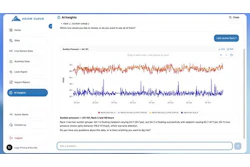
Most product-loss events in summer are slower, more innocuous excursions rather than catastrophic equipment failures. For example, a chiller running a degree warm for a few days. A blast cell loaded too densely, so the core temperature target slips. The cold chain seldom fails loudly, but these events compound over time, leading to shrinkage, grade loss, customer claims and forced discounts.
Inadequate cold chain management already accounts for an estimated 12% of global food production lost or wasted each year. What’s worse, 61% of businesses are blind to where their food waste occurs in the supply chain, while 56% simply do not understand the sheer volume of food waste generated when goods are transported. This is why visibility and education matter, because if a business does not fully understand its problem, it can’t begin to engineer the right solution.
Understanding the key temperature control differentiators
Procurement language in the industry can often blur the lines between blast freezing, tempering and standard chilled storage. Summertime is when that lack of precision can become expensive.
Blast freezing drives product core temperature down quickly, typically to about -18°C or below within a defined window, using high-velocity airflow. Fast freezing helps form smaller ice crystals that protect texture, cellular structure and yield. If a processor gets this wrong, the product may not be lost outright, but the grade can suffer. For facilities without enough fixed blast capacity, a modular blast environment can add targeted pull-down capability without turning a holding cooler into an emergency freezer.
Tempering is the opposite workflow, using controlled warming to bring frozen product up to a workable processing temperature without crossing into the USDA/FDA bacterial-growth danger zone. Tempering rooms live or die on airflow uniformity, consistency and tight setpoint control. A few degrees of drift can mean product is too soft to slice cleanly on one end and still frozen solid on the other. Deployable tempering rooms can also be positioned near the production line, reducing movement while keeping the process repeatable.
Standard chilled storage is typically designed to hold product in a stable range, often 32–40°F. It is not designed to pull heat out of warm product quickly. It is not a substitute for a blast freezer. It is not a tempering solution because a dedicated room is unavailable. In peak periods, temporary chilled environments can be configured in real time to protect finished goods, ingredients, quality assurance holds or staged outbound loads while primary rooms stay focused on their intended function.
Thermal integrity is a planning decision
Cold chain infrastructure is not built on the same timeline that peak demand arrives. Permanent facilities can take years to move from planning to operation. A processor that needs blast capacity for an eight-week fruit season, seafood run or export surge often cannot wait for a fixed asset to be designed, permitted and built. Rapidly deployable modular environments close that timing gap by adding controlled space in weeks rather than waiting for a capital project to catch up.
An audit by environment is more useful than an audit by square footage. Operators need to know where product is being frozen, where it is being warmed, where it is being held and whether each environment is doing the job it was designed to do.
Thermal integrity also belongs in the food safety plan, not only in the maintenance schedule. Blast freezing, tempering and chilled storage are often treated as facility issues. They should also be treated as process-control issues, with documentation, accountability and review.
With the FDA extending FSMA 204 compliance to July 2028, operators have the time to improve their documentation and traceability systems. That window should not be wasted. When enforcement begins, the data trail behind a freeze cycle will count as much as the cycle itself.
Flexibility protects margin
The hardest question in cold chain planning revolves around how long capacity is needed vs. just how much.
A permanent blast freezer may make sense for a facility with steady year-round demand. But many peak season needs are measured in weeks, not years. Building fixed infrastructure for temporary demand can leave operators paying to refrigerate empty space the rest of the year. Not building enough capacity can expose product quality during the busiest and most valuable periods.
The better approach is to build flexibility into the asset base. Modular blast cells, tempering rooms and chilled storage give operators the ability to place specialized environments where product flow requires them. They are not replacements for permanent infrastructure, but a way to make that infrastructure more adaptive. For some operations, that means leasing supplemental capacity for a season; for others, it means creating a repeatable contingency plan for promotions, recalls, trials, maintenance shutdowns or weather disruption.
Having designated temperature control systems in the right place protects product quality, labor efficiency, energy performance and customer service. When teams are not improvising in the wrong environment, they can manage the cold chain with greater consistency and reduce waste. The end goal boils down to mastering the ability to deploy the right specialized environment quickly, control it precisely and scale it as demand changes, protecting margin when seasonal pressure is highest.