According to a Gartner survey of logistics leaders, 39% of respondents cite improving customer experience by offering more service choices as a top priority for the next five years, more than any other initiative.
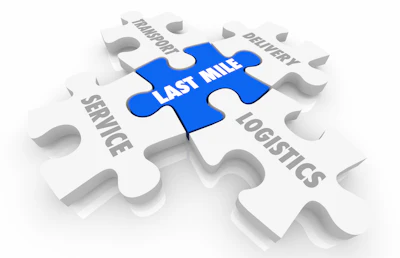
As a result, it’s not surprising that last‑mile delivery has become a focal point of logistics transformation. The last mile is the most visible stage of fulfillment; the one customers experience directly and the one most often blamed when service levels fall short.
Yet many organizations are discovering that these efforts yield less benefit over time. The reason is simple: last‑mile performance is largely determined long before the final delivery ever begins.
Across industries, the first and middle mile quietly shape the cost, speed and reliability of the last mile. When those upstream stages are fragmented or inefficient, the last mile is forced into reactionary mode.
How last‑mile obsession creates blind spots
Last-mile delivery has evolved into a strategic lever for supply chain management, as it plays a critical role in the total logistics costs and influences overall customer satisfaction. True last‑mile excellence, however, involves taking action long before the customer’s doorstep.
The first mile, which moves goods from origin to an initial consolidation point, and the middle mile, which transports goods to regional distribution centers or cross‑dock facilities, quietly determine what the last mile must work with.
These activities are often governed transactionally, with ownership split across procurement, inventory, manufacturing and transportation functions. Each function optimizes locally, but no one owns the end‑to‑end outcome.
The result is unnecessary handoffs and limited accountability regarding how upstream tradeoffs affect downstream performance. The last mile absorbs this complexity, even though it lacks the authority to influence the decisions that created it.
This legacy mindset also explains why efforts to rebalance attention upstream frequently encounter resistance. Organizations have long equated last‑mile performance with customer experience, reinforcing the belief that optimization must happen closest to the end customer.
Meanwhile, first‑ and middle‑mile processes have been allowed to operate with limited scrutiny. Shifting focus to these upstream stages can therefore feel counterintuitive, even disruptive, to teams accustomed to measuring success at the point of delivery. Leaders should expect resistance and plan for it, recognizing that redesigning where last‑mile excellence is built is as much a leadership challenge as it is an operational one.
Visibility comes before velocity
Organizations cannot fix what they cannot see. Improving last‑mile performance begins with making first‑ and middle‑mile processes visible end-to-end.
To identify inefficiencies within first- and middle-mile operations (transportation, distribution, handling, storage and support), logistics leaders should perform end-to-end value stream mapping. This involves creating a logistics value stream map, conducting on-site and virtual walkthroughs to watch and document the work being done and challenges that arise.
This allows supply chain leaders to uncover workarounds, waiting time, excess movement and redundant activities that rarely appear in performance reports. Most importantly, it changes the focus from optimizing each team in isolation to fixing the problems that eventually show up as delays and disruptions in the last mile. By addressing these cross-functional inefficiencies, organizations can enable the last mile to operate with greater predictability and fewer costly interventions.
Governance is the piece most leaders underestimate
Technology and process improvements alone cannot overcome fragmented ownership. Sustainable gains depend on governance that reflects the cross‑functional nature of logistics execution. Consolidating first‑ and middle‑mile governance establishes clear accountability for orchestrating trade‑offs across transportation, inventory and service objectives.
To be successful, organizations need a cross‑functional leader, supported by stakeholders from each function, to enable decisions to be made through an end‑to‑end lens rather than within silos. The current organizational structure may present challenges, but having leadership of the cross-functional teams required to drive optimization and results is critical. The goal should be to create governance based on collaborative decision making with these stakeholders.
Equally important is the redesign of performance metrics. Customer‑focused KPIs that balance cost and service outcomes help teams understand how upstream decisions directly influence last‑mile results and align behavior accordingly.
Technology delivers value when applied upstream
Most organizations deploy advanced visibility and control tools in the last mile, but upstream processes often operate with limited system support. Extending transportation management systems, real‑time transportation visibility platforms and yard management systems into the first and middle mile creates a shared view of product movement and capacity across the network.
When supported by high‑quality, shared data, these tools enable scenario modeling, proactive exception management and better coordination across logistics stages. Importantly, they shift decision‑making earlier in the lifecycle where variability is easier and less costly to address, rather than forcing last‑minute fixes at the point of delivery.
Designing last‑mile excellence
Organizations will always invest in the last mile, and they should. It is where customer promises are ultimately fulfilled and customers are lost. But leaders who treat last‑mile performance as something to optimize in isolation are solving the wrong problem. In most networks, last‑mile variability and inefficiencies are inherited rather than created.
Organizations that consistently excel in last-mile delivery are those that proactively shift their focus upstream. By tackling challenges in the first and middle mile, they minimize cost and complexity long before products reach the customer.