The global conversation around food sustainability often focuses on how to produce more food to feed a growing population. Yet an equally important question receives far less attention: How do we protect more of the food we already produce?
Demand for seafood, fresh produce, and other perishable foods continues to rise worldwide, placing increasing pressure on fisheries, farms, water supplies, and energy resources. The instinctive response is to harvest more fish and grow more crops but continually increasing production places additional strain on ecosystems that are already under pressure.
At the same time, approximately one-third of all food produced globally is lost or wasted each year. According to an FAO estimate, that amounts to roughly 1.3 billion tons of food annually.
From a sustainability perspective, this should concern everyone.
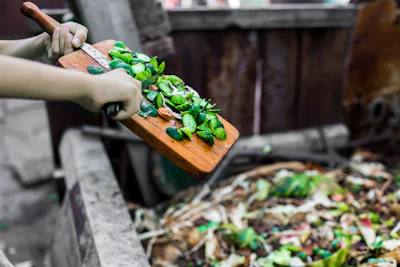
When food is wasted, we do not simply lose the product itself. We lose the water, land, energy, labor, and transportation resources required to produce it. Food waste that ends up in landfills also generates methane, a greenhouse gas significantly more potent than carbon dioxide. Every shipment of seafood, produce, dairy, or protein that spoils before it can be consumed creates both environmental and economic costs.
There’s a lot of effort that goes into producing and moving perishable food around the world. Those efforts can quickly be undone when proper temperature control is lost. In many respects, preserving food may be one of the most immediate and practical sustainability opportunities available to our industry.
This challenge is particularly important in seafood. Global demand for fish continues to increase while more than one-third of fish stocks are already being harvested at biologically unsustainable levels, according to FAO data. Every pound of seafood lost after harvest represents pressure placed on marine resources with no societal benefit. The same principle applies to fresh produce and other perishables. When natural resources are finite, protecting food quality becomes just as important as increasing production.
A significant amount of food loss occurs during transportation and storage. While major refrigeration failures can certainly cause spoilage, the more common threat is often a series of relatively small temperature deviations that occur throughout the journey.
Many perishable foods are highly sensitive to temperature changes. A few degrees above the recommended range for several hours can accelerate ripening, moisture loss, bacterial growth, and other processes that shorten freshness and quality. The food may still arrive at its destination, but its useful life has been reduced, increasing the likelihood that it will ultimately be discarded before consumption.
This is why cold chain integrity plays such an important role in sustainability.
Historically, refrigerated containers did an excellent job of maintaining temperature, but they provided limited visibility into what was happening inside. Once the container doors closed, operators often had little insight into temperature fluctuations, airflow restrictions, equipment issues, or power interruptions until the shipment arrived.
Today's telematics technology has changed that reality.
Modern connected refrigerated containers continuously monitor and transmit data on temperature, humidity, airflow, power status, equipment performance, door activity, and location. If temperatures begin moving outside acceptable parameters, operators can receive immediate alerts and intervene before food quality is compromised.
Advanced systems can also identify developing equipment problems before they become failures. By analyzing operating patterns from refrigeration components such as compressors, fans, and sensors, predictive maintenance tools help operators address issues proactively rather than reactively.
This real-time visibility is critical because food deterioration is rarely caused by a single catastrophic event. More often, it results from a series of small temperature excursions that gradually accelerate spoilage. The ability to identify and correct those issues in real time can make the difference between food reaching consumers and food becoming waste.
Technology also provides a valuable record of environmental conditions throughout a shipment's journey. This transparency helps operators better understand where risks exist and continuously improve food protection practices across the supply chain.
Protecting food quality extends beyond transportation. During peak harvest seasons, holiday periods, festivals, and other high-demand events, refrigeration capacity is often stretched beyond its intended limits. Overcrowded coolers, restricted airflow, and frequent door openings can create temperature instability that accelerates food deterioration.
Portable cold storage helps address this challenge by providing additional refrigerated capacity exactly where it is needed. Whether supporting grocery retailers during seasonal demand spikes, preserving seafood at outdoor events, or providing overflow storage during produce harvests, these units help ensure food remains in an environment designed to maintain freshness and quality.
The sustainability value is straightforward: every pound of food protected from spoilage conserves the resources invested in producing it and prevents avoidable waste. We must also become better stewards of the food we already produce.
Every improvement in cold chain integrity can help reduce waste, conserves resources, lowers emissions associated with discarded food, and strengthen the global food supply. One of the most effective ways to build a more sustainable food system is not simply to produce more food, but to waste less of it.
Protecting the integrity of the cold chain is one of the most practical ways to achieve that goal.