Supply chain transparency connects operational data with emissions information across all three scopes, enabling companies to understand their environmental footprint and make real-time decisions rather than waiting for annual reports. By leveraging existing fleet telematics, sensors, and facility data, businesses can identify emissions drivers and act on them immediately while shipments are moving.
- Three emissions scopes: Scope 1 (owned sources like fleet fuel), Scope 2 (purchased energy), and Scope 3 (value chain activities like outsourced transportation and supplier operations)
- Real-time visibility is now affordable: Most companies already collect location, fuel, temperature, and shipment data through existing systems; cloud platforms make combining this information economical
- Act while shipments move: Connected operations can trigger dock adjustments, maintenance alerts, and routing optimizations based on real-time emissions estimates and operational data
- Regulatory deadlines approaching: California's SB 253 requires Scope 1 and 2 disclosures starting 2026, Scope 3 in 2027; EU Corporate Sustainability Reporting Directive has similar requirements
- Start with decisions, not compliance: Begin with a manageable area, establish baselines using existing records, align teams on definitions, and make emissions information actionable alongside cost and service metrics
A refrigerated truck is waiting outside a distribution center. Its engine is idling, its refrigeration unit is running, and its delivery window is slipping. Operations sees a service problem. Finance sees wasted fuel and detention charges. The sustainability team sees emissions.
They are all looking at the same event. But too often, they are looking at it through different systems.
That's the opportunity behind supply chain transparency. Connecting operational data with emissions information lets companies understand their environmental footprint and act on what's driving it. Those decisions can increasingly happen while a shipment is still moving, not months after an annual report is published.
For food logistics executives, this is a better way to run the business.
Three scopes, three views
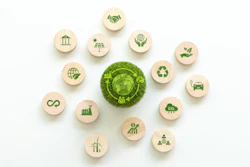
The Greenhouse Gas Protocol organizes a company's emissions into three scopes, three different views of the same operations and value chain. Scope 1 covers emissions from sources you own or control, diesel burned in your fleet, fuel used in facility boilers, refrigerant leaks from your cooling equipment. Scope 2 covers the energy you purchase. For a cold storage operator, electricity used to power refrigeration is the obvious example, alongside purchased steam, heating, and cooling. Scope 3 covers everything else across your value chain, the ingredients and packaging you buy, transportation performed by outside carriers, and the waste your business generates.
Here is an example. Fuel burned by a carrier's truck produces Scope 1 emissions for that carrier. For the food company that hired the truck, those emissions generally fall under Scope 3. Outsourcing the transportation changes where the emissions land in the accounting. It doesn't make them disappear. That's why visibility beyond your own facilities matters. A company can improve its fleet and warehouses while overlooking real opportunities in purchasing, supplier operations, and outsourced logistics.
Visibility became affordable
Assembling this picture used to be an expensive exercise. Fuel receipts, utility bills, carrier records, and supplier questionnaires lived in different places, and connecting them took custom technology and a considerable amount of spreadsheet work. When the payoff was a report delivered months later, competing operational priorities usually won.
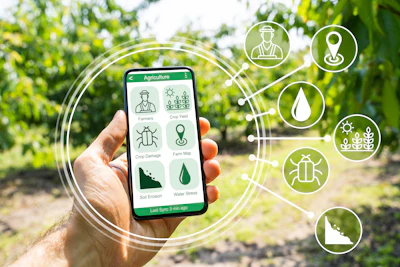
The economics have changed. Most companies already collect location, fuel, temperature, and shipment data through fleet telematics, connected sensors, and transportation management systems. Cloud platforms and standard software connections make that information easier to combine, and for businesses with those tools already in place, adding emissions analysis is far more economical than building separate visibility infrastructure from scratch.
Analytics turns those records into usable estimates. Fuel consumption paired with emissions factors produces an estimated quantity of greenhouse gases. Electricity use connects to the right power-supply factor. Shipment data allocates transportation emissions to specific customers, products, or lanes.
Technology doesn't eliminate the work of cleaning data or engaging suppliers. It makes it more practical to reuse information the business already needs. The same data that supports service, maintenance, and cost control can also support sustainability.
Acting while the shipment is still moving
Consider that delayed refrigerated truck. A connected operation combines its arrival time, fuel consumption, temperature readings, and unloading schedule. An alert prompts the receiving team to adjust the dock sequence, while analytics estimates the cost and emissions tied to the delay. Across repeated deliveries, the same information reveals that a particular appointment pattern consistently creates unnecessary waiting.
Inside a warehouse, an unexpected increase in refrigeration electricity use triggers a maintenance inspection. Across a carrier network, shipment-level estimates help planners compare routing or consolidation options before dispatch. These are different decisions, but they share the same principle. Make environmental impact visible where operational choices happen.
Real-time action doesn't require a perfectly measured, real-time inventory of every emission. Fuel and electricity data update frequently, while supplier production data arrives quarterly or annually. Scope 3 will often combine supplier information with modeled estimates. The goal is timely, decision-useful information, with clear labels showing what's measured, estimated, or missing. Formal disclosures still require reconciliation, consistent methods, and appropriate verification. A fast dashboard is valuable. A fast dashboard that disguises uncertainty is not.
Where operators get stuck
Most modern fleet and facility systems already expose this data through standard exports. Ownership is the stall point. Fleet fuel data sits with transportation. Facility energy data sits with operations. Emissions accounting sits with sustainability or finance. Each group tracks its own numbers, on its own timeline, with its own definitions.
When a customer or a regulator asks for a unified answer, someone spends days reconciling spreadsheets built on different definitions, different timelines, and different formats. Solving this is an organizational choice before it's a technical one. It means agreeing on shared definitions, assigning ownership, and building the layer that lets fuel, energy, and shipment data feed one model instead of three.
Ahead of regulation
There's a compliance reason to build these capabilities too. California's Climate Corporate Data Accountability Act, SB 253, covers qualifying U.S.-formed businesses with more than $1 billion in annual revenue that do business in the state, public and private companies alike. The statutory timetable begins Scope 1 and Scope 2 disclosures in 2026, with Scope 3 disclosures beginning in 2027.
In the European Union, the Corporate Sustainability Reporting Directive requires covered companies to report sustainability information under European standards, including Scope 1, 2, and 3 emissions, subject to materiality and phase-in provisions. The EU has narrowed coverage and revised its standards since the rule was first written, so companies should confirm which requirements and dates apply to them.
The rules aren't uniform, and implementation continues to evolve. But waiting for a government to settle every detail isn't a business strategy. Customers need your emissions information for their own reporting, and your operations team benefits from better visibility regardless of whether a disclosure deadline applies.
Starting early provides time to establish a baseline, improve supplier data, and test the controls behind the numbers. It also means collecting operational savings while others are still deciding how to collect their data.
Start with decisions
Begin with a manageable operating area, a refrigerated fleet, a distribution center, or a group of high-volume lanes. Establish a baseline using fuel, electricity, shipment, and maintenance records. Bring operations, finance, procurement, and sustainability together to agree on definitions and ownership.
Then make the information actionable. Give each alert an owner. Track emissions alongside cost, service, safety, and food waste. Measure both total emissions and emissions per unit moved, so efficiency gains don't conceal a growing overall footprint. Expand supplier coverage and improve estimates as the process matures.
Transparency earns its value when it changes a decision. Data and connected systems make it possible to understand emissions across all three scopes and respond to many of their drivers in real time. Those numbers can help you operate better today, whatever a regulator eventually requires.