*Content sponsored by Copeland
For years, international supply chains have leaned heavily on 2G and 3G infrastructure to track cargo. However, the landscape is now changing.
Telecommunications providers around the world are phasing out legacy 2G and 3G networks in favor of 4G and newer technologies, putting many existing tracking devices at risk of losing cellular connectivity and the ability to transmit shipment data.
Even a short loss of visibility can make it more difficult to verify cold chain integrity, potentially increasing the risk of spoilage, rejected loads or compliance challenges.
This comes at a time when the stakes have never been higher. Projections indicate the Earth’s population will reach 10 billion people by 2050, meaning to feed everyone sustainably, global food demand is forecasted to spike by more than 50 percent. Preventing waste and protecting product integrity during transit is no longer just a corporate goal; it’s a global necessity.
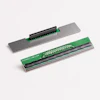
To help bridge potential network gaps, Copeland, a global climate technologies company, launched its new GO Real-Time GL and GO Real-Time GL XL cargo trackers. Engineered on global long-term evolution (LTE) cellular technology, these devices leverage widely available 4G networks to maintain reliable connectivity as legacy networks are retired.
“As supply chains grow more complex and telecommunications networks evolve, customers need reliable, real-time visibility they can depend on,” says Alex Axelsson, senior product manager at Copeland. “Our goal with these devices is to provide organizations transporting perishable and temperature-sensitive food and pharmaceuticals dependable, end-to-end visibility to protect product integrity, reduce waste and support safe delivery.”
Meet the Lineup: GL vs. GL XL
Copeland built these trackers to help organizations standardize shipment monitoring across multiple transportation modes, from cargo planes to cross-border shipping containers.
Both devices monitor temperature, humidity, movement, light, security and location; however, they are optimized for specific use cases.
Organizations shipping by air or moving high-value goods through ground transportation may find the GO Real-Time GL best suited for shorter transit windows. Powered by an alkaline battery, this device is ideal for shipments taking up to 20 days.
For extended-duration shipments, the GO Real-Time GL XL is a better match. Equipped with a lithium battery, the device offers up to 90 days of in-use life and can operate reliably in deep-freeze environments.
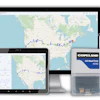
All monitoring data is transmitted in real time to Copeland's cloud-based Oversight360 platform, where it is analyzed to provide actionable insights for supply chain teams.
Turning Shipment Data into Actionable Intelligence
A tracker is only as good as the software backing it up. Oversight360 translates data into actionable intelligence to enable organizations to detect risk earlier, benchmark carrier and lane performance, increase visibility across partners and make more informed supply chain decisions.
The goal isn't just to know where cargo is, it's to identify potential issues early enough to prevent product loss, maintain quality and reduce waste.
The difference between a routine shipment and a costly loss is how quickly a problem is identified. Temperature excursions, unexpected delays or unauthorized access can escalate within hours, leaving little opportunity to recover valuable or time-sensitive goods. Real-time monitoring gives supply chain teams the information they need while a shipment is still in transit, allowing them to investigate issues, coordinate with carriers and take corrective action before product quality is compromised.
For example, if a reefer container’s cooling unit fails on a highway or a cargo door is opened unexpectedly in a port, the Oversight 360 software triggers an immediate alert. Supply chain managers can spot the risk early, diagnose the issue and intervene before a valuable shipment of medicine or fresh produce spoils.
Alerts, shipment status, and sensor data are displayed in dashboards that provide a real-time view of in-transit shipments. Users can customize device settings and dashboards to prioritize the information that matters most to their operations. The software can also automatically generate and distribute trip reports to key stakeholders, reducing manual reporting and keeping teams informed.
“By pairing global 4G connectivity with the analytical power of Copeland’s Oversight360, we’re helping supply chain managers protect sensitive goods, reduce waste and improve decision-making across their supply chains,” says Axelsson.
The era of relying on legacy connectivity is ending. As the cold chain becomes increasingly connected and data-driven, organizations that modernize their tracking technology will be better positioned to protect product quality, reduce waste and maintain visibility across global supply chains.
Explore Copeland's GO Real-Time Trackers and Oversight360 cloud-based platform today.