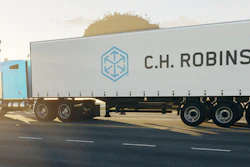
The most dangerous moment in a cold chain is not a warm truck. It is the handoff. Product changes custody, plant to carrier, carrier to depot, depot to customer, and at each exchange, two threads must survive together: the identity of what is moving and the conditions it has experienced.
Logistics has grown sophisticated at monitoring the second thread. The industry's quiet weakness is that the two threads are so often carried separately, and a thread carried separately is a thread that breaks.
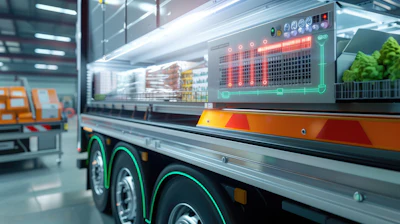
Consider what actually happens when temperature data and product identity live in different systems. A lane monitor flags an excursion on a Tuesday afternoon. The question that matters immediately is: which cases, which lots, which customers? If identity travels as paperwork while temperature travels as telemetry, answering means manual reconciliation, matching timestamps to manifests to pallet sheets, under time pressure, with product aging while people search. The excursion was detected in seconds; the exposure takes days to define, and the definition arrives wide, because uncertainty always recalls more than necessary.
Now run the same event where the threads are braided: every pallet, ideally every case, carrying a captured identity that the shipment record binds to its journey, and condition data attached to that identity rather than to a vehicle in the abstract. The excursion resolves to a defined set of units in minutes. Affected product is intercepted precisely; unaffected product flows on. The same telemetry investment, an order of magnitude more valuable, because it finally knows what it was measuring.
The braid has to begin inside the plant, which is why this is not purely a logistics problem. A shipment can only be as granular as the plant's data: if production captures identity at unit level and prints case and pallet labels from that data, the advance shipping notice becomes a true product-level manifest, and everything downstream can stay precise. If the plant ships batch-level paperwork, no amount of downstream telemetry can sharpen it. Cold chain precision is inherited, not added.
There is a commercial edge for carriers and 3PLs willing to lead here. Shippers are being pushed, by regulation and by their retail customers, toward product-level accountability across the whole journey. Logistics partners able to receive identity-rich shipment data, preserve it through their own handoffs, and return condition history attached to it are selling something scarcer than trucks and pallet positions: they are selling the continuity of proof.
The cold chain has spent two decades learning to measure everything. The next advantage belongs to those who connect what is measured to what is moved, so that at every handoff, the product and its story change hands together.