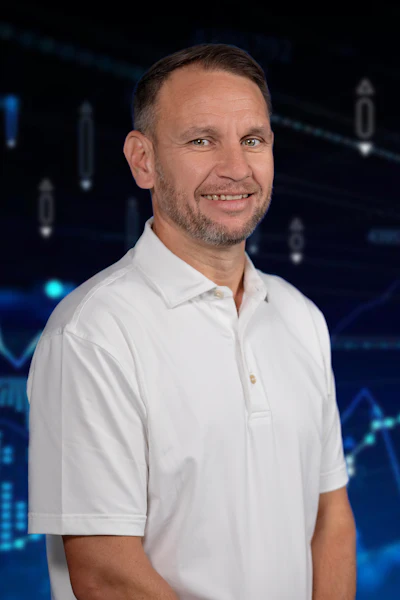
Graham Scott, SVP, chief procurement officer, Jabil Inc., was named the overall winner of the Top Procurement Pros category for this year’s Pros to Know award, presented by Supply & Demand Chain Executive.
Scott serves as Jabil’s SVP and chief procurement officer, leading a global procurement organization responsible for more than $26 billion in annual spend and a supplier ecosystem of approximately 38,000 partners worldwide. Recently elected to the CPO role, he oversees more than 1,000 global procurement professionals across electronics, mechanicals, indirect materials, and compliance, with accountability for aligning procurement strategy to enterprise growth, margin expansion, and risk management.
With over 30 years of experience in the procurement space, Scott is deeply focused on expanding Jabil’s procurement technology capabilities across the enterprise. His personal strategy centers on embedding advanced digital tools, analytics, and AI-enabled platforms across procurement to improve visibility, forecasting, decision-making, and collaboration with suppliers and customers. He also places strong emphasis on eliminating redundancies in technology investments and building scalable systems that can be applied consistently across electronics, mechanicals, indirect materials, and compliance. This includes supporting advanced initiatives such as Jabil’s Procurement Intelligence Platform (PIP) and MI-6 costing tool.
Scott also plays a central role in procurement governance pertaining to policy updates, contract and liability approvals, organizational design choices, senior leadership promotions, and other strategic decisions that shape the direction of the function.
He also continues to redefine how procurement creates value, moving beyond price negotiation to a disciplined, partnership-driven operating model anchored in the “4Cs”: communication, consistency, credibility, and collaboration. These four principles shape how Jabil engages its global supply base. In parallel, Scott is advancing the digital maturity of procurement, ensuring that the same principles guiding supplier relationships are supported by real-time intelligence and advanced tools.
Over the past year, Scott has focused on the continued advancement of PIP, which transitioned the team away from manual, spreadsheet-based work toward real-time digital insight. This work also included the development of MI-6, which integrates AI-enabled cost modeling for mechanical components into the PIP platform. During the same period, Scott continued to evolve Jabil’s supplier relationship management program, which included disciplined reviews of strategic supplier portfolios, assessment of technology fit, regional coverage, and commercial value, and helped the organization navigate a rapidly shifting environment. He also played a key role in supporting the continued growth of Jabil’s procurement services capabilities.
Looking ahead, Scott is focused on strengthening the alignment, maturity, and strategic influence of Jabil’s global procurement organization; resetting and strengthening the way Jabil engages its strategic suppliers; and technology enablement.
Scott sits down with Marina Mayer, editor-in-chief of Food Logistics and Supply & Demand Chain Executive and co-founder of the Women in Supply Chain Forum, to talk more about Jabil’s supplier relationship management programs and the importance of engaging strategic suppliers.
Supply & Demand Chain Executive: Let’s first talk about you. Tell me a little bit about yourself and your journey to get to this current stage in your career?
Graham Scott: I lead Jabil’s procurement organization as senior vice president and chief procurement officer, managing over $26 billion in annual spend and a supplier ecosystem of approximately 38,000 partners worldwide. Recently promoted to the role, I manage more than 1,000 global procurement professionals across electronics, mechanicals, indirect materials, and compliance, with accountability for aligning procurement strategy to enterprise growth, margin expansion, and risk management. With over 30 years of procurement experience, my focus is on positioning the function as a growth driver rather than simply a cost center. Early on I learned quickly that details matter: understanding your category, knowing your cost drivers, and building real relationships with suppliers all directly influence decisions both upstream in design and downstream in delivery.
I’ve progressed through positions across global sourcing, commodity management, and costing, taking on increasing responsibility across Europe, Asia, and the U.S. In 2016, I became senior director of global sourcing at Jabil, eventually advancing to VP of global procurement, and most recently, chief procurement officer in 2025.
Throughout my time at Jabil, I’ve focused on building a procurement model that goes beyond price negotiation, emphasizing consistency, transparency, and partnership. Operationally, that means embedding advanced analytics, AI-enabled cost modeling, and digital platforms across categories so our teams can make fact-based decisions quickly, collaborate with suppliers early, and align with customer priorities. Technologies like our Procurement Intelligence Platform (PIP) and MI-6 mechanical component intelligence solution illustrate this approach, giving our teams the ability to engage with both mechanical and electronic manufacturers across our supplier ecosystem with the same level of insight and rigor.
Over the years, I’ve learned that value in procurement compounds over time. It comes from disciplined, repeatable decisions; investments in systems and tools that scale; and the patience to build relationships that withstand market turbulence. That combination — grounded in experience, amplified by technology, and disciplined through governance — is what allows Jabil’s procurement organization to move beyond cost management into strategic impact, and it guides everything I do in this role
Supply & Demand Chain Executive: One of the achievements outlined in your submission is how you redefine how procurement creates value, moving beyond price negotiation to a disciplined, partnership-driven operating model. Please outline the principles and why doing so is important.
Scott: Redefining value in procurement has been about shifting the focus from transactional price negotiation to a disciplined, partnership-driven operating model. For me, this approach is anchored in four core principles: communication, consistency, credibility, and collaboration:
• Communication ensures suppliers always understand priorities, expectations, and direction, so decisions are informed and aligned.
• Consistency eliminates surprises, builds predictability into relationships, and allows both Jabil and our suppliers to plan and execute with confidence.
• Credibility is earned through follow-through. Commitments are honored across the lifecycle of a program, which reinforces trust and strengthens long-term partnerships.
• Collaboration brings the final element. Working side-by-side with suppliers allows us to solve complex problems, co-develop technology, and respond more effectively to customer needs.
These principles are embedded in our supplier relationship management (SRM) program, which elevates supplier engagement from reactive issue resolution to a proactive, strategic capability focused on long-term value creation. Our SRMs work to develop a comprehensive understanding of each supplier’s business, including strategic priorities, executive incentives, financial performance, technology roadmaps, and sustainability goals. This insight allows us to build deep partnerships with key suppliers, recognizing them as critical collaborators in delivering value to our customers and enabling shared growth, particularly during periods of market volatility.
For example, in highly cyclical markets such as semiconductors, our differentiated approach translates into tangible advantages. Jabil often gains priority access to constrained supply, earlier visibility into emerging technologies, and opportunities to collaborate on new manufacturing and customer initiatives. The strength of these relationships enable us to secure disproportionate support and capacity because we have invested in the partnership long before a crisis occurs.
Supply & Demand Chain Executive: You’ve also played an integral part in the advancement of Jabil’s Procurement Intelligence Platform and its supplier relationship management program. What are some cool features about these solutions?
Scott: Jabil’s Procurement Intelligence Platform (PIP) and MI-6 technologies provide the intelligence to make decisions quickly and confidently, while Supplier Relationship Managers (SRMs) ensure those decisions are anchored in durable, strategic relationships. It all comes back to people, process, and technology enabling each other.
Jabil’s Procurement Intelligence Platform (PIP) gives our teams the ability to act with both speed and insight. The tool brings together spend, supplier, and commodity data in real time, embedding analytics directly into workflows and reducing manual effort. By unifying data and embedding it directly into procurement workflows, we reduce manual friction and preserve context end-to-end.
The addition of our MI-6 solution introduces AI-driven cost modeling for mechanical components, filling a historical gap in pricing data and giving teams the confidence to test scenarios, evaluate trade-offs, and make proactive sourcing decisions. As we continue to scale the platform, the goal is to free capacity while enabling our commodity managers to perform higher-value work: shaping negotiation strategy, strengthening supplier relationships, and making informed decisions as markets tighten.
Our supplier relationship managers complement these tools by providing the structure and discipline needed for long-term resilience. Our SRMs align key suppliers with long-term objectives, fostering executive-level partnerships, and embedding processes that maintain continuity and support innovation even under stress. It’s not just about reacting; it’s about shaping a supply base that can adapt and perform under pressure.
Combined, all of these solutions turn procurement into a function that drives margin, mitigates risk, and creates enterprise-wide impact — not just today, but long term.
Supply & Demand Chain Executive: One of the goals outlined in your application is to reset and strengthen the way Jabil engages its strategic suppliers. What does this look like?
Scott: Resetting and strengthening how we engage with strategic suppliers is about clarifying roles, deepening partnerships, and ensuring that every interaction creates long-term value. Over the past few years, supplier relationship managers (SRMs) have been called on to manage both long-term partnership and short-term commercial execution. As markets stabilize, my goal is to clearly delineate these responsibilities: commodity managers will lead near-term sourcing, negotiation, and escalation, while SRMs will focus on the longer-term journey, aligning on technology, capabilities, and growth opportunities.
This reset is also about embedding discipline and consistency at scale. We are reviewing supplier portfolios, assessing regional coverage, evaluating technology fit, and ensuring governance and engagement processes are aligned across the organization. The objective is to maintain continuity and build trust with our most critical suppliers, and consequently our customers, while enabling collaboration that drives innovation and strengthens resilience across our supply base.
Supply & Demand Chain Executive: The Top Procurement Pros category recognizes professionals in the procurement space. What advice do you have for other procurement professionals or even those looking to join the logistics space?
Scott: In today’s operating environment, resilience is not a response capability; it is the cumulative result of disciplined decisions made early, pressure tested and reinforced over time.
Many organizations experience disruption not because of a single shock, but because past sourcing and design choices limited flexibility, leaving them overly dependent on narrow supplier sets, rigid geographies, or transactional relationships. Inventory or contingency plans can absorb some impact, but they cannot create flexibility that wasn’t built in from the start.
The lesson for procurement professionals is to focus on proactive optionality, not static continuity. Success comes from building trusted supplier relationships, cultivating skilled teams, and embedding disciplined processes that enable confident decision-making under pressure. Technology (including AI adoption) and analytics are powerful enablers, but their value depends on how well they support human judgment and foresight.
Ultimately, resilience comes from the combination of disciplined decisions, capable people, and trusted partnerships. By thinking ahead, investing in relationships, and reinforcing strategic practices over time, procurement professionals can turn disruption into opportunity, ensuring supply chains remain adaptable, reliable, and strategically valuable under even the most volatile conditions.
Supply & Demand Chain Executive: What are some things not addressed above that would be pertinent to include in the article detailing your strengths, achievements, overall goals, etc.?
One of the clearest demonstrations of my approach came during the turbulence of the early 2020s, spearheaded by COVID-19. In a period defined by shortages, price volatility, and extreme market uncertainty, my team reacted calmly and responsibly, relying on the proven capabilities and disciplines we had spent decades building.
Our Procurement Intelligence Platform (PIP) provided real-time visibility into risk signals, cost drivers, and supplier constraints, allowing the team, to escalate early and engage from a position of insight rather than urgency. When escalation was necessary, our commodity managers approached suppliers with data, context, and a partnership mindset grounded in communication, consistency, credibility, and collaboration. Those conversations were structured and solutions-oriented, not transactional. As a result, Jabil preserved our position as a customer and partner of choice at a time when many companies were struggling to secure supply. And most importantly, the business continued to grow through one of the most volatile supply environments in history.
Navigating this period of extreme market volatility provided the kind of hands-on, practitioner-led experience that directly informs how I support the continued growth of Jabil’s portfolio of procurement services offerings. Over the past 12 months, I have worked to scale and apply the same tools, intelligence platforms, and supplier[1]engagement approaches used internally so they can be extended to customers as tailored service offerings. This work has strengthened the operating model behind the business, improved governance, and helped position procurement not only as an internal enabler but as a capability that creates value for our customers as well.
These experiences continue to shape how I lead the function today. I view procurement as a strategic lever that protects continuity, enables innovation, and reinforces enterprise confidence. This perspective drives a focus on disciplined governance, forward-looking risk management, and supplier partnerships grounded in trust and accountability. It also defines how I structure the function, scale services, and measure success. We build capability ahead of need, align performance to enterprise outcomes rather than transactional savings alone, and make decisions that preserve flexibility over time for ourselves and our customers. When procurement operates with clarity and discipline, it does not simply react to market conditions; it helps define them.
CLICK HERE to view the full list of winners.