Food warehouses are designed for movement. Everything inside them is optimized around speed, timing, and flow. Pallets are constantly shifting between staging areas and loading docks. Forklifts weave through narrow aisles carrying heavy, often vision-obstructing loads. Workers move between picking zones, refrigeration areas, packing stations, and outbound lanes under relentless operational pressure to keep orders moving.
On paper, these facilities are heavily regulated environments with strict safety procedures, detailed training programs, and compliance frameworks built to minimize risk. But the lived reality on the warehouse floor is far more fluid than any safety manual can fully account for.
Conditions change by the minute, visibility disappears in an instant, a pedestrian steps into a shared traffic zone at the exact moment an operator is navigating a blind corner with a raised load. Most incidents don’t happen because somebody deliberately ignored safety procedures, but because modern warehouse environments bet too heavily on human awareness and reaction time in spaces where there’s very little margin for error.
According to the U.S. Bureau of Labor Statistics, the warehousing and storage industry reported an injury and illness rate of 4.5 cases per 100 full-time workers in recent years, significantly above the national average for private industry. Forklift-related incidents remain one of the most persistent operational hazards across these logistics-heavy environments, particularly in facilities where pedestrians and industrial vehicles operate side by side.
Food warehouses are even more vulnerable because beyond putting workers at risk, these incidents can also disrupt product integrity, damage inventory, interrupt cold chain operations, and create downstream compliance consequences that ripple outward across the business and cascade into major losses.
It’s time for a fresh conversation around warehouse safety. Operators still matter, training still matters, and compliance still matters, but warehouse leaders are beginning to come to terms with the fact that procedures alone – however well intentioned – can’t solve a problem rooted in unpredictable, real-time variables. The industry needs to look beyond enforcement and toward systems capable of actively supporting awareness inside the flow of day-to-day operations.
The awareness trap
Safety systems in warehouses tend to rely on the simple premise that if an operator can see a hazard, they’ll avoid it. That thinking shaped the industry’s approach to vehicle safety for years, from mirrors and blue safety lights to reverse alarms, camera displays, warning decals, and painted pedestrian walkways. They’re all designed to make it easier for operators to gain awareness of their surroundings. Those tools still play an important role, but they have an Achillies heel – they all depend on the operator having perfect awareness at all times. Just because an operator can see something, thanks to a mirror or a camera display, doesn’t mean they will. They’re often navigating tight spaces, managing obstructed loads, watching for pedestrians, protecting inventory, and maintaining throughput targets all at once. Add noise, fatigue, time pressure, and congested traffic flow into the mix, and even the most seasoned operators will make honest mistakes. It’s an unfair burden to place on them.
Blind spots continue to create some of the highest-risk moments in warehouse operations, particularly around intersections, loading docks, staging zones, and refrigeration areas where visibility can change instantly. That challenge is even greater when forklifts are carrying elevated or oversized loads that block forward vision entirely.
Traditional warning systems work to an extent, but they also lose effectiveness when they produce constant alarms or alerts that aren’t related to genuine danger. Eventually, operators stop reacting with the same sense of urgency because the safety systems they depend on are constantly “crying wolf” as their cab becomes saturated with noise. Human attention has limits, especially in facilities where movement never really stops. That’s why more organizations are beginning to rethink what warehouse safety should actually look like.
Instead of asking operators to carry the full burden of environmental awareness themselves, the focus is shifting toward systems capable of interpreting surrounding conditions in real time and communicating meaningful risk the moment it emerges.
Embedded intelligence
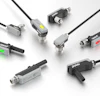
AI-powered perception systems are starting to change how industrial vehicles interact with the environments around them. Rather than simply recording footage or triggering generic proximity alarms, these systems use machine vision and edge-based AI to interpret what’s happening in real time. They can identify pedestrians, monitor movement around the vehicle, and recognize when somebody is entering a high-risk area, all without relying on cloud processing or delayed response times. In a busy food warehouse where forklifts and pedestrians constantly move through shared spaces, that immediacy makes a real difference. Seconds often separate a near miss from a serious incident.
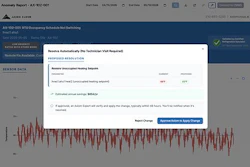
What makes these systems effective isn’t just detection capability, however. It’s how they communicate risk to the operator. Warehouses are already noisy, high-pressure environments, and constant alarms quickly become background noise. That’s why the next generation of industrial safety technology is focusing heavily on clarity and context, surfacing meaningful hazards without overwhelming operators with unnecessary alerts.
Rather than removing human judgment from the equation, it elevates it – paying attention when they physically can’t to give them the split-second insight they need to act. When safety systems can actively interpret surrounding conditions and communicate genuine risk in real time, they become far more useful than passive tools operators eventually learn to tune out. They become real co-pilots.
The food warehouse of the future probably won’t look radically different from the outside. Forklifts will still move pallets, loading bays will still run at full speed, and operators will still make thousands of decisions every shift.
But the intelligence of the systems supporting those decisions will have been completely overhauled. Safety cannot simply be a case of placing more responsibility on people and hoping vigilance fills the gaps. It needs to be built into the environment itself, where machines can recognize risk as it develops and help unavoidable risk become avoidable risk.