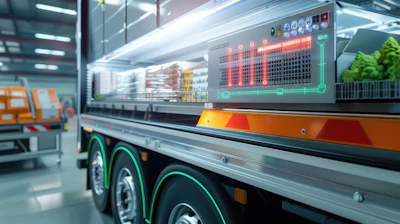
A foodservice fleet was losing hours at every stop. The driver was pulling product off of conveyor rollers through a side door of the trailer, creating a manual and cumbersome process. Each stop took roughly two hours. After discovering the inefficiency, the fleet redesigned the trailer to remove side doors and put the product on pallets. That dropped the length of stops to just 30 minutes. The route didn’t change, and neither did the product. The only thing that changed was the trailer. Trailer design is the hidden lever that unlocks efficiency, safety, and driver retention, and most fleets overlook it.
Trailer designs have often been centered around the freight, prioritizing elements such as temperature zones and weight capacity. While those are important factors to get right, it means the driver’s experience often takes a back seat. What’s changing now is that fleets are starting to design trailers around the driver’s actual experience. Beyond making routes more efficient, they’re discovering it’s also one of the most direct levers they have for improving safety, reducing fatigue, and keeping drivers on the job.
The pressure behind the shift has been building for years. Data from the American Transportation Research Institute (ATRI) shows an aging driver population, with retirements only expected to increase, all while the industry has been coping with a driver shortage. Fleets have responded with better pay, signing bonuses, and scheduling flexibility. Those efforts help, but when a driver has 15 stops on a route, and each one requires climbing in and out of the trailer and handling heavy product by hand, compensation alone doesn’t keep someone in the job for long. The physical experience of the work matters, and that experience is shaped by the trailer.
Think about what a typical day looks like in a multi-temperature foodservice operation. The trailer has rear doors and multiple side doors, each opening into a different compartment. A driver may go in and out of those doors dozens of times before the day is done. Every time they climb up, there is a chance of a missed step or a fall. Every box they lift by hand creates wear on their back and shoulders. By afternoon, they are fatigued, and a fatigued driver is a less safe driver, both on the road and at the next stop.
When those injuries happen, they hit the bottom line directly. Insurance is already one of the fastest-rising costs in trucking. According to the ATRI, premiums have climbed 36% per mile over the last eight years, and insurance was voted a top-three industry concern in 2025. Every workers’ compensation claim from a driver injury sends those costs even higher at renewal.
That is why seemingly small design changes carry so much weight. Reconfiguring a trailer so drivers can access product from fewer doors, or from the ground level via a liftgate instead of repeatedly climbing into the trailer, reduces injury exposure and cuts the physical toll across a shift. It also speeds up the stop, which means more deliveries fit into a single route without dispatching another driver and trailer. A fleet that shaves 15-20% off each stop is gaining capacity and making the job more sustainable at the same time.
Even changes that seem minor have a way of adding up. Trailer suspension is a good example. An air ride system absorbs road shock that spring suspension passes straight through to the cab. That makes a huge difference in how the driver feels over an eight- or 10-hour day. A driver who is not getting beaten up on the road arrives at each stop less fatigued, works more safely, and finishes the day with more left in the tank.
Interior lighting works the same way. A driver might have to pick individual SKUs for a job in the dark bed of a trailer. Without good lighting, they spend a long time searching with a flashlight for each one, slowing down the stop and adding frustration to an already demanding task. A simple addition like motion-sensing lights that come on when a driver walks in and shut off when they leave can make that process fast and accurate.
One change affects comfort on the road. The other affects efficiency at the stop. Both can affect whether the driver is still on the job six months from now.
The challenge is that these kinds of problems rarely show up in planning systems or on spec sheets. A fleet can model routes and optimize stop sequences all day, but the software does not know that a driver is hauling a pallet jack three blocks down a crowded street because the truck cannot get close enough to the restaurant. Or that a driver is forced to get out of their truck in the middle of traffic because there’s nowhere to safely park at the drop-off site.
Spending a full shift with a driver, stopwatch in hand, observing how long each stop takes, how many times they enter and exit the trailer, what workarounds they have invented because the equipment does not match the delivery environment — that is the information that leads to meaningful improvements.
Situations like these are often uncovered by spending time in the field with drivers and observing the realities of daily deliveries. That firsthand perspective can help fleets make equipment and operational decisions that better align with real-world workflows.
Fleets should reevaluate their trailer specifications every 3–5 years or any time their delivery model or driver workflow changes.
As the industry continues to evolve, the demands on trailer design will continue to shift. Automation is already showing up at the dock, with robotic systems and automated conveyor belts handling product during loading. Trailer interiors will need to accommodate those technologies alongside the human workflows that still define most last-mile delivery. As the number of items fleets carry keeps increasing and delivery windows tighten, fleets will need trailers that support faster picking, smarter product organization, and seamless handoffs between automated loading systems and the driver.
Too often, the default is to push what is available. That mindset produces trailers that are close enough to what a fleet needs, but never quite right for how their drivers actually work. The fleets seeing the strongest long-term results are treating equipment as a long-term investment in their workforce, not a transaction. Getting the trailer right on the front end — designed around real driver workflows informed by time spent in the field — pays off across every mile and every stop that follows. No operation moves product without a driver behind the wheel. It’s time fleets started designing trailers around that reality.