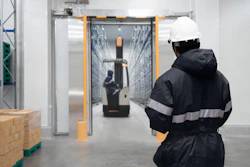
The global warehousing industry is navigating a period of profound structural transformation. As fulfillment velocities increase and consumer expectations for next-day delivery become the baseline, labor capability has emerged as the primary engine of competitive advantage. To ensure their workforce is operating efficiently, many facilities have invested heavily in labor management systems (LMS). However, while an LMS is a critical foundational tool, relying on it alone to manage a highly dynamic warehouse often leads to severe operational bottlenecks.
To survive in a volatile market, supply chain leaders must understand the distinct capabilities of an LMS, its inherent limitations, and how pairing it with artificial intelligence and agentic orchestration can eliminate the crushing weight of decision overload.
The foundational role of the LMS
In the technological hierarchy of a warehouse, an LMS typically follows the implementation of a warehouse management system (WMS). While a WMS tracks inventory and executes tasks, an LMS focuses specifically on tracking and optimizing individual worker performance.
An LMS evaluates your workforce by tracking key performance indicators (KPIs) such as pick rates, accuracy, and attendance. It provides visibility into which workers are thriving and which are struggling, allowing managers to offer targeted training or reward top performers. Ultimately, an LMS looks inward, evaluating people against historical standards and past performance metrics. It tells you how your people worked yesterday, but it lacks the predictive and prescriptive power to tell you where they should be ten minutes from now to prevent a looming bottleneck.
The transactional trap and decision overload
The fundamental limitation of a traditional LMS is that it operates in a silo, separate from the WMS, transportation management system (TMS), and automation execution tools. While an LMS is excellent at measuring past performance, it is not designed to dynamically coordinate real-time tradeoffs across the facility.
Warehouse conditions change constantly. Transportation delays, order spikes, automation variability, and sudden labor shortages quickly invalidate static labor schedules created at the start of a shift. Because the LMS and WMS cannot natively synchronize these disruptions, the burden of rebalancing the floor falls entirely on human supervisors. This fragmentation creates severe decision overload, forcing managers to manually stitch together data from disconnected systems, often using "Shadow IT" like disparate Excel sheets and paper logs, to make a single execution decision.
When a manager spends 70% of their shift behind a desk analyzing reports to decide where to move five people, they are not on the floor coaching or ensuring safety. This "management latency" is the invisible drain on modern supply chain efficiency.
The true cost of unorchestrated labor
When static labor plans fail and supervisors are overwhelmed by decision overload, the facility descends into a culture of reactive firefighting. This operational drag is not merely a headache; it consumes 8% to 15% of a facility's total operating expenses. To bridge the gap between static plans and operational reality, facilities often fall into two costly, unsustainable extremes:
1. The overtime trap
Facilities lean heavily on extended shifts to recover lost productivity caused by poor coordination. However, working employees past 50 hours a week triggers the "productivity-fatigue paradox." Research shows that output drops so significantly after a certain threshold that a 60-hour workweek often yields less total output than a well-rested 40-hour week due to errors and slowed pace. Furthermore, the human cost is high: working 12 or more hours a day increases safety hazard rates by 37%, leading to higher insurance premiums and worker compensation claims.
2. Labor hoarding and "busywork"
To avoid service failures and "out-of-stock" penalties from retailers, some managers chronically overstaff the floor. This "labor hoarding" results in skilled associates being forced into monotonous, non-productive busywork just to keep them on the clock. This inefficiency kills margins and insults the intelligence of the workforce, leading to disengagement.
The attrition crisis: A financial hemorrhage
Both of these extremes drive severe burnout and systemic attrition. Annual turnover rates in modern distribution centers frequently reach 40-60% and can exceed 100% in high-velocity fulfillment centers. This is a financial catastrophe. Recruiting, hiring, and onboarding a single entry-level associate costs between $4,000-10,000. These costs stem from recruitment fees, a 30- to 90-day new-hire productivity gap, and the high rate of errors made by inexperienced staff. When a warehouse loses 50 people a year, it is effectively flushing half a million dollars down the drain, money that could have been invested in technology or higher wages.
Synchronizing the warehouse with agentic orchestration
To unlock the full potential of their workforce and their LMS, forward-thinking operations are shifting to dynamic warehouse orchestration powered by Agentic AI. While an LMS looks inward at individual performance, Orchestration looks outward, continuously adjusting workflows to respond to current operational needs and constraints.
A warehouse decision agent acts as a centralized "digital brain," sitting on top of the existing WMS, LMS, and ERP systems. This "overlay" approach is critical because it allows companies to harmonize data without requiring a disruptive and expensive "rip and replace" of their core infrastructure.
By analyzing real-time data across labor availability, inbound carrier ETA, and automation capacity, the decision agent continuously recalculates the optimal labor plan. This moves the facility from reactive management to proactive execution.
● Scenario: If a truck arrives two hours late, a traditional LMS-only facility keeps workers in the receiving area with nothing to do.
● Orchestrated response: The decision agent senses the delay via the TMS, calculates the impact on shipping deadlines, and autonomously reallocates those receiving associates to the picking zone via their WMS-handheld devices.
This happens in minutes, not hours. It eliminates the need for manual firefighting, reduces the reliance on chronic overtime, and empowers supervisors to act as proactive floor coaches rather than data analysts.
Building a sustainable workforce culture
The most underrated benefit of AI orchestration is the stabilization of the workplace. When a warehouse is orchestrated, the "chaos factor" disappears. Schedules become more predictable, "panic-overtime" is minimized, and workers feel that their time is being used effectively.
Modern Agentic AI also introduces Explainable AI. When the system redirects a worker to a new zone, supervisors can ask the agent why that decision was made. The AI might explain that a specific sorter is at risk of "starvation" or that a high-priority order is approaching its shipping window. This transparency builds trust between the technology and the human team, transforming the AI from a "black box" into a collaborative partner.
The ultimate productive warehouse
LMSs are vital for understanding workforce efficiency, but they cannot manage the real-time chaos of a modern distribution center alone. An LMS tells you the score of the game; agentic orchestration calls the plays in real-time.
Combining a WMS, an LMS, and an orchestration platform creates the ultimate productive warehouse. By utilizing Agentic AI to make warehouse decisions work together, supply chain leaders can stabilize their operations, protect their margins, and build a sustainable culture that stops turnover at the source. The competitive edge of the next decade won't be found in who has the most data, but in who can turn that data into autonomous, intelligent action on the warehouse floor.