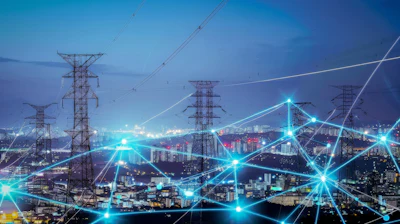
With the U.S. Department of Energy warning that blackouts could increase 100 times by 2030, the reliability and security of our aging national grid is in question. For warehouses and distribution centers (DCs) though, going dark isn’t an option. These facilities typically allocate around 15% of their operating budget towards energy costs, and their critical systems must stay running 24/7.
To mitigate the risk of losing power and to put less strain on the national grid, warehouses and DCs are exploring new decentralized energy options such as on-site microgrids with distributed energy resources (DERs) and battery energy storage systems (BESS). By doing so, they aim to ensure facility backup power and to keep material handling equipment running.
Let’s take a closer look at the challenges of a centralized grid, the essential systems warehouses depend on, and the energy technologies that can strengthen supply chain resilience.
Challenges of a centralized grid for warehouses
Many parts of the grid are outdated and not equipped to handle the growing demand for electricity, especially with the rise of automation and advanced technologies in warehouses. Over 70% of U.S. transmission infrastructure is past the midpoint of its 50-year life expectancy. Construction of new high-voltage transmission is occurring but at a slow pace.
In addition to the aging infrastructure, the centralized grid is also increasingly vulnerable to extreme weather events. Hurricanes, storms, and other natural disasters can damage power lines and substations, leading to prolonged power outages. Warehouses located in regions prone to such events are at a higher risk of experiencing these disruptions.
An unstable grid leaves warehouses and DCs vulnerable to significant financial and operational risks. Critical warehouse operations that simply cannot go dark, for instance, include refrigeration systems, material handling equipment, security, warehouse management software and other IT networks – the list is long. Outages for any of these vital components can equal lost productivity and revenue, spoiled inventory, security issues and more.
Historically, warehouses have dealt with grid outages by using inefficient, fossil-fuel driven generators, often paired with uninterruptable power supply (UPS), to keep critical systems running. While powerful, generators can produce high emissions and maintenance costs and have limited scalability. These factors make them less attractive for warehouse operators looking for sustainable, future-proof power options.
The rise of microgrids and DERs in warehousing
Today, more warehouse and DC operators are eyeing development of localized, decentralized electricity grids to support their operations. They are building their own microgrids on-site to reach energy resiliency, sustainability and net-zero goals.
A microgrid is a local energy system that connects power sources and equipment within a defined area and operates as one unit with the main grid. It can operate in either grid-connected or island mode, including entirely off-grid applications. DERs are small, modular energy generation and storage technologies that provide electric capacity or energy where it is needed. DERs can include solar systems, wind generation and battery energy storage systems (BESS).
Microgrids can be used during normal operations when there are no outages to help lower energy costs and significantly lower carbon emissions. Additionally, using solar and wind resources for microgrids can help further reduce a facility’s environmental impact. The large flat roofs of large-scale, industrial warehouses are particularly well-suited for solar arrays.
Another key component of a microgrid is a BESS. BESS are advanced solutions for energy storage and controlled usage, helping facilities maintain resilience. The technology seamlessly integrates renewable sources into a facility’s power mix, ensuring stable and dependable back-up power. BESS can also manage peak power usage well and enable load shifting to off-peak hours, potentially lowering energy spend for warehouses.
BESS are available in different battery chemistries, including lead, lithium and vanadium, as well as hybrid options, depending on the application. The domestic supply chain for lead BESS is well-established, with strides being made toward creating reliable networks for vanadium and lithium batteries close to home. These efforts will limit dependence on volatile global supply chains.
In addition to serving as facility back-up power, a microgrid with a BESS can be paired with charging stations for a warehouse’s electric material handling fleet both during outages and during normal peak demand periods. If the fleet also uses its own energy performance management software tool, the fleet manager can have good visibility into peak and average energy usage for their motive power assets.
Lastly, BESS can even be paired with generators if facility operators choose to keep them, increasing generators’ efficiency and reducing fossil fuel consumption.
Generating revenue with an on-site microgrid
As warehouses continue to explore decentralized energy options, there also are potential opportunities to generate revenue from their microgrids. Facilities in deregulated markets can store excess energy generated by their microgrids during off-peak hours and sell it to the wider grid during peak hours. This process helps improve a warehouse’s bottom line and improves the power quality for a region.
Facilities may also be eligible to participate in community solar programs. States like Illinois now have programs where businesses with solar arrays can sell their energy to program customers or local utilities. Savvy warehouse operators should explore these opportunities and determine if on-site solar energy generation comes with additional financial benefits.
The future of warehouse energy
Installing a microgrid gives facilities greater control over their energy supply, helping maintain operations during grid disruptions. On-site renewable resources can reduce reliance on the grid, lower emissions and potentially generate revenue, while battery storage and smart energy management can help cut costs during peak demand periods.
The time to build energy resilience for warehouses using emerging technologies is now.