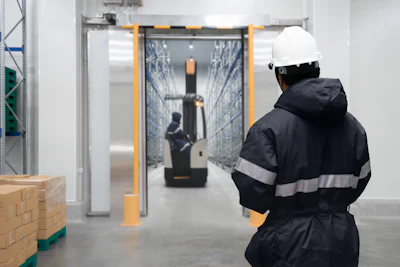
One of the biggest misconceptions about cold chain distribution centers is that keeping products cold is the hardest part. In reality, the real challenge, and the greatest opportunity, lies in how facilities are designed to balance space, labor, and automation from Day 1.
Cold chain environments operate under a different set of economics. Operating, construction, and energy costs are often higher, which means every square foot and every labor decision carries more weight. Treating these facilities as colder versions of ambient warehouses is a costly and all too common mistake.
Space efficiency in cold storage is not just about throughput, it directly affects where capital can be invested. When operators reduce waste space, they create room to invest in automation and systems that deliver long-term value rather than simply absorbing cost.
At the same time, cold chain operators face labor constraints that ambient facilities do not. Operating windows are limited by warm-up and cool-down cycles. Labor is harder to attract and retain. Physical demands make certain roles unsustainable over time. These realities force a critical question: Where does human labor add the most value, and how can operations be designed to minimize unnecessary effort while maximizing human contribution?
Why strategy must lead automation
Historically, cold chain automation has been dominated by rigid, crane-based systems that require large, uniform volumes to justify the investment. Those systems were expensive, inflexible, and poorly aligned with demand variability, which kept many operators manual longer than they should have been.
Today, robotics and modular automation have completely changed that equation. Operators can deploy automation in phases, retrofit existing systems, and even scale efforts over time. It’s important to note, though, that greater access to technology does not always guarantee better outcomes. Too often, organizations start with a technology solution before clearly defining the problem they are trying to solve. Automation is a tool, not a strategy. Without a clear understanding of demand patterns, labor constraints, and facility segmentation, even advanced systems can miss the mark.
Designing humans and robots to work together
There is no universal approach to how automated a cold chain facility should be. The right balance depends on variability, order profiles, and where demand is concentrated within the building. In cold environments, success comes from positioning people where they are most effective and designing operations to reduce the hardest and most repetitive work.
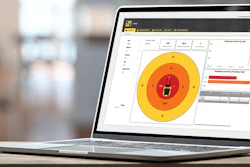
Blending human and robotic solutions often delivers a stronger ROI than fully automated or fully manual approaches because they align labor and technology to the realities of the operation. Real-time data, wearable technology, and advanced software platforms are increasingly important in enabling this balance. Visibility into travel time, congestion, and capacity helps operators continuously refine how humans and automation interact on the floor.
Unlocking capacity and designing for change
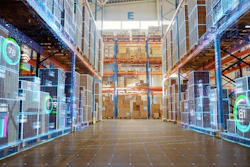
One of the most overlooked opportunities in cold storage is hidden capacity. Many facilities look to expansion before fully understanding how layout, slotting, zoning, and software can unlock usable space that already exists.
Advanced WMS, WES, and WCS platforms allow operators to move beyond theoretical capacity and manage growth more intelligently, often delaying or eliminating costly freezer expansions. Given the capital intensity of cold storage, flexibility is no longer optional. The highest performing cold chain distribution centers will not be the most automated. They will be the most adaptable.
The operators who thrive in the cold chain are those who take the time to plan, start with strategy, and deploy automation thoughtfully, supporting people, removing unnecessary strain, and enabling teams to focus on decisions and actions that make the biggest difference.