In today’s warehouses and distribution centers, the design of forklifts and related technologies increasingly reflects the requirements of the people who purchase, operate and maintain them. This shift stands in stark contrast to era of manufacturers engineering lift trucks as inflexible, seldom-updated solutions based on their own value chain. As the needs of warehouses evolve, material handling equipment must keep up. Operations that are beholden to manufacturers that sell off-the-shelf solutions risk falling behind their customers’ fast-changing demands, as standardized equipment is less able to adapt to changing workflows. As such, many successful material handling products and technologies now spring from an end user-driven design approach, a structured process of understanding customers’ unique, real-world challenges and converting feedback into tangible features that improve safety, productivity, operator comfort and operational value.
Design that is more responsive to the application
Labor shortages, increased SKU variety, tighter delivery windows and intense throughput demands create complex challenges for warehouse managers and forklift operators alike. But, although many of these challenges are common to all warehouses, the solutions required can vary widely by operation. When purchasing lift trucks, operations must consider how they’ll be used to enhance overall operational efficiency. For example, a truck’s lift and lower speeds may be among the best available, but a lack of stability at height could prevent those equipment-focused metrics from translating to a meaningful difference in key operational metrics.
Designing trucks based on this approach is not just about listening to what customers say and taking orders. It requires expert guidance to observe how customers actually work and collaboration to refine their requests into solutions they truly need. This means working closely with stakeholders throughout the operation, studying customer workflows and validating concepts with real users throughout development. This enables the designer and the customer to work together, uncovering potential problems and addressing those concerns without adding unnecessary costs.
Translating real-world needs into real-world designs
A foundational element of this approach is learning about and understanding every aspect of a customer’s operation. This is accomplished through:
· Interviews across roles: Operators, purchasing agents, safety managers, technicians and dealers all interact with equipment differently. Every point-of-view helps increase the understanding of what works and what doesn’t.
· Site visits and observation: Allowing manufacturers to see your operation firsthand gives them insight into your workflows and uncovers opportunities for improvement.
· Trend and usage analysis: Cataloging industry developments and emerging use cases can help you anticipate needs and adapt solutions to address them.
This iterative feedback loop keeps solutions rooted in reality, rather than one-sided assumptions by a manufacturer or conventional wisdom that may no longer hold true. It also helps keep trade-offs between cost, performance and usability grounded in operational priorities.
Ergonomics and operator comfort: Core examples of operator-driven innovation
Forklift operators spend long hours handling repetitive tasks under pressure. Poor ergonomics can lead to fatigue and injuries such as back strain, neck pain and musculoskeletal issues. Ergonomic risk factors include prolonged repetitive motion, awkward postures and exposure to vibration and noise. Understanding these realities is pivotal to understanding what exactly your warehouse needs from a forklift.
Improved visibility. Visibility directly impacts both comfort and safety. Traditional mast designs force operators to crane their necks to see their load and the environment around them, leading to strain and discomfort. Innovations influenced by feedback from operators — particularly those working in tight aisles or high stacking environments — have led to:
· Configurations with wider mast windows, nested channels and externally mounted chains and hoses for better forward visibility
· Narrower overhead guards that allow upward visibility without compromising protection
· Lower cowls and dashboards that provide a better forward view of the fork tips and ground
These improvements help operators avoid awkward head and neck positions and boost confidence and precision.
Operator comfort and control. When operators are uncomfortable and fatigued, they’re less productive. Integrating features like cushioned platforms, adjustable armrests and strategically placed padding allows operators to shift weight or rest, helping to stave off fatigue over long shifts. For example, operator feedback regarding shock and vibration has led to multiple floor options to improve comfort on stand-up trucks, from factory-integrated cushions to fully suspended floors.
Operator feedback also supports the importance of easy-to-understand, ergonomic controls. Intuitive controls — such as customizable touchscreens that provide performance information like equipment status and diagnostics, and armrest-integrated, steer-by-wire joystick controls that minimize hand movements — help address operator fatigue and improve productivity.
Technologies born of customer insight
Beyond fundamental operator ergonomics, overall operational goals of warehouses have influenced broader forklift technology development, particularly systems that address safety and operator awareness.
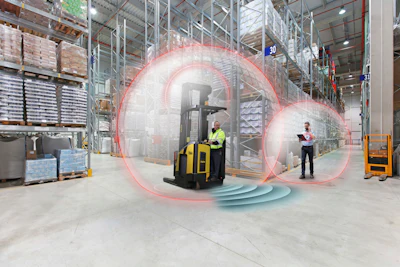
Operator-assist solutions. Operator-assist solutions (OAS), many variations of which are now standard offerings from many forklift manufacturers, originated from real-world use cases, such as:
- Pedestrians unexpectedly walking in front of a lift truck
- Operators traveling too quickly through crowded areas or around turns
- Loads sliding off the forks and damaging product
- Trucks hitting racking or other equipment
OAS technologies can help address these and other challenges. These systems range from simple lights and alarms to advanced stability and object-detection technologies that automatically intervene to help reduce collisions and tip-overs while keeping the operator in control.
Telematics and fleet management. Modern forklift telematics gather real-time data like idle time, operator habits, uptime and maintenance indicators, information that was previously difficult to obtain for fleet managers. This data helps warehouse managers make informed decisions about training opportunities, equipment utilization and safety improvements. In turn, this data also informs engineers on how trucks are used across various industries and working conditions, feeding into future design cycles where real usage patterns shape engineering priorities.
A redesign tailored to the application
During site visits, designers noticed operators struggling with visibility in dark trailers, knee pain from repeatedly crossing dock plates and the constant stop‑and‑go rhythm of order picking when using an end rider lift truck.
Their observations led to a new design that incorporates:
· Recessed lighting so operators no longer relied on fragile clip‑on dock lights
· Larger platform with a heavily cushioned mat to reduce joint impact
· Smart coast control to improve efficiency during high‑volume picking
By grounding these new features in real operator behavior, the truck supports operators in their pursuit of critical operational goals.
Designing for people, not assumptions
In a logistics landscape where labor demands are rising, safety expectations are paramount and customer delivery standards continue to tighten, having the right tool for the job is a necessity. By working closely with their equipment manufacturer, and by gathering and integrating real input from forklift operators, dealers and warehouse professionals, operations can take advantage of lift trucks and technologies that empower them to solve real, everyday warehouse problems.
The future of lift truck technology is being shaped by those who use it. A continual dialogue between warehouses and lift truck manufacturers leads to designs and features that aren’t merely engineered in a vacuum, but rather inspired by specific operational challenges.