As automation price points fall and capabilities accelerate, food and beverage companies are no longer treating robotics as future upgrades. Instead, they are embedding these capabilities into warehouse facilities from Day 1, using data‑driven design and infrastructure‑first planning to ensure smooth deployment, long‑term performance and a more favorable return on investment.
Embedding data infrastructure and robotics readiness into the facility itself
Engineers now account for robotics readiness at the structural and infrastructure level during early design phases. Key facility considerations include load‑bearing capacity to support reliable robot navigation, aisle widths that align with automation footprints, dedicated charging zones and layouts that accommodate future routing or throughput changes. These requirements apply whether the project involves a greenfield facility or the retrofit of an existing facility.
Early digital and data infrastructure planning is also key at the facility design phase. Key aspects of digital warehouses should include warehouse management systems (WMS), warehouse execution systems (WES), and connections to broader enterprise systems (ERP, supply-chain platforms) to ensure real-time visibility into inventory, orders, workforce status, and equipment health. Automated systems rely on uninterrupted real‑time data exchange, making network coverage, system integration, and reliable connectivity foundational within warehouse design.
Sensor networks for RFID, environmental monitoring (especially for warehouses that need temperature and humidity controls), and movement tracking should be integrated into racking and workflows, feeding real-time data and predictive insights, potentially across the supply chain. Developing such functionalities (e.g., IoT, sensor-embedded systems, or data-sharing capabilities) requires careful planning, design, and implementation.
Despite the advancements of warehouse technology and connectivity, warehouse robotics come with a notable capital expense. There are, however, easy and accessible ways to maximize your design for increased ROI before capital investment is ever made.
Designing for automation and robotics starts with data, not equipment
Simulation‑driven facility studies help identify digital or structural constraints early, enabling engineers to resolve them before they become operational risks and costly project rework. Simulations not only find risks, but they also find opportunities for increased production, storage and efficiency.
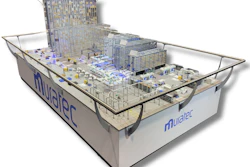
To maximize design, engineers increasingly rely on simulation‑based studies to model warehouse operations before construction or equipment procurement begins. These digital models allow teams to evaluate multiple scenarios by testing traffic flows, equipment mixes, throughput limits, and space utilization under realistic demand and operating conditions. Providing more than facility design input, but virtual commissioning for automated systems as well. A key byproduct of this approach is the groundwork for a digital twin, which can continue to support optimization and reduce OpEx long after the facility is operational.
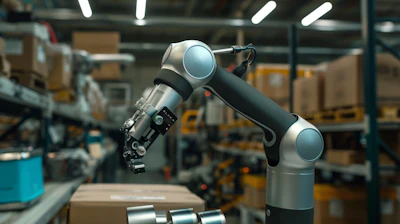
Not all automation investments deliver equal returns, and simulation engineers play a critical role in identifying the right level of automation for an operation. Simulation engineers, along with warehouse design engineers, balance automated systems and human workflows so facilities can operate effectively even if part of the automation is offline. For example, cobots can assist operators rather than fully replace them, supporting both flexibility and safety.
The faster ROI projects typically come from data‑driven system sizing, not simply deploying more robots. A material movement and storage analysis provides the operational metrics needed to align automation investments with business drivers. By quantifying throughput requirements, utilization rates, and system interactions, automation and robotics engineers can justify automation levels that balance capital investment with measurable performance gains.
Long-term flexibility
Operational flexibility is increasingly a design requirement. As product mixes change, throughput grows, or routing logic evolves, automated systems must adapt without becoming operational bottlenecks. Latest practices even use cloud-based robotics platforms that let robots download software and operational maps automatically, reducing setup time and increasing fleet flexibility.
Data‑driven simulations also enable teams to model future operating ranges, peak‑demand conditions, and failure‑and‑recovery scenarios in a virtual environment. This testing environment allows teams to work through operational changes with less downtime, pinch points, and unplanned outcomes. As operations progress and a functional digital model is fed the facility’s real operating data, teams can explore ample environmental and system changes to meet evolving business demands and drivers, further laying the foundation of digital twins.
With a true digital twin you can test the results of adding more robots to your fleet, modify traffic routes in real time, and explore system variations to reduce wait times. Within the next few years, digital twins will be the standard for continuous improvement operations in warehouses big and small.
Robotics in cold storage
Cold and freezer warehouses are particularly well-suited for robotic applications. Automated systems reduce the need to condition large spaces, significantly lowering energy consumption and operating costs while enhancing safety by limiting personnel exposure to extreme conditions. Automation and robotics can particularly be helpful in cold storage spaces for high-density storage configurations that also reduce the facility footprint.
Engineering automation that works from Day 1
Embedding data infrastructure, robotics readiness, and flexibility into food warehouses from Day 1 requires a shift in mindset from designing buildings around equipment to designing systems around operational data and long‑term performance. By using integrating digital infrastructure early, simulation‑based planning, virtual commissioning, and grounding automation investments in operational metrics, food and cold storage operators can achieve faster ROI and more resilient operations. The result is a well-planned, automated food manufacturing warehouse optimized to deliver value today and as business demands evolve.