Frontline supply chain workers operate at the intersection of speed, precision, and risk. Machine operators, forklift drivers, quality inspectors, maintenance technicians, and logistics teams all work in high-stakes environments where a single miscommunication can cascade into a safety incident, a production delay, or even a costly shutdown.
Yet despite the complexity of their work, many still rely on the same outdated radios, walkie-talkies, and aging smartphones that have been used on factory floors for decades. Nearly 400 manufacturing workers lost their lives on the job last year. Safety can’t be an afterthought; relying on outdated tools puts workers at risk, turning everyday tasks into life-or-death situations.
These legacy tools create a hidden and growing safety risk. In environments with lots of noise, distance, and multilingual teams, critical messages are often missed, garbled, or delayed. At a time when manufacturing operations are expanding, production timelines are tightening, and facilities are becoming more automated, these gaps can no longer be treated as minor inconveniences. They’re structural vulnerabilities.
Research from Relay Pro shows that 72% of frontline industrial workers believe modern communication technology would reduce stress on the job, and 59% say AI could help them identify safety risks before they escalate. The frontline is clearly ready for AI-powered safety infrastructure and technology that anticipates risks, enhances real-time awareness, and directs the right response before an incident spirals.
As manufacturers rethink how they protect workers and maintain operational continuity, AI is emerging not as a futuristic add-on, but as the backbone of frontline safety.
Outdated tools on the factory floor
In manufacturing, time has always been a critical variable. When a press jams, a pallet collapses, a chemical leak is detected, or a worker experiences a medical emergency, the speed and accuracy of communication often determine the outcome.
Yet most frontline workers still rely on tools that fail under pressure:
● Radios with unclear audio in loud environments
● Walkie-talkies shared across departments, forcing teams to filter out irrelevant chatter
● Smartphones that are incompatible with gloves, PPE, or cleanroom standards
● One-way systems that provide no visibility into who received a message or whether they are close enough to respond
● Devices with dead batteries or unreliable connectivity, failing at the exact moment they’re needed most
● Systems that provide no reliable way to locate workers in real time, leaving responders unsure who is closest or where an incident is occurring
These limitations mirror what security leaders in other high-risk industries have described as the “visibility gap.” Workers know an issue is unfolding, but they lack visibility into who is available, who is closest, and who is best equipped to respond.
On a factory floor, outdated communication can create dangerous confusion: the wrong worker may be dispatched to a machine malfunction, a fire-safety alert might go unheard during a busy shift change, multilingual teams can miss critical announcements, and a hazardous spill may escalate simply because no one realizes a responder is standing just 30 feet away. These gaps slow operations and shrink the already narrow margin for error in environments where even slight delays can have serious consequences.
AI is essential to safety infrastructure
AI should now be treated as core safety infrastructure in manufacturing, even as elemental as PPE, lockout/tagout procedures, or ventilation systems. The reason: AI can do what human dispatchers, supervisors, or shift leads cannot.
- AI “hears” every channel at once. Instead of relying on a single supervisor monitoring multiple noisy radios or group chats, AI can continuously scan all communication channels for signals of risk such as keywords, distress phrases, maintenance alerts, or unusual patterns. Where humans might miss an early warning, AI will pick it up.
- Automatic transcription and documentation strengthen compliance. Many manufacturing facilities are governed by stringent safety, quality, and regulatory requirements. Manual documentation is notoriously inconsistent. AI changes this automatically by transcribing critical communications, time-stamping alerts and responses, archiving incident records for audits, and therefore reducing the administrative burden on frontline teams.
- AI supports multilingual and distributed teams. Manufacturing is increasingly globalized and diverse. On any given shift, instructions may need to be delivered in multiple languages. AI-enhanced communication systems can translate messages in real time, standardize terminology, and reduce misunderstandings that contribute to accidents. In high-risk environments, clarity saves lives.
What AI ultimately provides is situational awareness at scale. Instead of reacting only after something has gone wrong, modern manufacturers are now using AI to prevent incidents altogether. And combining location awareness with the AI features listed above becomes super powerful for safety reasons, such as real-time location alerts, faster emergency response, and proactive intervention before a near-miss becomes a reportable incident.
Imagine a system that can detect concerning phrases like “leak,” “stuck,” or “overheating” across all communication channels, flag repeated patterns tied to a specific piece of equipment, alert maintenance teams before mechanical stress turns into failure, and notify supervisors when workers mention discomfort or unsafe conditions. This is the future frontline workers are asking for, tools that make their jobs safer and more predictable.
A safer future for frontline workers
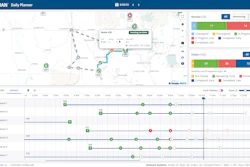
More manufacturers are recognizing that modernizing frontline communication is no longer a convenience upgrade, it’s a strategic imperative. They’re shifting toward unified platforms that connect safety, maintenance, and operations; adopting voice-first devices that function seamlessly with PPE; enabling cross-department visibility to break down silos; deploying AI-driven monitoring that flags threats early; and relying on analytics dashboards that expose hidden risks in workflows, staffing, and equipment.
In these environments, safety becomes proactive rather than reactive, and frontline teams feel the difference immediately: stress decreases, coordination strengthens, response times shrink, and workers report feeling supported and protected. The frontline workforce keeps the entire supply chain moving, and they deserve tools that reflect the importance of their work.
Industrial workers understand the limits of their current tools and see the potential for AI to help them work more safely and confidently. AI isn’t replacing workers; it’s replacing the blind spots that surround them. This is happening especially for lone workers operating out of sight or earshot of others. By continuously monitoring communication conditions, context, and risk signals, AI enables proactive safety, helping teams identify issues early, intervene faster, and prevent incidents before they escalate.
And as manufacturing grows more complex, global, and automated, the companies that will lead are those that invest in intelligence, not just equipment. When every second counts, real-time awareness is the foundation of modern industrial safety. The time to modernize is now; manufacturers that act today will build the safer, more resilient operations the future is demanding.