Moving temperature-sensitive food from producer to processor, distributor, retailer, or even consumer requires packaging that can do more than simply contain a product. The packaging must protect against physical damage, including the demands of transportation and, most importantly, maintain proper temperature throughout the journey. For these reasons, the product you choose for your food shipping containers is important.
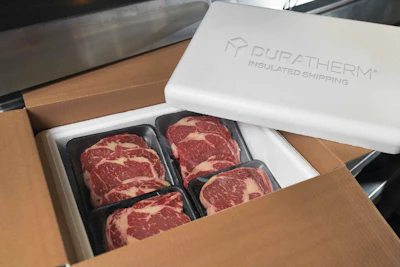
Expanded polystyrene (EPS) has long played an important role in the food shipping process. Lightweight, insulating, and durable, EPS packaging is used across the country for seafood, meat, produce, and other perishable food items that must remain within controlled temperatures during transportation.
While there is much focus on packing during the food shipping process, what happens to that packaging after the shipment has reached its destination?
For many EPS packages, the end of the cold chain is the beginning of another journey. Once collected and densified, used EPS can be recycled and transformed into raw material for new products.
Misconceptions about EPS recycling persist. Some businesses and consumers assume the material cannot be recycled, while others simply need directions on how to get it to a proper recycling facility. The truth: EPS is a recyclable thermoplastic with a strong, established recycling process. Once the truth is known, the greater challenges are awareness, collection, and access.
Why EPS works in the food supply chain
EPS is approximately 98% air and 2% plastic by volume, a composition that gives the material an exceptional strength-to-weight ratio while minimizing raw material use.
For food logistics, its thermal performance is particularly important: EPS packaging helps protect temperature-sensitive products from external temperature fluctuations during transportation while adding relatively little weight to a shipment. It can also be molded into precise shapes and sizes to accommodate specific products and shipping requirements.
That combination makes EPS uniquely useful for seafood, meat, fresh produce, meal kits, and other perishable food shipments traveling through temperature-controlled supply chains.
The sustainability conversation surrounding food packaging extends beyond the package itself. If inadequate packaging contributes to spoiled or damaged food, the environmental and financial consequences include far more than the loss of product: the water, energy, labor, refrigeration, and transportation used to make and move that food item are also wasted.
Effective packaging has two jobs: protect the product during its first use and, when possible, provide a pathway for the packaging material to remain productive afterward.
What happens to used EPS?
The EPS recycling process is relatively straightforward because EPS is a single-material plastic.
The process begins with collection and inspection. Used EPS packaging must be clean and free from contaminants such as tape, labels, excessive dirt, food residue, and the like. This last requirement is especially important in food applications: packaging that has been contaminated by food may not be appropriate for the recycling process, making proper handling and shipping preparation critical.
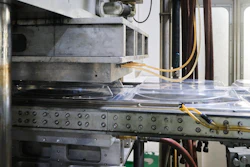
Clean EPS is then fed into a grinder, which breaks down the molded foam into much smaller pieces. The ground up material is typically collected in large silos before moving to the next step: densification. This is where the recycling process addresses one of the most distinctive characteristics about EPS: Because the material is mostly air, used EPS takes up considerable space relative to its weight. Densification removes nearly all of that air and dramatically reduces the overall volume.
FYI: Cold compression densification mechanically compresses the ground up EPS into dense rectangular blocks or logs without using heat. Thermal densification provides another option, using heat to achieve a similar reduction in volume.
This results in a significant transformation: a large quantity of lightweight food packaging — that would otherwise be inefficient to transport— becomes a dense block, weighing hundreds of pounds and occupying only a fraction of the original space.
From foam to feedstock
Densified EPS can then be accumulated until enough material is available for efficient transportation to a processing facility. A full truckload may contain approximately 30-40,000 pounds of densified material at one time.
Next, the material is ground up again and sent through an extrusion process. Heat softens the polystyrene, which is ultimately converted into uniform recycled plastic pellets. These pellets become feedstock for manufacturers using recycled polystyrene in products ranging from picture frames and architectural moldings to office and consumer products. Recycled material may also be incorporated into certain new EPS products and applications.
For companies evaluating the environmental impact of their food packaging systems, this recycling chain can take place entirely within North America, allowing recovered material to remain within the regional manufacturing economy.
The challenge of access
If the technology to recycle EPS already exists, why isn’t every EPS food package recycled? Great question.
Collection remains one of the biggest pieces of the equation, and education is wildly important. Businesses need to know what material is accepted, how it should be prepared for the recycling process, and where proper recycling programs are located. Expanding across these access points is critical to increasing recovery.
Look beyond the package
Sustainability decisions in food logistics rarely come down to one single characteristic of a packaging option. Packaging as a whole must be evaluated according to how well it does its primary job while considering shipping weight, transportation efficiency, and end-of-life recycling options.
A package that helps temperature-sensitive food items successfully complete their journey helps to protect the resources already invested in that food product. When the EPS material can then be collected and recycled easily, the value of the packaging extends well beyond a single shipment.
As food logistics companies look for ways to reduce waste throughout the supply chain, understanding what happens after packaging is used is a great place to start. EPS demonstrates that cold-chain performance and end-of-life recovery don’t have to be competing priorities: the recycling process already exists. The next opportunity is to make sure more clean material reaches it successfully.