Every company in the supply chain industry is being asked to do more with less. Less labor, less margin and less tolerance for errors. Food and beverage shippers are feeling this with rising labor costs, tighter delivery windows and stricter compliance requirements which are driving the need for efficiency. The question is no longer whether to automate, but how to automate in a way that actually strengthens your operation rather than adding another layer of complexity.
Too often, organizations go all in on automation without fully appreciating what it takes to sustain it. It’s the companies that approach it thoughtfully, starting small and keeping their people at the center that reap transformative results. The difference comes down to strategy, not technology.
The real pressures behind the push
The acceleration of interest in warehouse automation is not happening in a vacuum. Labor availability has become a significant challenge, particularly for facilities in densely populated areas where competition for warehouse talent is fierce. Recruiting and retaining skilled workers is harder than ever, and turnover costs compound quickly.
That said, labor challenges are not universal. Organizations that invest in their people to build strong cultures and foster genuine bonds tend to retain talent more effectively, regardless of the market. This is important because it speaks to a truth at the heart of any automation conversation: people are your most valuable asset, and no technology should change that.
What has changed, however, is the economics of automation itself. Solutions that once required massive capital investment have become more affordable and scalable, opening the door for companies that previously couldn’t justify the cost. This has shifted the conversation from “can we afford to automate?” to “can we afford not to?”
Rethinking what automation actually means
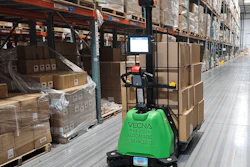
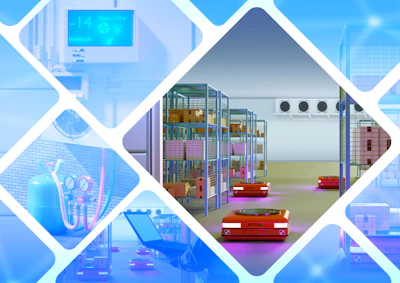
One of the biggest misconceptions in the warehousing industry is that automation means robots. When people hear “warehouse automation,” they picture conveyor belts, autonomous mobile robots and massive material handling systems. While these technologies have their place, the reality is much broader and more accessible.
Through AI-driven workflows, companies can automate simple, repetitive processes with minimal to no coding. These automated workflows save an enormous amount of time and dramatically improve accuracy. They don’t require a seven-figure investment or a team of engineers to maintain. They’re the kind of smart, targeted improvements that can deliver measurable ROI quickly and are often the best place to start.
This reframing matters because it changes the accessibility of automation. A food shipper that feels “behind” doesn’t need to leap to full-scale robotics. They need to evaluate their processes, identify bottlenecks and repetitive manual tasks and begin with targeted solutions that free their people to focus on higher-value work.
Distinguishing value from complexity
Not all automation creates value. Too often, companies aggressively pursue automation without recognizing that it requires ongoing systems, checks and talented people who know how to fix and continuously improve it over time. Automation systems tend to be less flexible and nimble when dealing with change and in food logistics, change is constant.
The metrics that should guide automation decisions are familiar: throughput, order accuracy and labor utilization all contribute to a clear business case ROI. But one metric that deserves more attention is downtime. Understanding how much time a system is offline and what that costs you is critical for assessing the true value of any solution. It’s equally important to consider how automation allows to reallocate labor hours to tasks that are more beneficial to the organization.
Great companies don’t lose sight of the fact that the purpose of automation is to empower their people, not replace them.
The food industry’s unique complexity
Food and beverage warehousing presents a unique set of challenges that directly shape automation strategy. High SKU counts, varying product sizes, temperature control requirements and the non-negotiable priority of product safety create an operating environment where one-size-fits-all solutions rarely work. Layer on lot numbers, batch tracking and expiration management, and the complexity deepens further.
The more product mix, variety and velocity you have, the more complex your automation solution becomes. This demands thorough planning and rigorous testing to ensure the system can support all the variation your operation requires. A solution that works beautifully for a high-velocity, low-SKU dry goods operation may fall short in a mixed environment with refrigerated, frozen and ambient products moving at different speeds.
But automation also offers powerful advantages in food-specific areas that go well beyond speed. Integrated warehouse systems can automatically track lot numbers, expiration dates and rotation requirements, enforcing FEFO and FIFO protocols with a consistency that manual processes struggle to match. By reducing manual entry and paper-based workflows, automation decreases the risk of errors and significantly improves recall readiness and regulatory compliance.
Perhaps most importantly, automation protects product integrity. Consistent, standardized processes reduce variability and product damage. Minimizing unnecessary touches, maintaining better environmental controls and improving monitoring of temperature-sensitive products all contribute to both efficiency and quality assurance.
Why most shippers shouldn’t go it alone
Automation still requires capital, technical expertise and long-term planning. Many food shippers are rightly focused on production, sales and distribution, and may not have internal resources dedicated to automation strategy and maintenance. Add in the uncertainty around volume growth or evolving customer requirements, and large investments can feel risky.
This is where shared and outsourced warehouse models fundamentally change the equation. In these models, the investment risk is distributed. Logistics providers can leverage automation across multiple customers, strengthening the business case and allowing individual shippers to benefit from advanced technology without carrying the full financial or operational burden.
Network-wide automation creates additional advantages such as standardization across facilities, shared data visibility and economies of scale. When systems are integrated across locations, organizations can shift volume between facilities more seamlessly, replicate best practices more effectively and drive down transit times, miles traveled, damages, carbon emissions and costs. These are not marginal improvements. They represent a fundamentally different way of operating.
Flexibility as a strategic imperative
Flexibility is critical in food logistics, especially when dealing with seasonal products or promotional spikes. Highly rigid automation systems can struggle during volume swings. The important fallback is that organizations can always supplement automation by bringing people back into the process when demand surges.
This is also why system integration is essential. Warehouse management systems, labor management tools and transportation systems must communicate seamlessly and without integration, automation operates in silos, limiting its impact. True efficiency comes from synchronized data and coordinated workflows. Real-time data is what allows organizations to quickly identify bottlenecks, reduce downtime and optimize labor allocation. Data is ultimately the source of the adjustments that maximize automation’s ROI.
Thinking long-term, starting now
When automation is implemented correctly, the results speak for themselves: improved order accuracy, increased throughput, better labor allocation, reduced operational variability, decreased damages, enhanced inventory visibility and better data collection. These aren’t aspirational outcomes, they’re what consistently emerges in operations that approach automation thoughtfully.
But automation must align with long-term network design, customer strategy and growth projections. It isn’t nimble. It’s not easy to pick up and move to a different location. People can adapt and change much more quickly, so any automation investment needs to be well thought out and planned within the context of your broader network strategy.
For food shippers who feel they’re behind on warehouse automation, the best advice is straightforward: start with process evaluation before technology investment. Identify inefficiencies, bottlenecks and repetitive manual tasks. Automation doesn’t have to happen all at once, and it doesn’t have to mean robotics. Begin with targeted improvements that deliver measurable ROI, build internal knowledge and choose flexible solutions that can evolve with your business.
Most importantly, remember that automation is a tool to empower your people and strengthen your operation. It should never replace your culture or your workforce. The companies that get this right, that use technology to elevate their teams rather than eliminate them, are the ones building supply chains that will endure.