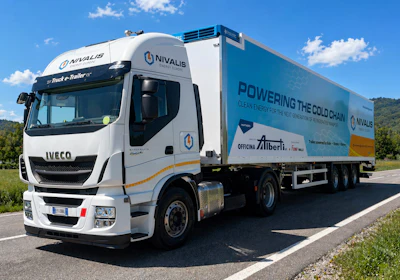
Electric refrigerated transport units have proven their reliability with uptime exceeding 99.5% and deliver substantial cost savings through lower fuel and maintenance expenses, making them economically superior to diesel systems when properly designed for fleet operations and cold chain requirements.
- Proven reliability: High-quality electric refrigeration systems achieve uptime exceeding 99.5% over more than two years of deployment, challenging assumptions that diesel is necessarily safer.
- Economic advantage: Electric systems offer lower fuel and maintenance costs that support stronger margins, more competitive pricing, and reinvestment opportunities for fleets.
- Custom design critical: Electrification must be tailored to each fleet's routes, refrigeration loads, and infrastructure—including modular battery capacity, e-axles, and rooftop solar configurations.
- Total cost of ownership: Compare diesel consumption, servicing, and maintenance against higher upfront capital costs but significantly lower operating expenses of electric systems over their working lives.
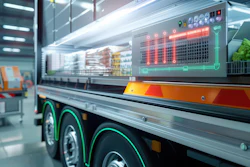
- Energy intelligence: Electrified trailers enable remote monitoring of temperature, battery state, energy consumption, and system performance, strengthening cold chain traceability and ESG reporting.
Refrigerated transport is one of the last parts of the food supply chain still heavily dependent on diesel.
The economic case for electric TRUs is no longer hypothetical, it has been demonstrated through years of deployment. What holds fleets back is confidence: can they capture those savings without risking food safety or disrupting daily operations?
Those are legitimate concerns. A refrigeration failure can jeopardize a load and a customer relationship. But reliability should be judged by operating data, not familiarity. Good quality systems have demonstrated uptime exceeding 99.5% over more than two years of deployment, challenging the assumption that staying with diesel is necessarily the safer choice.
Operational fit is the other major concern. Electrification should be designed around the fleet, not the other way around. Site-specific charging layouts must account for where trailers park, how they move through the yard, their loading schedules, and their routes. Done properly, charging becomes part of the existing workflow rather than an operational obstacle.
Likewise, a modular approach allows battery capacity, e-axle generation and rooftop solar to be configured around each fleet’s routes, refrigeration loads and available infrastructure. The objective is not simply a bigger battery, it is the right combination of energy storage, generation and charging to deliver dependable refrigeration.
Fleets that invest time in understanding and implementing an optimized electric solution will gain a substantial competitive advantage. Lower fuel and maintenance costs support stronger margins, more competitive pricing and reinvestment. Fleets remaining dependent on diesel will face competitors with a structurally lower operating cost base. Increasingly, the question is not whether electrification makes economic sense, but how quickly fleets can implement it effectively.
For food and beverage operators, refrigeration failure can mean spoiled product and broken cold chain compliance.
Protecting the cold chain requires attention to refrigeration reliability and energy availability. While high-quality solutions offer uptime of over 99.5%, strong uptime does not eliminate the need to plan for disruptions.
Energy planning must account for more than the average route. Traffic jams, missed charging opportunities and unplanned overnight stops can exhaust a battery’s energy reserve. A system designed for daily deliveries may not support several days of refrigeration without replenishment.
E-axles and rooftop solar can extend runtime, but fleets should understand their limitations: e-axles contribute while moving, and solar output depends on daylight and conditions. Neither replaces contingency planning. For operations with unpredictable delays, hybrid TRUs retain diesel as a backup, allowing routine operation on electricity without removing a familiar fallback for exceptional circumstances.
Beyond hardware, fleets should size systems for demanding conditions including hot weather, frequent door openings and extended dwell times, and maintain an energy reserve. Monitoring battery charge and refrigeration temperature, keeping temperature records, and establishing clear response procedures are equally important. Drivers and dispatchers need to know when to recharge, activate backup or arrange assistance.
The correct comparison is the total cost of operating both systems over their working lives. With a conventional TRU, that means diesel consumption, servicing, oil changes, filters, mechanical maintenance and downtime. An electric system has a different cost profile: higher upfront capital expenditure in many cases, but much lower fuel and maintenance requirements, as well as benefits such as quieter operation for residential routes.
Utilization is particularly important. A refrigeration unit operating for 15-20 hours per day presents a much larger opportunity to eliminate diesel consumption than one used intermittently. That means the same technology can have a very different payback depending on the fleet.
Operators also need to consider infrastructure. If electrification requires a major depot grid upgrade, that cost and lead time belong in the calculation. Conversely, if some of the trailer’s energy can be generated through solar and regenerative braking, infrastructure requirements can be reduced or eliminated.
Operators are encouraged to model individual duty cycles rather than ask for an industry-average ROI. Understand how much diesel the existing TRU consumes, how many hours it operates, what maintenance actually costs, what electricity is available and when, and how long the asset will remain in service.
Ultimately, electrification will scale because it saves fleets money. The sustainability benefit is important, but if the total cost of ownership does not work, widespread adoption will always be difficult.
One of the less acknowledged benefits is electrification. Once you have an intelligent electrical architecture on the trailer, you have an opportunity to capture far more information about how that asset is operating. That can include temperature, location, refrigeration demand, battery state, energy consumption and generation, charging behavior and system performance.
For cold chain operators, it strengthens traceability because they can remotely demonstrate how the trailer and refrigeration system performed throughout a journey. For ESG teams, actual energy data can also make reporting much more robust than relying on assumptions about diesel consumption.
The bigger opportunity is turning monitoring into optimization. Once you understand how energy is being used across different routes, trailers and conditions, analytics can identify inefficiencies and eventually predict how energy should be generated, stored and deployed before the journey even takes place.
The trailer is going to become a more intelligent and active part of the transport system. Today, electrification is primarily thought of as replacing the diesel engine that powers refrigeration. Increasingly, trailers will also generate energy, store it onboard and intelligently decide where that energy creates the most value. The same principle is already being explored beyond refrigeration, with propelled e-axles allowing trailers to contribute to moving the load itself.
Longer term, that could extend beyond the journey. A trailer returning to a distribution center with unused battery capacity is effectively a mobile energy-storage asset. With the right infrastructure and intelligence, fleets could eventually use those assets to support depot energy demand during peak periods or feed into the grid.
That changes the way we think about trailers fundamentally. Instead of being passive assets that simply carry goods, they can become connected energy platforms that contribute to refrigeration, fleet efficiency, energy resilience and potentially the economics of the wider logistics operation or even become a profit center in its own right.