Approximately 20% of global food production is lost or wasted, with over 4% spoiling in the supply chain due to inadequate monitoring and visibility. Reliable, continuous cold chain condition information enables operators to intervene before products are discarded, preventing avoidable waste and reducing the $163 billion in annual inventory losses.
- 20% of global food production is lost or wasted, with much spoiling during storage and transport due to poor monitoring
- $163.1 billion in inventory is lost annually through spoilage and disposal, with 4% spoiling in supply chains and 3% discarded from overproduction
- Transit gaps are the biggest blind spots where temperature fluctuations and handling issues go undetected between supply chain nodes
- Bluetooth smart labels enable continuous, product-level tracking of temperature, humidity, location, and handling from distribution centers to retail stores
- Bluetooth smart label shipments are projected to grow from 169 million in 2026 to 1.9 billion by 2031, showing rapid industry adoption
Ask most people to picture food waste and they might imagine a half-eaten meal or a forgotten container at the back of a refrigerator. However, the larger losses happen long before food gets to the shelf. Approximately 20% of global food production is lost or wasted, with much of it spoiling during storage and transport due to inadequate monitoring. Reliable condition information can give cold chain operators more opportunities to intervene before products are discarded. When the industry cannot see condition, it defaults to caution, and caution in a cold chain usually means disposal.
A lack of visibility creates avoidable waste
Waste is rarely intentional. It stems from a lack of visibility into where products are, what condition they are in, and whether they are still usable. When confidence is low, operators make overly cautious decisions that lead to spoilage and loss. A pallet of produce that may have been perfectly good gets discarded because selling food that cannot be verified as safe is a worse option.
Repeat that decision across every handoff in a cold chain and the cost compounds. Independent analysis finds that nearly 8% of all stock perishes or is discarded each year. More than 4% spoils in the supply chain before reaching the shelf, while more than 3% is discarded because of overproduction. Together, these losses represent more than $163.1 billion in inventory each year.
For years, the industry accepted this as part of the cost of doing business. Temperature was checked at the dock, logged on paper, and assumed to have remained steady in between. That approach measures a cold chain in snapshots and leaves long stretches of guesswork between readings. The change now underway replaces those periodic checks with continuous, product-level visibility, moving more of today’s losses into the preventable column.
Where cold chain failures hide
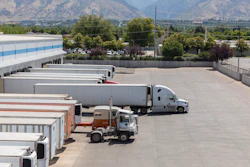
The most damaging blind spots sit in the handoffs. Every time a load leaves one node and moves in transit to another, visibility has historically gone dark. Fixed-point infrastructure, whether line-of-sight scanning or fixed readers, tends to stop at the loading door. What happens on the trailer, at the cross dock, or during a delay in a yard has been difficult to see.
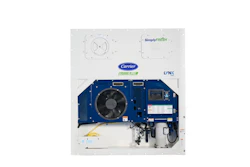
Those transit gaps are where cold chain failures hide. A reefer drifts out of range for part of a route. A pallet waits on a dock before it reaches refrigeration. A shipment lands at the wrong store and has to move again. In each case, conditions change and no one knows soon enough to act. The perishable that misses its window arrives compromised, or arrives fine but unverifiable, and either outcome can end in a cautious write-off.
Continuous visibility in practical terms
Bluetooth technology has become part of the food supply chain’s operating layer. Bluetooth smart labels can track location while carrying condition data such as temperature, humidity, handling, and movement at the pallet, case, or item level. That granularity separates knowing a trailer’s average temperature from knowing that one specific area of a load crossed an acceptable threshold during transit.
The value appears in the decisions this enables. When an operator can see that goods are genuinely at risk, they can intervene, reroute, prioritize, or isolate a specific case rather than condemn an entire load. When the data shows goods are still viable, that same visibility can prevent precautionary disposal driven by missing information.
The appetite for technology that improves supply chain performance is already clear. Nearly 78% of supply chain leaders are seeking technology solutions to increase operational efficiency, improve production and delivery speeds, and automate repetitive tasks.
The produce aisle offers a concrete example. A multinational grocery retailer applied battery-free Bluetooth tags to cases of strawberries, providing continuous case-level temperature and location monitoring from the distribution center, through transit, to multiple stores. The data identified previously unnoticed temperature fluctuations within the same trailers, surfaced unattended pallets and unsuitable storage conditions, and helped optimize routes to reduce fuel waste. The information also enabled the retailer to take immediate action to reduce waste across its supply chain.
Adoption projections suggest that this type of capability is moving well beyond limited pilots. ABI Research forecasts annual shipments of Bluetooth smart labels to grow from 169 million in 2026 to 1.9 billion by 2031, representing a compound annual growth rate of 62%.
From farm to fork
The industry has spent decades digitizing individual points, including receiving doors, warehouses, and store shelves, without always connecting the information between them. Carrying condition and location data with the goods themselves allows a problem detected early to be addressed early.
If cases of strawberries are heading to a store that cannot sell them before their quality declines, knowing that before they arrive creates more options. The goods could be diverted upstream, prioritized for sale elsewhere, or routed to a destination with stronger demand. By the time they reach markdown or disposal, most of those choices have disappeared.
That visibility has a direct bearing on return. Reducing waste means less spoilage, fewer wasted miles, tighter inventory, and fewer precautionary write-offs. In fresh food, where margins are thin and shrink is a daily operating concern, timely condition and location data can protect both product and profitability.
Why a standard matters
Cold chains are shared across many independent actors, including growers, carriers, distributors, and retailers. A monitoring approach delivers its greatest value when information can travel across those boundaries.
A low-power, widely available, standards-based technology gives the industry an interoperable foundation across products, systems, and operational environments. It can support condition monitoring as goods move through the chain without requiring each participant to rely on the same proprietary ecosystem. Bluetooth technology serves as the connective layer behind that visibility, helping operators follow real-world conditions and respond with greater precision.
The food industry will not eliminate every loss. A meaningful share of what is discarded today, however, is written off because its condition cannot be verified with confidence. Continuous, product-level insight gives operators an opportunity to identify genuine risk earlier, preserve goods that remain viable, and prevent avoidable waste from farm to shelf.