Refrigeration 4.0 leverages advanced gas, pressure and temperature sensors to enable precise control, energy efficiency and regulatory compliance in cold chains, while supporting the transition to sustainable natural refrigerants like CO2 and ammonia that reduce environmental impact.
- Advanced sensors provide early leak detection, ensuring safety, compliance and reduced emissions in refrigeration systems using natural refrigerants
- Quality pressure and temperature sensors minimize energy waste by reducing overcooling and enabling predictive maintenance across distributed operations
- Natural refrigerants such as CO₂, ammonia and propane are replacing synthetic alternatives due to zero ozone depletion and very low global warming potential
- Stricter F-Gas regulations and leak detection requirements are driving adoption of advanced sensor monitoring and real-time cloud-based analytics
- AI-driven sensor analytics will enable self-optimizing cold chains with higher accuracy, durability and seamless integration in the next decade
The refrigeration industry is at the center of a global transformation, driven by food safety demands, sustainability targets and the need for energy-efficient and reliable cold chains. Gas, pressure and temperature sensors are critical to this evolution, enabling precise control, regulatory compliance, and predictive maintenance.
Advanced sensing solutions ensure optimal storage conditions while minimizing energy waste, by reducing overcooling and improving system efficiency. Integrating advanced, quality sensors lowers overall energy consumption and operational costs for original equipment manufacturers (OEM) as well as end users on the market.
A2L refrigerants are still used in refrigeration systems but natural refrigerants such as CO₂ (R-744), ammonia (R-717), and hydrocarbons such as propane (R-290) are growing in popularity due to response to stringent environmental regulations. These refrigerants have low or zero ozone depletion potential and very low global warming potential, making them a sustainable alternative to traditional synthetic refrigerants.
Stricter leak detection and reporting requirements under F-Gas and similar legislation are driving the adoption of advanced sensor monitoring and maintenance practices in refrigeration systems. These measures help identify and address refrigerant leaks quickly, reducing emissions as well as long-term costs, while preventing environmental harm.
Expansion of cold chain infrastructure in emerging markets creates new demand for reliable, high‑performance sensing and control solutions. By retrofitting existing systems with the right sensors and controls, end users can improve efficiency, compliance and their carbon footprint without needing a full equipment replacement or new leak detection system.
Sensor market evolution in refrigeration
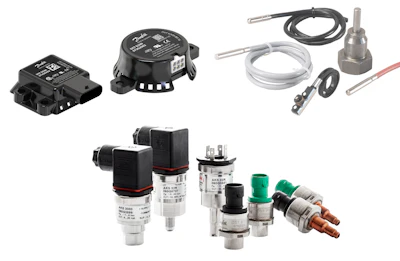
Sensors are a vital part of refrigeration systems. Advanced gas sensors provide early leak detection, ensuring safety, regulatory compliance and reduced environmental impact in cold chain applications, where gas leakages can occur. Developed specially for refrigeration applications, their robust design ensures superior protection against moisture, vibration and temperature extremes, leading to long‑term monitoring accuracy, while safeguarding both the system and the environment.
Quality pressure sensors help maintain optimal system performance, protect compressors from damage and enhance energy efficiency in cold chain operations. By providing accurate, real‑time pressure monitoring, they enable precise control and early detection of system problems.
Accurate and responsive temperature sensors ensure precise temperature control, safeguard food safety and maintain product quality in cold chain applications. Their real‑time measurements enable consistent storage conditions and quick response to deviations. This reliability helps prevent spoilage, reduce waste and supports compliance with food safety standards.
The cold chain industry is increasingly demanding sensors with higher accuracy, rapid responsiveness, smarter features and long-term stability, even in extreme temperature ranges, to ensure consistent performance and product safety. Robust designs capable of withstanding the high pressures, such as those of CO₂ refrigeration systems, are becoming essential as natural refrigerants gain market share.
Seamless integration with cloud‑based monitoring platforms enables real‑time data access, predictive maintenance and improved decision‑making across distributed operations.
Installation space compatibility and modularity allow sensors to fit into compact refrigeration units without compromising performance or serviceability. These trends collectively enhance system efficiency, reliability and compliance with evolving environmental regulations. They also support sustainability goals by enabling precise control, reducing energy waste and extending equipment lifespan.
Component producers must be ready to lead
Finding the right, reliable partner can be tough for some OEMs. But some component developers and producers can deliver a full range of gas, pressure and temperature sensors designed specifically for refrigeration applications — from small commercial units to large industrial plants – that provide reliable A2L and A3 refrigerant leak detection, meeting UL 60335‑2‑89 and F‑Gas regulatory requirements.
Having the right accessories is critical for ensuring seamless integration, reliable performance, and long-term operation of refrigeration systems. Electrical connectors, pressure connection adaptors and a wide variety of cables with mating connectors are not just add‑ons – they are essential components. In a competitive market, the ability to source all necessary accessories from a single, trusted supplier streamline procurement enhances quality assurance and ultimately delivers greater value to end users.
Today's sensor suppliers must demonstrate proven performance in systems using standard and low-GWP refrigerants such as A2L and A3, as well as in high‑pressure CO₂ and ammonia systems, ensuring reliability under demanding conditions. Global application engineering support and a resilient supply chain are essential to meet customer needs across diverse markets. A strong commitment to sustainability and regulatory compliance builds trust and aligns with evolving industry and environmental standards.
Future outlook
The next decade will see refrigeration systems become even more connected, efficient and environmentally friendly. AI-driven analytics will enable self-optimizing cold chains, while sensor technology will continue to evolve for higher accuracy, durability, and integration.
In refrigeration, precision is critical, impacting everything from food safety to energy efficiency. Choosing the right partner is essential for industry leaders aiming to achieve the next generation of cold chain performance.