As the logistics industry heads into 2026, the freight market faces an unusual period of stagnation. Prolonged softness in demand and sustained pressure on margins have pushed the industry to confront inefficiencies it could once afford to ignore. The next chapter for third-party logistics (3PLs) service providers isn’t cheaper freight; it’s about building smarter, more capable, and more automated networks.
Strategic imperative: Competing beyond low rates
Carrier rates, already at low levels, are unlikely to drop further going into next year. Driver wages continue to outpace inflation and rising insurance premiums fueled by cargo theft and fraud have erased most of the remaining margin cushion.
That leaves 3PLs at a crossroads. Competing on price alone is no longer viable. The logistics providers that win in 2026 will be those that prioritize strategic performance, elevating efficiency, strengthening resilience, and enhancing their ability to adapt.
Building smarter loads and smarter networks
The 3PLs that come out ahead in 2026 will be the ones building intelligent, data-driven networks designed to eliminate waste. Network optimization, long a talking point but inconsistently adopted across the industry, has now become an essential capability. Modern supply chains are dynamic but dispersed. Manufacturers increasingly rely on co-manufacturers, often far from headquarters or distribution centers. This geographic disconnect can greatly increase transportation costs on shippers' inbound loads to distribution centers. Understanding the service and cost implications of setting up distribution networks is more important than ever in today's ultra-competitive environment.
Skilled 3PLs provide network analysis services that map every node, from suppliers and production facilities to distribution centers and customer endpoints, to expose inefficiencies in current networks. These insights guide shipper decisions on relocation, consolidation, or partnership strategies over a three- to five-year horizon.
Another common challenge for shippers is understanding how minimum order quantities (MOQs) affect their customers. Encouraging larger orders may increase shipping costs, but it ultimately drives more favorable landed costs for the customer. Just as important is freight optimization - consolidating smaller shipments into optimized truckloads, planning mode mixes, and aligning freight flows to minimize empty miles. If you’re not finding ways to fix any inefficient LTL shipments through consolidation and optimization, you’re already behind.
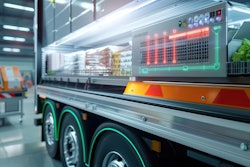
Underlying all of this is real-time visibility technology. ELD and GPS integrations have evolved beyond basic tracking and into advanced monitoring. Real-time visibility means route deviations of flags, delay predictions, and team alerts to potential theft or compliance issues in real-time. Such visibility is no longer a differentiator but a necessity for operating a modern, secure network.
Optimizing labor planning
Even as automation advances, labor remains a pivotal, yet volatile, cost center. Driver wages continue to rise, and competition for skilled warehouse and operational labor remains fierce.
To manage this, 3PLs are investing in advanced labor forecasting and planning tools. These systems help synchronize workforce supply with demand volatility, particularly in peak-heavy sectors, such as retail where 60% of annual shipments can occur within a three-month window. By smoothing peaks and valleys, companies can avoid both the financial drain of overstaffing and the productivity dip from understaffing.
Internally, many 3PLs are also automating non-revenue-generating administrative functions, from order entry to scheduling. Tasks once handled manually, such as driver check-ins or route confirmations, are now being replaced with AI-driven workflow automations. These technologies free teams to focus on higher-value activities, such as customer relationship management, that are the real differentiators in the modern 3PL space.
Reducing labor dependency with automation and robotics
Automated picking systems, AI-assisted conveyance, and trailer-unloading robotics are already delivering measurable ROI, often paying for themselves within two to three years. For high-volume facilities that move tens of thousands of cases daily, automation isn’t just efficient, it’s the only scalable solution as human labor won’t be enough for such specific business needs.
Beyond the warehouse, AI-enabled platforms are reshaping back-office functions, continuously optimizing shipments, and dynamically adjusting schedules without human intervention. These innovations allow companies to handle more volume with fewer staff, mitigating the risks of labor shortages. The goal is not to replace people but to redeploy them to work on value-generating tasks.
Automation is a strategic path against disruption in a labor market where competition for talent remains intense. It ensures throughput, consistency, and continuity, no matter the labor climate.
Timing: Seizing the moment of stability
With forecasts pointing to a stable—though still subdued—freight environment in 2026, the present moment offers shippers and carriers a rare chance to get ahead of the next market shift. Periods of relative equilibrium are ideal for strategic transformation. Investing in technology and process analysis during stable times allows companies to test, integrate, and refine before future market swings.
Forward-looking 3PLs need to use this window to modernize their systems, vet automation partners, and establish contingencies for tariff shifts and fraud risks. If companies are not early tech adopters, they’re already behind. Technology is moving fast, and 3PLs that don’t evolve now will struggle to compete in two years.
The outlook for 2026 signals a fundamental shift in how 3PLs compete. The leaders won’t be defined by the lowest rates but by the highest intelligence, connected systems, optimized networks, and increasingly automated operations. As supply chains grow more complex, the 3PLs that blend human expertise with AI and machine-driven precision will be the ones steering the industry into its next chapter.







![Top Tech Logo 2026 Vertical [color]](https://img.foodlogistics.com/mindful/acbm/workspaces/default/uploads/2026/04/top-tech-logo-2026-vertical-color.mWl7RAiZmg.png?ar=16%3A9&auto=format%2Ccompress&bg=fff&dpr=2&fill-color=fff&fit=fill&h=135&q=70&w=240)


