Most food and beverage supply chains have abundant data visibility but struggle to convert that information into coordinated action. Closing this execution gap requires digital yard twins, AI-powered decision support, and disciplined processes that help teams anticipate problems and act before delays occur, rather than simply documenting them after the fact.
- Detention costs the trucking industry over $15 billion annually, affecting 40% of truckload stops and 56% of refrigerated loads.
- Digital yard twins create a live virtual representation of the yard that enables transportation, warehouse, and yard teams to coordinate decisions from the same real-time data.
- AI can identify patterns and surface developing bottlenecks before they occur, recommending next-best actions rather than simply showing problems after they form.
- Safety is at stake—drivers travel 15% faster after delays, and refrigerated drivers travel 27% faster, increasing crash risk by over 6% for every 15 minutes of dwell time.
- Optimization before automation is essential; organizations must establish clear processes and repeatable workflows before implementing technology to avoid automating inefficient operations.
A refrigerated trailer sits at a receiving dock, forty minutes past its scheduled appointment. The carrier knows it is there. The warehouse knows it is there. The transportation team can see its precise location on a screen. Everyone can see the problem.
What’s less clear is who owns the next decision, when the trailer will move, or what needs to happen if the delay continues.
This is an everyday reality for many food and beverage supply chain operators. GPS tracking, electronic logging devices, and connected vehicle platforms have given transportation teams more visibility than ever. Dispatchers can monitor trailers and loads across an entire network without picking up a radio. But visibility is not the same as execution.
Knowing where a trailer is does not tell an operations team where it should go next. Seeing congestion after it forms does not prevent the delay. Documenting that a load sat for six hours may explain what happened, but it does not help recover those hours or the spoiled product.
Most transportation systems are effective at describing the past. A load arrived late. A dock backed up. A refrigerated trailer remained idle longer than planned. Far fewer systems can use that information to anticipate what will happen next and help an operations team change the outcome.
The yard is where transportation plans meet operational reality
The supply chain execution gap becomes especially visible in the yard because the yard is where transportation and warehouse operations come together. Inbound drivers arrive against schedules created hours or days earlier. Dock availability shifts. Production priorities change. Loads arrive early, late, or out of sequence. Equipment, labor, and space must continually be reassigned.
The yard is sometimes treated as a parking lot between transportation and warehousing. In reality, it is a dynamic operating environment. Every late arrival, missed appointment, delayed trailer move, dock reassignment, and detention event eventually shows up there.
Despite that complexity, many yards still depend on radios, whiteboards, spreadsheets, and the knowledge of experienced employees to keep freight moving. Those employees often do an exceptional job of navigating changing conditions, but they should not have to spend their time searching for information, reconciling conflicting updates, or reacting to problems after the operational window to solve them has passed.
The industry has spent years working to improve visibility. The next challenge is operationalizing it.
That requires more than installing another piece of technology. It requires clear processes, defined ownership, consistent workflows, and a shared understanding of how decisions should be made. Technology can accelerate a disciplined operation, but it cannot substitute for one.
The lesson is the same one we have seen throughout warehouse automation and other large-scale technology transformations: optimization should come before automation. Organizations need to understand how work moves today, remove unnecessary variation, and establish repeatable processes before automating those processes.
Skip those steps, and the technology may function exactly as designed while the operation around it continues to struggle.
Detention is an execution problem
The cost of delayed decision-making is particularly clear in driver detention.
The American Transportation Research Institute’s latest detention research estimates that detention costs the trucking industry more than $15 billion annually, including $11.5 billion in lost productivity and $3.6 billion in direct expenses. Detention affects nearly 40% of truckload stops and accounts for an estimated 135 million hours of lost driver and equipment time each year.
The impact is even greater for refrigerated freight. Reefer loads experience detention at 56% of stops, well above the industry average. Temperature-controlled facilities frequently operate within tighter scheduling windows, leaving less flexibility when loads, labor, or dock capacity fall out of alignment.
Detention is not only a productivity and cost issue. It also carries safety implications. According to the same research, drivers travel an estimated 15% faster overall after experiencing a delay, while refrigerated drivers travel 27% faster. Separate analysis has found that an additional fifteen minutes of dwell time can increase crash rates by more than 6%.
These figures point to a larger operational reality. By the time detention appears on a business dashboard, the opportunity to prevent it may be gone. Improving performance means identifying the conditions that lead to detention early enough for someone to intervene.
From a visibility map to a shared operating model
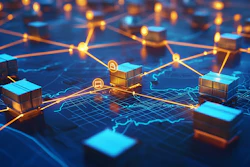
A yard operating system built around a digital twin can help close that gap. A digital twin is a live virtual representation of the physical yard, continuously updated with information from existing systems and available data sources. It can reflect trailer locations, dock status, yard tractor activity, gate events, and other operating conditions as they change.
The value of a digital yard twin is not simply that it creates a better map. It creates an operating framework that can be shared across transportation, warehouse, and yard teams.
Instead of separate groups working from different spreadsheets, radio calls, system records, and assumptions, teams can use the same current information to coordinate decisions. Technology such as computer vision can capture a trailer number at the gate and record its arrival. A kiosk or mobile app can update whether a trailer is loaded, empty, or damaged without waiting for someone to manually reconcile the information later.
This digitalization improves the quality and speed of the data, but data collection is only the first step. The larger opportunity is using that information to guide execution.
AI leveraged alongside a yard digital twin can identify patterns, surface developing bottlenecks, and recommend the next best action. It can identify that a dock is likely to back up before another truck arrives, rather than simply showing the backup after it forms. It can help sequence trailer moves and adjust the plan when a lane closes, a load arrives ahead of schedule, or dock availability changes.
This does not remove people from the operation. It gives them better information at the moment they need to act.
In the pre-autonomy era, dispatchers, yard managers, dock teams, and drivers are still the ones to execute the plan. Technology helps them spend less time searching for information and more time preventing disruption, coordinating service, and keeping freight moving. It also creates greater consistency by reducing the operation’s dependence on individual employees recognizing every emerging problem on their own.
As yards introduce autonomous equipment, that shared operating plan becomes even more important. Human-operated and autonomous yard tractors cannot function as separate systems with different priorities. Both need to execute against the same real-time plan, with clear rules for sequencing work, responding to exceptions, and escalating decisions that require human judgment.
Higher stakes for refrigerated freight
For temperature-sensitive freight, the difference between anticipating a delay and documenting one can be significant. A dock delay predicted twenty minutes in advance gives an operations team options. The team may be able to hold a departure, assign a different door, resequence a trailer move, or adjust labor before the load arrives.
A delay discovered after the trailer has been sitting is no longer just a scheduling problem. It may increase fuel consumption, create detention, affect product integrity, or contribute to a temperature excursion. At that point, the data can explain the loss, but it cannot reverse it.
The refrigerated trucking sector generates more than $12 billion annually across the United States and Canada, while food and beverage shippers already devote an estimated 7% to 10% of product cost to logistics. There is little room in that equation for avoidable delays or spoiled freight.
The operational goal should not be to collect more data for its own sake. It should be to use the information already available to protect the load, improve the driver experience, and give customers more consistent service.
Turning data into action
Most food and beverage supply chains do not have a shortage of data. They have a gap between information and execution.
Closing that gap requires more than software. It requires operational discipline, well-defined processes, clear ownership, and technology that helps people make better decisions faster. The objective is not simply to know what is happening across the yard. It is to recognize what is likely to happen next and act while there is still time to improve the outcome.
The organizations that gain an advantage will not necessarily be the ones collecting the most information. They will be the ones that turn the information they already have into coordinated action across transportation, yard, and warehouse operations.
Because a map can tell an operator where a trailer is. A better operating system helps the entire team decide what should happen next.