A single, unified AI agent is more effective for supply chain management than multiple specialized AI tools because it can autonomously execute complex tasks across different platforms and data sources simultaneously while maintaining enterprise-level security and eliminating inefficient fragmented workflows.
- Current logistics operations require manual switching between multiple disconnected databases, legacy systems, and tracking platforms, wasting valuable time and mental bandwidth.
- Most companies using AI agents still rely on manual human intervention to identify which agent to use and coordinate next steps, reducing actual efficiency gains.
- A single, elite AI agent can handle complex multi-platform tasks autonomously, such as resolving shipment issues by extracting data from TMS, cross-referencing rates, and updating fleet management systems simultaneously.
- Enterprise-grade AI agents must include comprehensive audit trails, granular user logging, cost controls, and strict security boundaries to safely access and interact with live business data.
- Only 15% of freight professionals currently use AI agents, despite 55% actively experimenting with AI in limited areas, indicating significant adoption potential for unified solutions.
It’s undeniable that the global supply chain is powered by data, which is gathered, analyzed and acted upon by increasingly intelligent tech solutions.
For several decades, the transportation and logistics industry has settled into an inefficient status quo, hopping between many different sources to sort through large quantities of fragmented data.
To keep freight moving, the typical coordinator must switch between disconnected databases, legacy enterprise solutions and tracking platforms to find what they need, wasting valuable time and mental bandwidth.
The truth is that their time can be utilized in a more productive, fulfilling way. Today, the industry has an army of specialized AI bots that can handle some of those manual, repetitive tasks, which on the surface, seems more efficient.
AI is this generation’s defining technology that has the potential to revolutionize the way freight is moved around the world. However, the current approach of creating isolated, separate AI tools for each individual task from billing to inventory auditing needs to be refined.
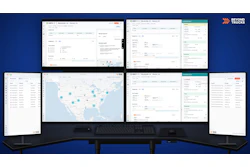
The solution to this problem is a single AI agent that can efficiently and reliably navigate and comprehend this complex and chaotic ecosystem and is managed securely from a single pane of glass, wiping out the “swivel chair workflow” once and for all.
One supercharged agent
Today’s off-the-shelf consumer-grade AI tools are inexpensive and easy to access, but most are unfit for logistics.
Despite all the hype about AI benefits efficiency gains, the way most logistics companies currently use AI agents is still pretty manual – currently, a human must understand the problem, determine which agent is right for the situation, prompt it and coordinate next steps.
When deployed without intentionality, the result is a tech environment that may look more advanced on paper, but is not actually more efficient, secure or manageable.
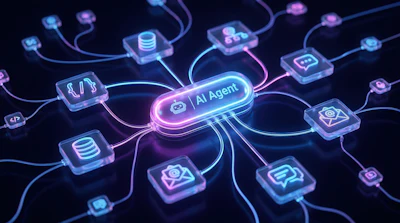
Instead, we need a single, elite agent that brings a unified experience to users, owning the entire execution layer.
This agent removes the need to navigate a bunch of disparate tools – instead, the agent can take your natural-language directive and identify the right agent and data across your ecosystem to get the job done.
True power of AI for logistics
For supply chain roles, the true power of AI doesn’t come from a tool that can write emails, answer questions or translate text. It comes from the system’s ability to act autonomously on high-stakes execution across multiple platforms and data sources, simultaneously.
For example, a common task that would benefit from a single elite agent is the resolution of a single problematic shipment. This task typically requires extracting account histories from a TMS, cross-referencing a Google sheet for spot rates, pulling in web data for current market information and then documenting a new routing strategy within a fleet management software.
This could be done with a small fleet of AI agents but would be much easier and faster with a truly powerful agent that executes this entire chain of commands across different platforms at the same time. This single, supercharged AI agent can move much faster than both human operators and traditional software, unlocking unprecedented efficiency.
However, in order to unlock this efficiency, a tool must be completely secure.
Addressing security risks
If we are to continue down the path of safely embracing agentic AI, logistics companies need to evaluate the smorgasbord of AI tools that they have been leveraging for their business operations.
An AI agent’s safety measures must scale with its operational velocity and access. For a unified agent to reach its full potential, it needs to be able to not only access, but also interact with, live business data and internal servers.
In an environment like this, even a small lapse in security could create a catastrophic corporate liability.
In the supply chain, we need solutions that come with comprehensive audit trails, granular user logging and strict cost controls. True enterprise safety means enforcing boundaries that cannot be compromised. A truly powerful agent must operate under strict cost ceilings, complete visibility, explicit user-permission constraints and bulletproof data security.
Next-gen AI
A safe, unified AI structure is not just a promise of the hype cycle; it’s the inevitable future reality for the global transportation and logistics industry.
In a survey of 68 freight professionals, about 55% of respondents said they were actively using, piloting or experimenting with AI in limited areas, but only about 15% were using AI agents.
Because of the supply chain’s massive scale and low margins, shippers and fleets don’t need to settle for consumer-facing solutions that haven’t caught up to the industry’s need for specialized tools.
It’s time we put a stop to all the swiveling between agents. By pairing top-of-the-line enterprise security with raw operational dominance in a single, next-generation AI agent, we can finally break down the fragmented workflows of the past to create a hyper-connected, high-velocity future for the global supply chain.