SymphonyAI announced CINDE Assortment and Space for CPGs, an AI platform that closes the loop between assortment strategy, planogram execution, and in-store compliance, compressing the category review cycle from 4-6 weeks to a matter of days.
The platform is underpinned by SymphonyAI's Transferable Demand AI, a model trained across 25 years of retail data and validated in production across more than 500 global CPG deployments.
"CPGs have spent years making assortment and shelf decisions with disconnected tools that cannot share data across the planning cycle," says Manish Choudhary, president of retail, SymphonyAI. "CINDE Assortment and Space was built to close that loop entirely. When a demand model proven at one retailer transfers without retraining to every other JBP in the portfolio, and when in-store execution feeds directly back into planning, CPGs stop rebuilding work from scratch every quarter. That capability is available today, backed by 25 years of production deployment across more than 500 global CPGs."
Key takeaways:
· CINDE Assortment and Space is available as a standalone Assortment-as-a Service offering and as part of the full CINDE CPG Enterprise Suite.
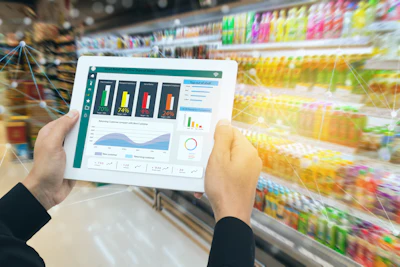
· Store Intelligence — Photo-to-Planogram Loop: A merchandiser takes a mobile photo of the shelf. Computer vision identifies every SKU, facing, and out-of-stock condition and routes a corrective task to the right associate, with no manual audit, no separate compliance tool, and no lag between the store walk and the action. The output feeds directly into the next assortment cycle, closing the planogram compliance gap that compounds between resets and drives on-shelf availability loss.
· Assortment Optimization — Transferable Demand: SKU-level rationalization driven by incrementality scoring, need-state analysis, and cannibalization modeling. The Transferable Demand AI model carries across retailers without retraining, meaning work validated at one JBP extends to the next without rebuilding from scratch.
· Intelligent Store-Based Clustering: Store clustering derived from store-level transaction and sales patterns, enabling highly accurate, scalable models tailored to localized demand, shopper behavior, and operational dynamics. This capability is particularly valuable across wholesale environments and markets with limited customer-level data, including many Asia-Pacific and emerging markets where retailer adoption depends on practical, store-centric intelligence.
· Space-Aware Assortment — Category Captain Workflow: Integrated assortment and planogram planning from a shared data model, producing shelf-ready outputs that store teams can act on directly. These are not analytical recommendations requiring manual translation before execution.
· Planogram Automation — Multi-Banner Scale: Store-specific planograms generated and maintained at scale across banners, countries, languages, and regulatory contexts, eliminating the manual rebuild cycle that consumes field and category team capacity between resets.