In this industry, the math has always been simple: for every five trucks, you hire one office employee. That’s how most fleets are built — one person to handle dispatch, billing, scheduling, and all the other moving parts that keep freight flowing.
But that math is changing fast.
AI is giving fleets the ability to grow without adding headcount. It’s not about cutting jobs; it’s about getting more out of the great people you already have. Running efficiently with AI, that 1:5 ratio can stretch to 1:10 or even 1:15 — tripling the value each person delivers inside the office.
The old way: Manual hustle
Every office employee in trucking knows what it’s like to live in reaction mode. Dispatchers, billing clerks, planners — everyone juggling portals, spreadsheets, phone calls, and half a dozen browser tabs just to keep the wheels turning.
You spend the day chasing data instead of moving freight: finding loads, checking capacity, calling drivers, calculating rates, scheduling appointments, chasing paperwork. It’s constant motion with no breathing room.
That grind has always been accepted as “just how it is.” But it doesn’t have to be.
The new way: System support
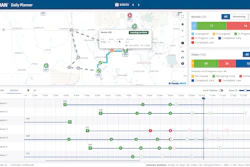
With AI built into the TMS, the work flips. The system starts doing the chasing for you, bringing the dispatcher or planner the best options first. Loads are ranked by profit, distance, lane history, driver availability, certifications, and timing.
Instead of scrambling to connect dots, your team sees a clean list of smart recommendations. The billing team gets pre-filled invoices. Appointment scheduling syncs automatically. Document capture happens instantly.
All the routine, repetitive work that eats up hours gets handled before anyone even logs in. That frees employees to do what they’re best at — solving problems, building relationships, and keeping trucks moving.
Grow without growing
Here’s the bottom line: a fleet that used to need 20 office employees to run 100 trucks can now handle that same volume — or more — with half the team.
That’s not about layoffs; it’s about leverage. It’s giving each person the tools to manage more freight with confidence. When the back office can handle 3 times the volume without 3 times the payroll, you’re not just scaling operations — you’re scaling efficiency.
The payoff is real: faster billing, cleaner dispatch, fewer missed appointments, happier drivers, and customers who see reliability go up while overhead goes down.
The people still matter most
Some folks hear “AI” and picture automation taking over jobs. But that’s not how it plays out in real trucking. This business still runs on people — relationships with customers, drivers, and partners.
AI doesn’t replace that. It just removes the clutter so your people can focus on what actually drives value. The dispatcher who used to manage five trucks can now manage 10 or 15 — not because they’re working harder, but because they’re working smarter.
In freight, the job doesn’t disappear — the nature of the job shifts. Your people go from chasing data to managing strategy. They become strategic operators: the ones who know the business, trust the tools, and move freight faster with fewer headaches.
The bottom line
AI doesn’t change what makes trucking work — it amplifies it. You still need reliable drivers, sharp dispatchers, and good communication. What changes is how far that same team can go.
That old 5-truck rule? It just got broken.
Now it’s one office employee for every 10–15 trucks, and fleets getting 3 times the value per person are proving what’s possible when people and technology pull together.
That’s not automation. That’s evolution.