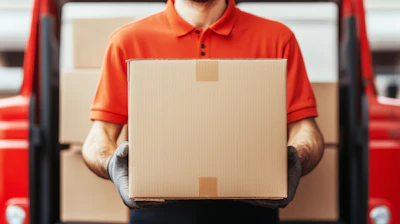
In supply chain management, few parts of the operation are as scrutinized as the last mile. It’s the most expensive and most visible part of the supply chain. It’s also the final touchpoint a brand has with its customer, and in today’s world of comparison shopping, instant reviews, and high expectations, that impression matters.
But despite all the focus on speed, automation, and efficiency, one truth remains: the last mile is still a people business. Technology can make drivers smarter and deliveries smoother, but when you’re sending someone into a customer’s home to install a refrigerator or carry a sofa up three flights of stairs, the human element is what ultimately determines whether that customer has a great experience.
That’s why the human side of the last mile isn’t just important – it’s essential.
The challenge behind the scenes
To understand why people matter so much, you have to look at what’s happening behind the scenes. The last mile today operates under pressures that didn’t exist even a decade ago.
Much of that pressure comes from the rising expectations of modern consumers. E-commerce giants trained the world to expect fast, free, and flawless delivery. Consumers want their orders to be fulfilled as soon as possible and at the lowest price, without compromising quality. Meeting that bar requires companies to stay flexible and proactively communicate with customers to manage expectations and to have the right inventory in the right place at the right time so orders can be deployed without delay. But even with perfect planning, it’s the person driving the last mile who ultimately delivers the experience that customers remember.
Big-and-bulky deliveries raise the stakes even more for drivers. They aren’t handling small‑parcel shipping – it’s heavy appliances like exercise equipment and furniture. Add in bad weather, traffic, installation requirements, or the need to haul away old items, and the complexity grows quickly.
Layer on the pressures of a shrinking driver workforce, and it becomes clear that last‑mile delivery isn’t just a logistics equation. With fewer people available to do increasingly complex work, the skills and service mindset of each individual driver have a greater impact.
Engaging the people who drive the business
In big‑and‑bulky last‑mile delivery, independent contractors play a key role in keeping the operation on track. They run their own businesses and choose which work to take. And they are, in every sense, the face of the brand they deliver.
To foster a consistently excellent last‑mile experience, logistics companies have to focus on recruiting and retaining the best service providers in the industry – those that that care about not only satisfying but delighting the end consumer.
That means logistics companies must respect their service providers’ time, make sure they’re compensated fairly for the work contracted, and create opportunities for service providers to grow their businesses as they like.
For example, to help drivers offset their own rising industry costs, especially truck rentals, we now offer access to a discounted vehicle rental program. With no exclusive service commitment to Ryder required, this program enables service providers to keep more earnings and focus on outstanding last-mile delivery.
Drivers also need technology that actually helps them – not systems that complicate their day. That’s where routing tools, scheduling platforms, and real‑time updates come in. Tech should make their work faster and more predictable.
But let me be clear about something: technology will never replace the human element behind last-mile delivery.
Technology can enhance the job, but it can’t do the job. Robots don’t carry treadmills upstairs, algorithms don’t calm a frustrated customer, and automation doesn’t navigate a tight hallway.
People do.
Meeting customers where they are
Just as people shape the last-mile experience, so do the expectations of the customers they serve. And expectations have never been higher. While speed is still important, the ability to schedule deliveries is taking priority. People don’t want to wait around all day for a delivery. They want to know when to expect their deliveries – and they’re willing to pay for control and convenience. Recent consumer research conducted by Ryder points to this clearly: 46% of consumers buying large, bulky products say they’re willing to pay extra to choose their delivery date, and 44% would pay more to select their time window.
Meeting customers where they are requires giving them flexibility and keeping them informed by offering clear delivery windows, providing updates before they have to ask, and being transparent when something changes. Our research also shows that delivery quality strongly influences repeat business, with 96% of consumers reporting that they are more likely to shop with a retailer again following a positive delivery experience.
Calling ahead, showing up on time, treating the delivery destination with respect, and resolving issues with patience and professionalism – this doesn’t just complete a delivery, this earns loyalty. And that feeling is what keeps people coming back to a brand.
Optimizing the last mile with technology and people
As the industry continues to evolve, last‑mile success will rely on a balance of technology and people. Technology will continue to improve predictability and efficiency. Tools like AI-driven routing and real‑time yard management help companies operate smarter, respond faster, and anticipate challenges before they become problems. Automation in scheduling and communication enhances speed and transparency. Data will make the last mile more informed, more accurate, and more resilient.
But technology alone cannot create a great last‑mile experience. That touchpoint is delivered by a person – someone who chooses to treat a customer well, navigates challenges with a positive attitude, and understands that they are carrying more than a product. They are carrying the promise of a brand.
When companies balance the right technology with an empowered, motivated, well‑supported service partner network, they create an experience that is consistent, reliable, and memorable. And that’s the path to resilience. The companies that will win the last mile aren’t those that automate the most – they’re the ones that invest intentionally in their network.
No matter how fast technology evolves, the service partner network will continue to be the driving force behind the last mile. And as long as this network remains central to the customer experience, the companies that prioritize their service partners will earn customer trust and loyalty, which is a crucial advantage in today’s rapidly changing, consumer-driven market.