In food and beverage (F&B) manufacturing, it’s tempting to believe the hard work is done once the product leaves the line. For most, food safety efforts naturally center around ingredients, processing, and finished goods. After all, that’s where the most obvious risks tend to sit, and it’s where teams have historically spent the bulk of their time and energy.
But there's an important piece missing from that picture that tends to evade the same levels of scrutiny: packaging. It’s often treated as something of a victory lap: something that happens once the real work is done. But in reality, packaging may be the most important part of a product's path to retail, and not just for branding or logistical reasons.
It's the last thing on the product before the shelf and when something goes wrong, it's part of how you trace what happened.
Attention around packaging has begun to shift in recent years, and not by accident. As manufacturers prepare for SQF Edition 10, the latest version of the globally recognized Safe Quality Food code, and navigate tighter expectations around traceability and documentation, packaging is getting the same scrutiny as ingredients and in-process controls; and that's being enforced.
Now manufacturers have to prove where materials came from, how they were used, and how they connect to the finished product. Once you start looking at it through that lens, it becomes clear that packaging isn’t a separate step at all. It’s an extension of the food safety plan, whether it’s been treated that way in the past or not.
From afterthought to accountability
There was a time when packaging was peripheral – it sat on the edge of the food safety conversation. Records were kept, but they weren’t always managed with the same level of discipline as ingredients or in-process checks. In many facilities, packaging documentation was something you could pull together if you needed it, rather than something that was continuously tracked, verified, and connected back to the product in real time. That approach held up for a while, but expectations have changed. The industry has been under steady pressure for the past decade to strengthen traceability, and packaging has been pulled into that scope whether teams were ready for it or not. In Q3 2025, more than 50% of food and beverage recalls by the FDA were packaging-related, including instances of mislabeling, contamination, or faulty packaging.
This isn’t due to a sudden lapse in attention or scrutiny when it comes to packaging, but because with the rollout of SQF Edition 10 and other regulations across the industry, there’s less tolerance for gaps and more emphasis on being able to demonstrate control.
One of the major changes is that managing packaging correctly isn't enough anymore — you have to be able to show it. That means knowing which lots were used, where they came from, and how they tie back to specific production runs. It also means having that information readily available, not buried in a filing cabinet or in spreadsheets sitting on a drive somewhere.
For a lot of manufacturers, packaging is now part of what auditors and customers look at when they assess a food safety program, and not something you file away and pull out if there's a problem.
Traceability in practice: what happens when things go wrong
No business enters the industry thinking they’re going to deal with a recall. But if you stay in food manufacturing long enough, it’s going to happen. When it does, the difference between a controlled response and a difficult, drawn-out situation often comes down to how quickly you can connect the dots; and that includes packaging. Being able to trace packaging lots, link them to specific production runs, and understand exactly where they were used is just as important as tracking ingredients or finished goods.
Where things tend to break down is when packaging hasn’t been fully integrated into that traceability picture. If records are incomplete, hard to access, or disconnected from the rest of the system, teams are left trying to piece together information under pressure. That slows everything down at the exact moment when speed matters most.
On the other hand, when packaging data is treated with the same level of discipline and is tied directly to production and quality records, it becomes much easier to isolate an issue, understand its scope, and take immediate action. That visibility helps with compliance, and it keeps a manageable problem from becoming a brand crisis
The operational pressure point
Beyond compliance, packaging has become one of the more active pressure points inside day-to-day operations. There’s a lot more movement here than there used to be. Manufacturers are dealing with cleaner label initiatives, frequent artwork updates, and ongoing changes to ingredients and claims that all need to be reflected on-pack. That creates a steady flow of revisions that have to be managed carefully. It’s no longer a case of setting a label once and running it for months or years. Teams are constantly switching between versions, exhausting old inventory, and making sure the right materials are in place at the right time.
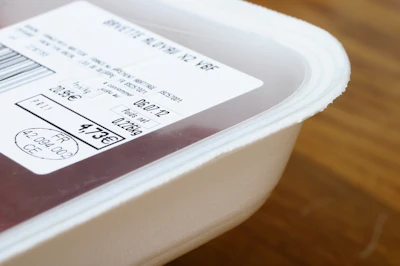
Every label change introduces another opportunity for something to be missed, whether it’s an outdated version being used on the line or a mismatch between what’s printed and what’s actually in the product.
Label verification is critical here, but it’s also more difficult to manage consistently, especially when you factor in workforce realities like high turnover and the need to get new employees up to speed quickly. When processes aren’t clear, connected, and easy to follow, small mistakes can slip through – and it’s not enough for that kind of knowledge to sit with a single employee or a group of team leaders – it has to be outlined and actionable, by anybody involved, which is exactly why packaging can't be treated as a final step.
Packaging as an extension of the food safety plan
Awareness of packaging risk isn't enough — it has to be built into how you operate. If packaging is touching the product and carrying critical information about it, then it has to be treated as part of the food safety plan itself. That means bringing it into the same level of structure and visibility as ingredients and in-process controls. Records need to be complete, consistently maintained, and directly tied to production activity so teams can follow what happened without having to piece things together after the fact.
It also includes understanding where packaging materials came from, how they were approved, and exactly where they were used across production.
What we’re seeing more of now is a shift toward treating packaging data as something that sits alongside everything else, not off to the side. When it’s integrated properly, it becomes much easier to follow the full story of a product from raw material through to final shipment.
It also reduces the reliance on tribal knowledge or manual workarounds that can break down over time, especially in an industry where turnover is high and teams are constantly changing. With the right tools in place, it fits into the production line like anything else, and teams hold packaging to the same standard they hold everything else.